Cheeseburger
A classic American sandwich featuring a juicy ground beef patty topped with melted cheese, served inside a soft bun with simple condiments and fresh garnishes.
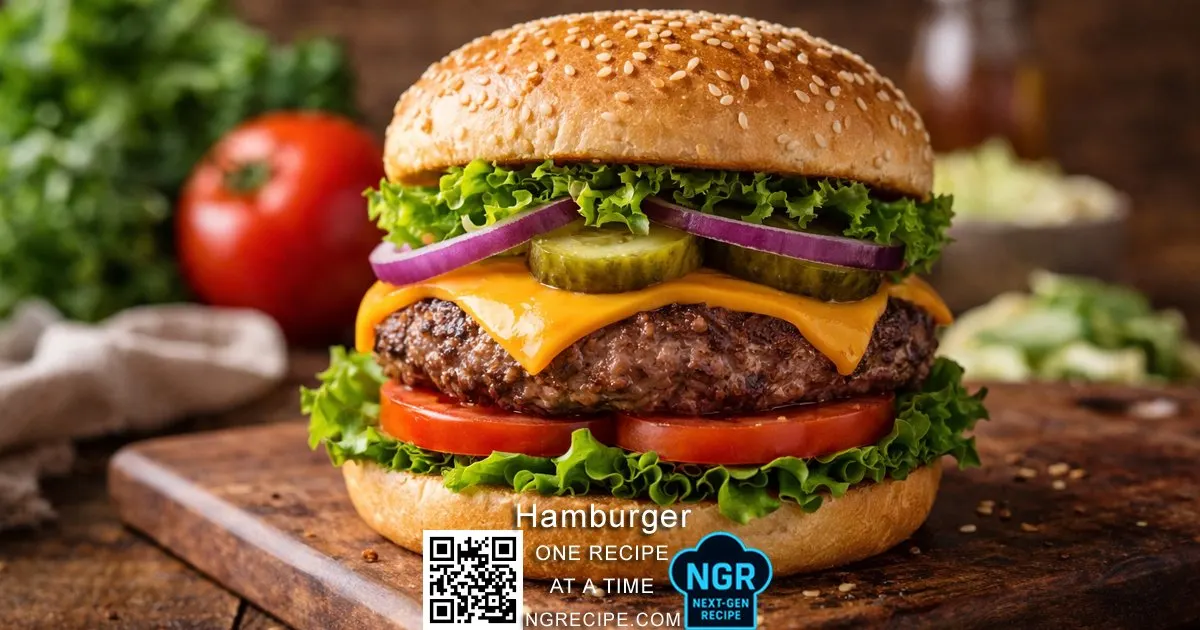
Quick Recipe Card
What This Recipe Is
A cheeseburger is a grilled or pan-seared ground beef patty topped with cheese, placed inside a sliced bun, and commonly accompanied by condiments such as ketchup, mustard, and vegetables like lettuce, tomato, and onion.
Ingredients
- 300 g (10.5 oz) ground beef (80/20 fat ratio)
- 2 burger buns
- 2 slices cheese (cheddar or American)
- 4 lettuce leaves
- 1 medium tomato, sliced
- 1 small onion, sliced
- 30 g (2 tbsp) ketchup
- 15 g (1 tbsp) mustard
- 5 g (1 tsp) salt
- 3 g (½ tsp) black pepper
- 10 g (2 tsp) butter or oil
Equipment
- Frying pan or grill
- Spatula
- Knife
- Cutting board
Instructions
Step 1:
Divide ground beef into 2 equal portions and shape into patties about 1.5 cm (½ inch) thick.
Step 2:
Season both sides with salt and black pepper.
Step 3:
Heat a frying pan or grill over medium-high heat and add butter or oil.
Step 4:
Cook patties for 3–4 minutes on one side until a crust forms.
Step 5:
Flip and cook for another 3–4 minutes.
Step 6:
Place cheese slices on patties during the last minute and allow to melt.
Step 7:
Toast burger buns lightly in the pan or separately.
Step 8:
Assemble burgers by placing lettuce, patty with cheese, tomato slices, onion slices, ketchup, and mustard inside the bun.
Step 9:
Cover with the top bun and serve immediately.
Visual Cooking Cues
- Patty develops a brown crust
- Juices rise to the surface before flipping
- Cheese fully melted and slightly glossy
Chef Tips
- Do not press patties while cooking to retain juices.
- Let patties rest briefly before assembling.
- Use slightly larger patties than buns to account for shrinkage.
Common Mistakes
- Overworking meat leads to dense texture
- Cooking on low heat prevents proper crust
- Skipping bun toasting causes sogginess
Troubleshooting
- Dry burger: Use higher fat beef or reduce cooking time
- Falling apart: Avoid flipping too early
- Cheese not melting: Cover pan briefly to trap heat
Ingredient Pairings
- French fries
- Pickles
- Coleslaw
Substitutions
- Ground chicken instead of beef
- Plant-based patty for vegetarian option
- Yogurt-based sauce instead of mayonnaise
Recipe Family Variations
- Double cheeseburger
- Smash burger
- Stuffed cheeseburger
Serving Suggestions
Serve hot with fries, salad, or a cold beverage.
Dietary Classification
- Non-vegetarian
- High-protein
Nutrition Information
- Calories: ~550 kcal
- Protein: ~28 g
- Fat: ~32 g
- Carbohydrates: ~35 g
- Fiber: ~2 g
- Sodium: ~700 mg
Storage / Reheating
Storage
- Store cooked patties in refrigerator up to 2 days
- Keep components separate for best quality
Reheating
- Reheat patty in pan over medium heat
- Avoid microwaving buns to prevent sogginess
FAQ
Can I grill instead of pan-fry?
Yes, grilling adds a smoky flavor.
Which cheese is best?
Cheddar or American for optimal melt.
How do I keep burgers juicy?
Use higher fat beef and avoid overcooking.
Why This Recipe Works
- Proper fat ratio in ground beef (around 20%) ensures juiciness.
- High heat creates a flavorful crust via Maillard reaction.
- Cheese melts over the hot patty, enhancing richness.
- Balanced toppings add freshness and acidity.
Dish Classification
- Dish type: Sandwich
- Course: Main course
- Meal type: Lunch, Dinner
- Traditional or modern dish: Traditional
- Street food or home cooking: Both
- Festival or everyday food: Everyday food
Recipe History
The cheeseburger originated in the United States in the early 20th century as an evolution of the hamburger, with cheese added to enhance flavor and texture. It became a staple of American diners and fast-food culture.
Cultural Notes
Cheeseburgers are a central part of American food culture and are widely adapted globally.
Advanced Cooking Knowledge Open detailed cooking science and reference notes
Flavor, Texture, and Aroma Profile
- Flavor: Savory, slightly smoky, mildly tangy
- Texture: Juicy interior, crisp exterior, soft bun
- Aroma: Grilled meat, melted cheese, toasted bread
Flavor Components
- Sweet: Bun, ketchup
- Salt: Beef, cheese, seasoning
- Acid: Mustard, tomato
- Bitter: Light char from grilling
- Umami: Beef, cheese
- Aromatic elements: Onion, toasted bun
Ingredient Notes
- Use fresh ground beef for best flavor.
- Cheese with good meltability (cheddar, American) is preferred.
- Soft buns improve bite balance.
Ingredient Science
- Fat in beef prevents dryness and enhances flavor.
- Salt helps retain moisture and improves protein binding.
- Cheese melts due to emulsified fats and proteins.
Ingredient Roles
- Beef: Primary protein and flavor base
- Cheese: Adds fat, umami, and creaminess
- Bun: Structural support and mild sweetness
- Vegetables: Freshness and crunch
- Condiments: Flavor balance and moisture
Ingredient Classification
- Protein: Beef
- Dairy: Cheese
- Grains: Bun
- Vegetables: Lettuce, tomato, onion
- Condiments: Ketchup, mustard
Preparation Techniques
- Shaping patties evenly
- Slicing vegetables uniformly
- Lightly toasting buns
Cooking Techniques
- Grilling or pan-searing
- Melting cheese over residual heat
Heat Management
- Low heat stages: None
- Medium heat stages: Toasting buns
- High heat stages: Cooking patties
- Temperature cues: Pan hot enough to sizzle immediately
Texture Development
- High heat creates crust on patty
- Resting retains juices
- Toasted bun prevents sogginess
Cooking Time Control
- 3–4 minutes per side for medium doneness
- Avoid overcooking to prevent dryness
Flavor Pairing Logic
- Rich beef pairs with acidic condiments
- Creamy cheese balances savory meat
- Fresh vegetables add contrast
Global Variations
- American cheeseburger
- Australian burger with beetroot
- Japanese teriyaki cheeseburger
Leftover Ideas
- Chop leftover patty into salads
- Use in wraps or sandwiches
Cooking Safety Notes
- Cook beef to safe internal temperature (~71°C / 160°F)
- Avoid cross-contamination with raw meat
Sustainability Notes
- Use locally sourced beef when possible
- Reduce waste by reusing leftovers
