Sindhi Biryani
A bold, aromatic, and spicy layered rice dish from Sindh, Pakistan, known for its tangy yogurt base, vibrant spices, tender meat, and signature addition of potatoes and fresh herbs.
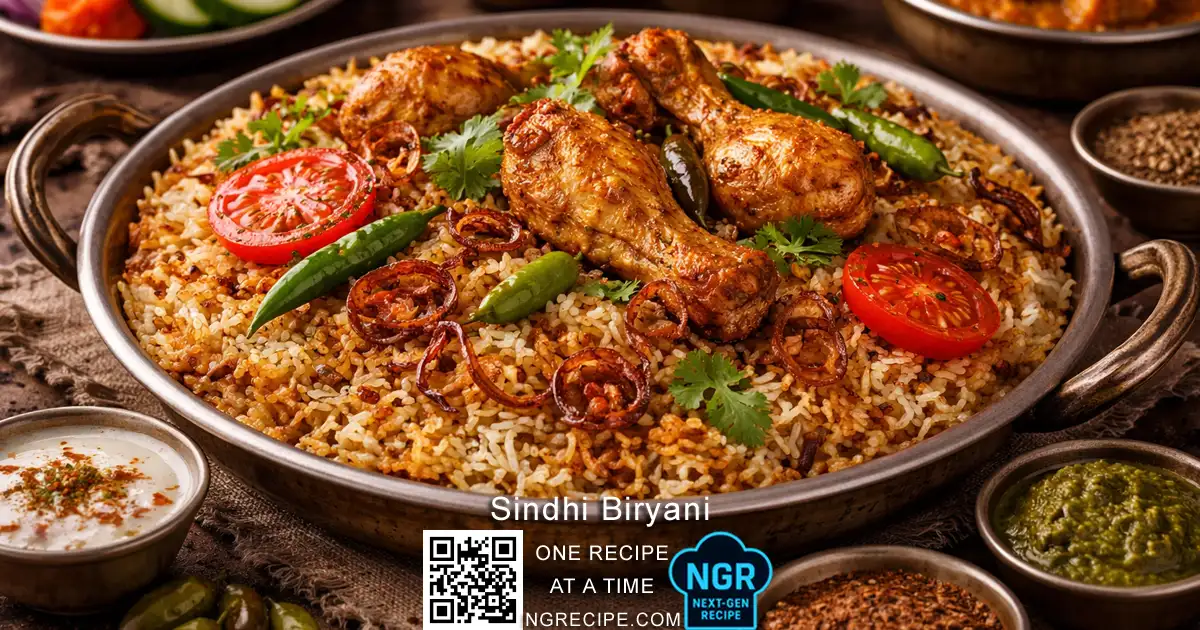
Quick Recipe Card
What This Recipe Is
Sindhi Biryani is a richly spiced rice and meat dish where partially cooked basmati rice is layered with marinated chicken, vegetables, herbs, and a distinctive sour-spicy masala, then slow-cooked using the dum method to develop deep flavor.
Ingredients
- 500 g (1.1 lb) basmati rice
- 700 g (1.5 lb) chicken, cut into pieces
- 200 g (7 oz) potatoes, peeled and halved
- 200 g (7 oz) yogurt
- 150 g (5 oz) onions, thinly sliced
- 150 g (5 oz) tomatoes, chopped
- 4 green chilies, slit
- 2 tbsp ginger-garlic paste
- 100 ml (½ cup) cooking oil
- 2 tbsp biryani masala
- 1 tsp turmeric powder
- 1 tsp red chili powder
- 1 tsp cumin seeds
- 4 cloves
- 2 green cardamom pods
- 1 cinnamon stick
- 1 bay leaf
- 10 g (⅓ oz) fresh coriander leaves, chopped
- 10 g (⅓ oz) fresh mint leaves
- 1 tbsp lemon juice
- Salt to taste
- 1 pinch saffron soaked in 30 ml (2 tbsp) warm milk
Equipment
- Large pot or handi with lid
- Frying pan
- Slotted spoon
- Mixing bowl
Instructions
Step 1:
Wash and soak basmati rice for 20 minutes, then parboil in salted water until 70% cooked. Drain and set aside.
Step 2:
Heat oil in a pot and fry sliced onions until golden brown. Remove half for garnish.
Step 3:
In the same oil, add cumin seeds, cloves, cardamom, cinnamon, and bay leaf.
Step 4:
Add ginger-garlic paste and sauté briefly.
Step 5:
Add chicken and cook until lightly browned.
Step 6:
Add yogurt, tomatoes, turmeric, red chili powder, biryani masala, and salt. Cook until oil separates.
Step 7:
Add potatoes and cook until slightly tender.
Step 8:
Layer half the rice over the chicken mixture.
Step 9:
Add green chilies, mint, coriander, lemon juice, and fried onions.
Step 10:
Add remaining rice and drizzle saffron milk on top.
Step 11:
Cover tightly and cook on low heat for 20–25 minutes (dum).
Step 12:
Rest for 10 minutes, then gently mix before serving.
Visual Cooking Cues
- Oil separating from masala indicates readiness
- Rice grains appear long and separate
- Steam aroma becomes rich and fragrant during dum
Chef Tips
- Use a heavy-bottom pot to prevent burning
- Seal lid with dough for authentic dum effect
- Avoid stirring during dum stage
Common Mistakes
- Overcooking rice before layering
- Using too much water in masala
- Skipping resting time
Troubleshooting
- Soggy rice: Reduce water and cook rice less before layering
- Burnt bottom: Lower heat and use thick pot
- Bland taste: Adjust salt and spice levels
Ingredient Pairings
- Raita
- Salad
- Pickles
Substitutions
- Chicken → Lamb or beef
- Yogurt → Thick plant-based yogurt (for variation)
Recipe Family Variations
- Extra spicy version with more chilies
- Less spicy family-friendly version
Serving Suggestions
Serve hot with raita, fresh salad, and lemon wedges.
Dietary Classification
- Non-vegetarian
- Gluten-free
Nutrition Information
Approximate per serving:
- Calories: 550 kcal
- Protein: 28 g
- Fat: 20 g
- Carbohydrates: 65 g
- Fiber: 4 g
- Sodium: Moderate
Storage / Reheating
Storage
- Refrigerate in airtight container for up to 3 days
Reheating
- Reheat on stovetop with a splash of water or microwave covered
FAQ
Can I skip potatoes?
Yes, but they are traditional and add flavor.
Why is my biryani not aromatic?
Use fresh spices and proper dum cooking.
Can I make it less spicy?
Reduce chili quantity and use mild spices.
Why This Recipe Works
- Yogurt marinade tenderizes chicken and adds tanginess
- Layering ensures even flavor distribution
- Dum cooking traps steam, allowing rice to absorb aromatic oils and spices
- Potatoes absorb spices, enhancing depth and texture contrast
Recipe Identity
A regional Pakistani biryani distinguished by its tanginess, use of yogurt and tomatoes, and balanced heat with fresh green chilies and whole spices.
Dish Classification
- Dish type: Rice-based layered dish
- Course: Main course
- Meal type: Lunch, Dinner
- Traditional or modern dish: Traditional
- Street food or home cooking: Both
- Festival or everyday food: Both
Recipe History
Originating from the Sindh region of Pakistan, Sindhi Biryani reflects local culinary traditions emphasizing bold spices, sour notes, and hearty ingredients. It is widely enjoyed across South Asia and beyond.
Cultural Notes
Sindhi Biryani is known for its bold spice profile and is often served at gatherings, weddings, and special occasions.
Advanced Cooking Knowledge Open detailed cooking science and reference notes
Flavor, Texture, and Aroma Profile
- Flavor: Spicy, tangy, aromatic
- Texture: Fluffy rice, tender chicken, soft potatoes
- Aroma: Strong spice aroma with saffron and fried onions
Flavor Balance
- Heat from chilies and spices balanced by yogurt acidity
- Subtle sweetness from caramelized onions
- Earthy undertones from whole spices
Flavor Components
- Sweet: Fried onions
- Salt: Salt and spice blend
- Acid: Yogurt, tomatoes, lemon juice
- Bitter: Minimal (from browned onions if overcooked)
- Umami: Chicken and slow-cooked spices
- Aromatic elements: Cardamom, cloves, cinnamon, cumin, mint, coriander
Ingredient Notes
- Use aged basmati rice for better grain separation
- Yogurt should be thick and not watery
- Fresh herbs enhance aroma significantly
Ingredient Science
- Yogurt contains lactic acid, which breaks down protein fibers in chicken
- Saffron releases aromatic compounds when soaked in warm liquid
- Long-grain rice maintains structure under steam cooking
Ingredient Roles
- Rice: Structure and base
- Chicken: Protein and umami
- Yogurt and tomatoes: Acidity and moisture
- Spices: Flavor complexity
- Potatoes: Texture contrast and flavor absorption
Ingredient Classification
- Primary: Rice, chicken
- Secondary: Yogurt, potatoes, tomatoes
- Aromatics: Onion, ginger, garlic, herbs
- Spices: Whole and ground spices
Preparation Techniques
- Wash and soak rice for 20 minutes
- Fry onions until golden brown
- Marinate chicken with yogurt, spices, and aromatics
Cooking Techniques
- Parboiling rice
- Sautéing spices and aromatics
- Layering rice and chicken
- Dum cooking (steam cooking)
Heat Management
- Low heat stages: Dum cooking phase
- Medium heat stages: Cooking chicken masala
- High heat stages: Initial boiling of rice
- Temperature cues: Oil separates from masala, rice 70% cooked before layering
Texture Development
- Proper rice soaking ensures elongation
- Dum cooking creates fluffy grains
- Controlled frying prevents soggy onions
Cooking Time Control
- Avoid overcooking rice before layering
- Monitor dum stage to prevent burning
Flavor Pairing Logic
- Cooling yogurt-based sides balance spice
- Acidic pickles enhance flavor contrast
Global Variations
- Hyderabadi Biryani (India)
- Kolkata Biryani (India)
- Lucknowi Biryani (India)
Leftover Ideas
- Biryani fried rice
- Stuffed wraps
Cooking Safety Notes
- Ensure chicken reaches safe internal temperature (75°C / 165°F)
- Store leftovers promptly
Sustainability Notes
- Use locally sourced spices and rice
- Minimize food waste by repurposing leftovers
