Bombay Biryani
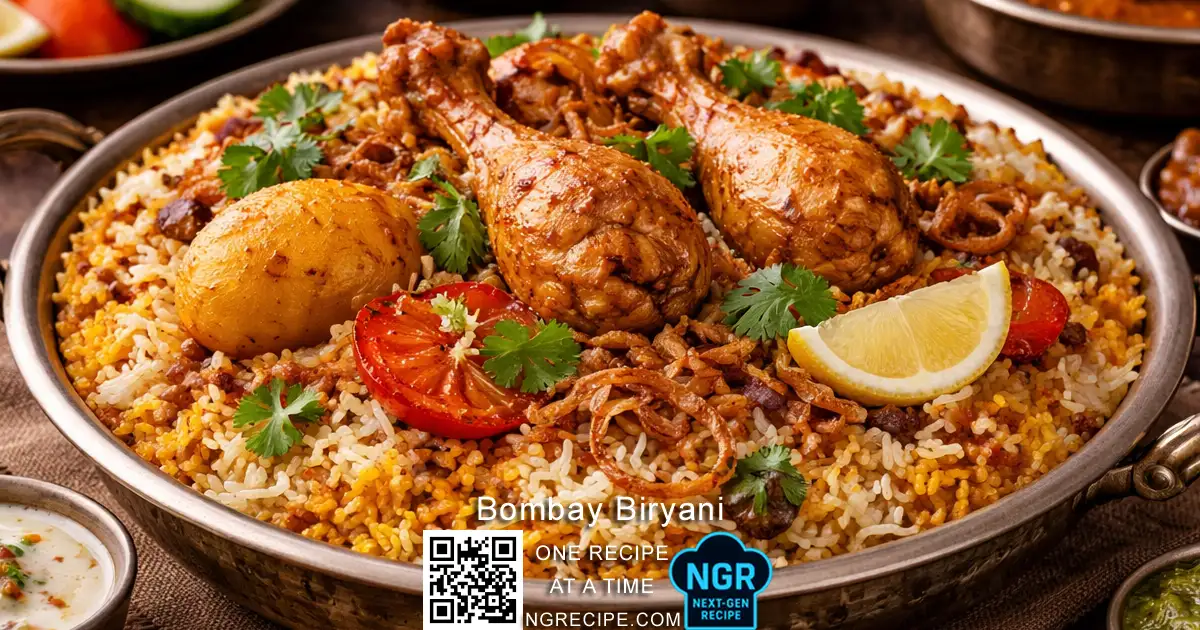
A vibrant, tangy, and aromatic rice dish from Mumbai, known for its signature use of potatoes, balanced spices, and a distinctive sweet-sour flavor profile.
Quick Recipe Card
What This Recipe Is
Bombay Biryani is a layered rice and meat dish cooked using the dum method, combining marinated chicken, parboiled basmati rice, potatoes, and a blend of spices. It stands out for its slightly tangy taste, often enhanced with yogurt, tomatoes, and lemon.
Ingredients
- 500 g (1.1 lb) basmati rice
- 700 g (1.5 lb) chicken, cut into pieces
- 3 medium potatoes (450 g / 1 lb), peeled and halved
- 200 g (¾ cup) yogurt
- 3 medium onions (300 g / 10.5 oz), thinly sliced
- 2 medium tomatoes (200 g / 7 oz), chopped
- 3 green chilies, slit
- 2 tbsp lemon juice (30 ml / 1 fl oz)
- ½ cup mint leaves (20 g / 0.7 oz)
- ½ cup coriander leaves (20 g / 0.7 oz)
- 4 tbsp oil (60 ml / 2 fl oz)
- 2 tbsp ghee (30 g / 2 tbsp)
- 2 tsp salt (10 g / 2 tsp)
- 1 tsp red chili powder
- 1 tsp turmeric powder
- 2 tsp garam masala
- 1 tsp cumin seeds
- 4 cloves
- 4 green cardamom pods
- 1 cinnamon stick
Equipment
- Heavy-bottom pot with lid
- Large pot for boiling rice
- Frying pan
Instructions
Step 1:
Rinse and soak basmati rice for 30 minutes.
Step 2:
Marinate chicken with yogurt, salt, chili powder, turmeric, and half the garam masala for 20 minutes.
Step 3:
Fry sliced onions in oil until golden; set aside half for garnish.
Step 4:
In the same pan, cook chicken with tomatoes, green chilies, spices, and half the fried onions until partially cooked.
Step 5:
Boil potatoes separately until slightly tender.
Step 6:
Parboil rice in salted water until 70% cooked; drain.
Step 7:
Layer chicken, potatoes, rice, mint, coriander, lemon juice, and remaining onions in a pot.
Step 8:
Drizzle ghee on top.
Step 9:
Cover and cook on low heat (dum) at 120°C (250°F) for 25–30 minutes.
Step 10:
Rest for 10 minutes before serving.
Visual Cooking Cues
Rice grains should be separate and fluffy. Steam aroma should be rich and spiced.
Chef Tips
Use a tight lid or dough seal for proper dum. Avoid overmixing after cooking.
Common Mistakes
Overcooking rice leads to mushy texture. Skipping layering reduces flavor depth.
Troubleshooting
If rice is undercooked, sprinkle water and cook on low heat briefly. If too wet, cook uncovered for a few minutes.
Ingredient Pairings
- Raita
- Salad
- Pickles
Substitutions
Chicken can be replaced with mutton. Yogurt can be substituted with thick curd.
Recipe Family Variations
Add boiled eggs or fried cashews for richness.
Serving Suggestions
Serve hot with raita and fresh salad.
Dietary Classification
Non-vegetarian
Nutrition Information
- Calories: ~520 kcal
- Protein: 28 g
- Fat: 18 g
- Carbohydrates: 60 g
- Fiber: 4 g
- Sodium: 700 mg
Storage / Reheating
Storage
Refrigerate in airtight container up to 3 days.
Reheating
Reheat on low heat with a splash of water.
FAQ
Can I skip potatoes?
No, they are a defining feature of Bombay Biryani.
Why is my rice sticky?
Likely overcooked or excess water.
Why This Recipe Works
The layering technique ensures even distribution of flavors, while dum cooking traps steam to infuse aroma and maintain moisture. Potatoes absorb spices, adding body and contrast.
Recipe Identity
A regional Indian biryani from Mumbai characterized by bold spices, tangy notes, and the inclusion of potatoes as a key component.
Dish Classification
- Dish type: Rice-based layered dish
- Course: Main course
- Meal type: Lunch, Dinner
- Traditional or modern dish: Traditional
- Street food or home cooking: Both
- Festival or everyday food: Both
Recipe History
Bombay Biryani evolved in Mumbai, influenced by Mughlai traditions and local tastes. It incorporates regional preferences such as tanginess and the addition of potatoes, making it distinct from other biryanis.
Cultural Notes
Potatoes in biryani reflect Mumbai’s regional culinary identity.
Advanced Cooking Knowledge Open detailed cooking science and reference notes
Flavor, Texture, and Aroma Profile
Bombay Biryani delivers a layered flavor experience with fragrant rice, tender chicken, and soft, spice-infused potatoes. The aroma is rich with whole spices and fresh herbs.
Flavor Balance
A balanced interplay of tangy, mildly sweet, and spicy flavors with aromatic depth.
Flavor Components
- Sweet: Mild sweetness from caramelized onions
- Salt: Balanced seasoning throughout
- Acid: Lemon juice and tomatoes
- Bitter: Minimal
- Umami: Chicken and yogurt base
- Aromatic elements: Whole spices, mint, coriander
Ingredient Notes
Potatoes are essential to Bombay Biryani’s identity. Use aged basmati rice for best texture.
Ingredient Science
Yogurt tenderizes chicken through mild acidity. Rice starch gelatinizes during boiling, then firms during dum cooking.
Ingredient Roles
- Rice: Structure and base
- Chicken: Protein and umami
- Potatoes: Flavor absorption and texture
- Yogurt: Tenderizer and tang
- Spices: Aroma and depth
Ingredient Classification
- Primary: Rice, chicken
- Secondary: Potatoes, yogurt
- Aromatics: Onion, herbs, spices
Preparation Techniques
Marination of chicken ensures flavor penetration. Rice is parboiled to maintain grain integrity.
Cooking Techniques
Layering and dum cooking create distinct textures and flavors.
Heat Management
- Low heat stages: Dum cooking
- Medium heat stages: Cooking chicken
- High heat stages: Frying onions
- Temperature cues: Gentle steam release during dum
Texture Development
Rice remains fluffy while chicken becomes tender and juicy. Potatoes soften and absorb spices.
Cooking Time Control
Rice is cooked to 70% before layering to prevent overcooking.
Flavor Pairing Logic
Cooling sides balance the spice and acidity of the biryani.
Global Variations
- Karachi Biryani
- Hyderabadi Biryani
- Lucknowi Biryani
Leftover Ideas
Use as stuffing for wraps or fried rice variation.
Cooking Safety Notes
Ensure chicken reaches safe internal temperature of 75°C (165°F).
Sustainability Notes
Use locally sourced ingredients where possible.
