Kacchi Biryani
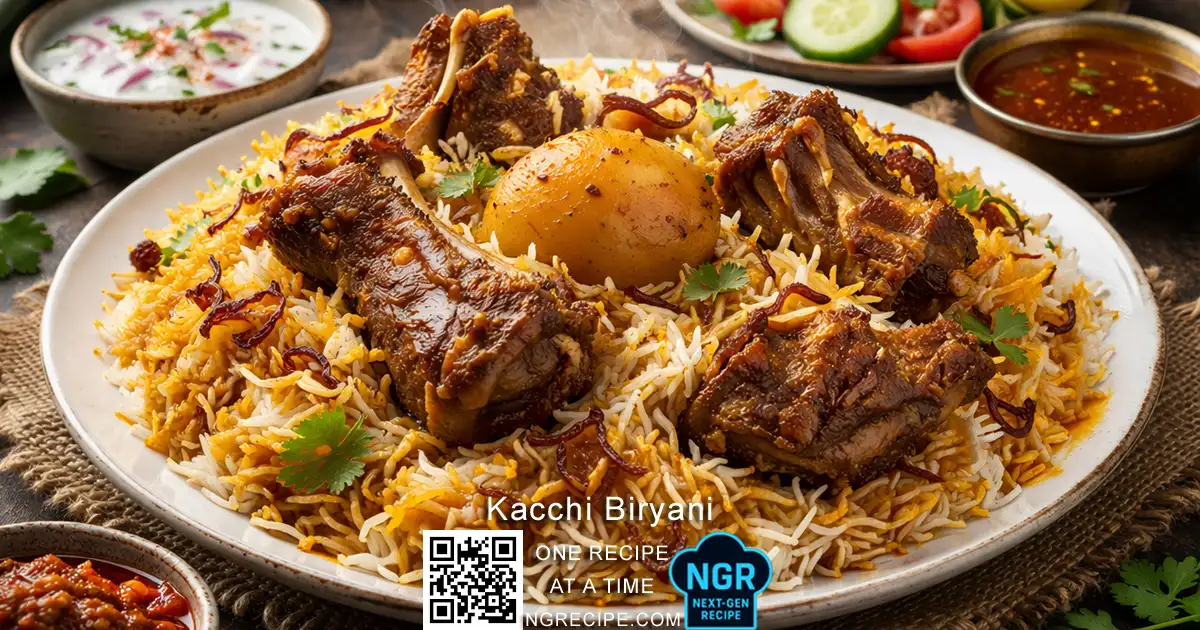
A rich, aromatic South Asian rice dish where raw marinated meat is layered with partially cooked rice and slow-cooked together, creating deep, fused flavors and tender texture.
Quick Recipe Card
What This Recipe Is
Kacchi Biryani is a traditional layered rice and meat dish where raw marinated mutton cooks together with fragrant basmati rice under sealed heat (dum), resulting in intensely infused flavor and melt-in-the-mouth meat.
Ingredients
- 1 kg mutton (2.2 lb), bone-in
- 500 g basmati rice (2½ cups)
- 250 g yogurt (1 cup)
- 200 g onion, thinly sliced (2 cups)
- 300 g potato, peeled and halved (2 medium)
- 120 ml ghee (½ cup)
- 60 ml oil (¼ cup)
- 20 g ginger paste (1 tbsp)
- 20 g garlic paste (1 tbsp)
- 2 tsp salt (or to taste)
- 1 tsp red chili powder
- 1 tsp turmeric powder
- 2 tsp biryani masala
- 4 green cardamom pods
- 2 black cardamom pods
- 4 cloves
- 2 cinnamon sticks
- 2 bay leaves
- 1 tsp kewra water (optional)
- 1 tsp rose water (optional)
- 500 ml water (2 cups)
Equipment
- Heavy-bottom pot or handi
- Lid for sealing
- Large bowl
- Frying pan
Instructions
Step 1:
Marinate mutton with yogurt, ginger, garlic, salt, chili powder, turmeric, and biryani masala. Rest for at least 1 hour.
Step 2:
Fry sliced onions in oil until golden brown; set aside.
Step 3:
Parboil basmati rice with whole spices and salt until 70% cooked; drain.
Step 4:
Heat ghee in a heavy pot and layer marinated mutton at the bottom.
Step 5:
Add potatoes and half of the fried onions over the meat.
Step 6:
Spread partially cooked rice evenly on top.
Step 7:
Sprinkle remaining fried onions, kewra water, and rose water.
Step 8:
Cover tightly and cook on very low heat for 1–1.5 hours.
Step 9:
Rest for 15 minutes before gently mixing and serving.
Visual Cooking Cues
Meat should be tender and easily pulled apart; rice grains should remain separate and fluffy.
Chef Tips
- Seal lid with dough to trap steam
- Use heavy pot to prevent burning
- Do not stir during cooking
Common Mistakes
- Overcooking rice before layering
- High heat causing burnt bottom
- Insufficient marination
Troubleshooting
- Rice too soft: Reduce parboiling time
- Meat undercooked: Increase dum time
- Burnt base: Lower heat and use thicker pot
Ingredient Pairings
- Raita
- Salad
- Boiled eggs
Substitutions
- Chicken instead of mutton
- Vegetable oil instead of ghee
Recipe Family Variations
- Add saffron milk for aroma
- Include boiled eggs
Serving Suggestions
Serve hot with raita and fresh salad.
Dietary Classification
- Non-vegetarian
- Gluten-free
Nutrition Information
- Calories: ~650 kcal
- Protein: ~28 g
- Fat: ~30 g
- Carbohydrates: ~60 g
- Fiber: ~4 g
- Sodium: ~800 mg
Storage / Reheating
Storage
Refrigerate up to 3 days in airtight container.
Reheating
Reheat on low heat with a splash of water.
FAQ
Can I use chicken?
Yes, but reduce cooking time.
Why is it called kacchi?
Because raw meat is used during cooking.
Why This Recipe Works
Cooking raw marinated meat with rice allows deep flavor penetration. Sealed dum cooking traps steam, ensuring even cooking and aroma retention.
Dish Classification
- Dish type: Rice-based meat dish
- Course: Main course
- Meal type: Lunch or dinner
- Traditional or modern dish: Traditional
- Street food or home cooking: Both
- Festival or everyday food: Festival and special occasions
Recipe History
Kacchi Biryani originates from the Mughal culinary tradition and is especially popular in Bangladesh and parts of India. It evolved as a refined version of layered rice dishes where raw meat is slow-cooked with rice.
Cultural Notes
A centerpiece dish in Bangladeshi celebrations, especially weddings and Eid.
Advanced Cooking Knowledge Open detailed cooking science and reference notes
Flavor, Texture, and Aroma Profile
Deeply spiced, aromatic, and savory with tender meat and fluffy rice layered with rich fat and caramelized notes.
Flavor Balance
Balanced richness from ghee and meat, warmth from spices, mild acidity from yogurt, and subtle sweetness from fried onions.
Flavor Components
- Sweet: Fried onions
- Salt: Salt and meat juices
- Acid: Yogurt
- Bitter: Minimal (from browned onions if overcooked)
- Umami: Mutton and slow cooking
- Aromatic elements: Cardamom, cinnamon, cloves, bay leaves, kewra water
Ingredient Notes
Use aged basmati rice for better grain separation. Bone-in mutton provides richer flavor.
Ingredient Science
Yogurt tenderizes meat through mild acidity. Ghee enhances fat-soluble flavor compounds.
Ingredient Roles
- Mutton: Protein and primary flavor
- Rice: Structure and bulk
- Yogurt: Tenderizer
- Spices: Aromatic complexity
- Ghee: Richness
Ingredient Classification
- Protein: Mutton
- Carbohydrate: Rice, potato
- Fat: Ghee, oil
- Aromatics: Spices, onion
Preparation Techniques
Marination, parboiling rice, frying onions, layering.
Cooking Techniques
Dum cooking, slow steaming, fat rendering.
Heat Management
- Low heat stages: Dum cooking phase
- Medium heat stages: Initial cooking and frying onions
- High heat stages: Bringing water to boil
- Temperature cues: Gentle steam without burning at base
Texture Development
Slow cooking ensures tender meat and separate rice grains.
Cooking Time Control
Avoid overcooking rice before layering; it should be ~70% cooked.
Flavor Pairing Logic
Cooling yogurt-based sides balance the rich, spicy biryani.
Global Variations
- Hyderabadi Kacchi Biryani
- Kolkata Biryani
Leftover Ideas
Use in wraps or stuffed paratha filling.
Cooking Safety Notes
Ensure meat reaches safe internal temperature and is fully cooked.
Sustainability Notes
Choose responsibly sourced meat and reduce food waste.
