White Clam Pizza
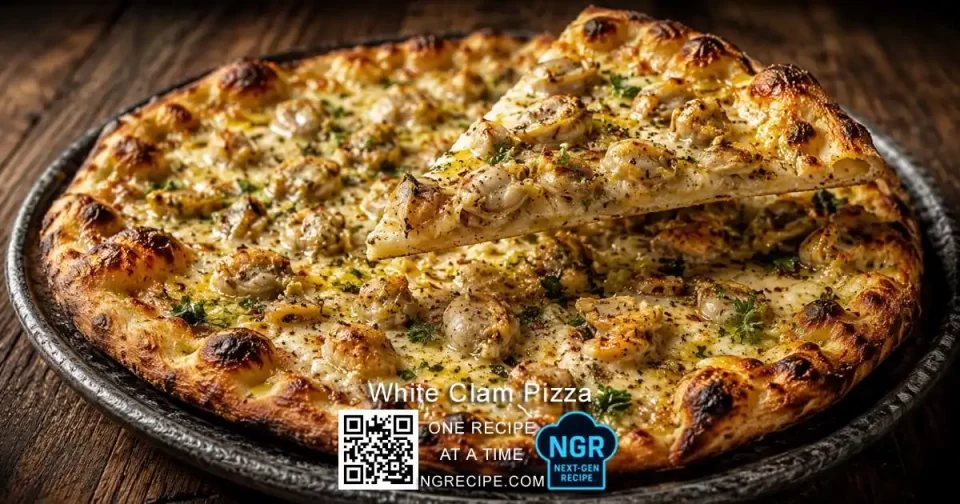
White Clam Pizza is a crisp, thin-crust seafood pizza topped with tender littleneck clams, garlic, extra-virgin olive oil, Pecorino Romano, oregano, and parsley. Inspired by the celebrated clam pies of New Haven, Connecticut, this tomato-free pizza delivers briny seafood flavor, a blistered crust, and a rich but balanced olive-oil finish without relying on mozzarella.
Quick Recipe Card
What This Recipe Is
White Clam Pizza is an Italian-American seafood pizza built on a thin, chewy, high-heat-baked crust. Instead of tomato sauce, the dough is dressed with extra-virgin olive oil, garlic, clam liquor, grated Pecorino Romano, herbs, and freshly shucked clams.
The pizza is particularly associated with New Haven-style apizza, where a dark, crisp, irregularly charred crust is considered desirable. Traditional versions are usually made without mozzarella so the clean salinity of the clams remains the central flavor.
This home-oven version preserves that identity while using a practical dough formula, a thoroughly preheated baking surface, and carefully drained clams to prevent a wet or undercooked center.
Ingredients
- 300 g bread flour (2 1/2 cups), plus a small amount from the measured quantity for handling
- 195 g lukewarm water (3/4 cup plus 1 tablespoon)
- 2 g instant yeast (1/2 teaspoon)
- 7 g fine sea salt (1 1/4 teaspoons)
- 10 ml extra-virgin olive oil (2 teaspoons), for the dough
- 225 g raw shucked littleneck clam meat (8 ounces), drained and roughly chopped if large
- 30 ml reserved clam liquor (2 tablespoons), strained
- 40 ml extra-virgin olive oil (2 tablespoons plus 2 teaspoons), for topping
- 12 g garlic (about 3 large cloves), finely minced
- 35 g Pecorino Romano (about 1/3 cup), finely grated
- 1 g dried oregano (1 teaspoon)
- 0.5 g red pepper flakes (1/4 teaspoon)
- 0.5 g freshly ground black pepper (1/4 teaspoon)
- 10 g fresh flat-leaf parsley (about 1/4 cup), finely chopped
- 15 g semolina flour (2 tablespoons), for dusting the pizza peel
Equipment
- Digital kitchen scale
- Large mixing bowl
- Measuring spoons
- Dough scraper or flexible spatula
- Clean kitchen towel or reusable bowl cover
- Fine-mesh strainer
- Small mixing bowl
- Pizza stone or baking steel
- Pizza peel or rimless baking sheet
- Oven capable of reaching 260°C (500°F)
- Pizza cutter or sharp kitchen knife
- Instant-read food thermometer
Instructions
Step 1:
Combine the bread flour, water, and instant yeast in a large mixing bowl. Stir until no dry flour remains, then leave the rough dough to rest for 15 minutes.
Step 2:
Add the fine sea salt and 10 ml of the extra-virgin olive oil. Knead in the bowl or on a clean work surface for 7 to 9 minutes, until the dough becomes smooth, elastic, and slightly tacky. Use only a light dusting of the measured bread flour if the dough sticks excessively.
Step 3:
Shape the dough into a ball and return it to the bowl. Cover and leave it at room temperature for 1 1/2 to 2 hours, or until noticeably expanded and soft. The dough does not need to double completely.
Step 4:
Place a pizza stone or baking steel on a rack in the upper-middle part of the oven. Preheat the oven to 260°C (500°F) for at least 45 minutes so the baking surface becomes thoroughly heated.
Step 5:
Drain the clam meat in a fine-mesh strainer and gently blot away excess moisture. Place the clams in a small bowl with the minced garlic, dried oregano, red pepper flakes, black pepper, half of the chopped parsley, and 15 ml of the topping olive oil. Toss gently until evenly coated.
Step 6:
Dust a pizza peel or rimless baking sheet with the semolina flour. Place the proofed dough on a lightly floured surface and press it outward from the center, preserving a slightly thicker rim. Stretch it into a thin 30 cm (12-inch) round without tearing it.
Step 7:
Transfer the stretched dough to the prepared peel. Brush the surface with 15 ml of the topping olive oil, leaving a narrow uncovered border. Sprinkle the Pecorino Romano evenly over the dough.
Step 8:
Distribute the seasoned clam mixture evenly across the pizza. Drizzle the strained clam liquor over the topping, followed by the remaining 10 ml olive oil. Avoid pouring all the liquid into one area.
Step 9:
Slide the pizza onto the hot stone or steel. Bake for 8 to 11 minutes, rotating once if necessary, until the rim is deeply golden with scattered dark blisters, the underside is crisp, and the clams are opaque and cooked through.
Step 10:
Transfer the pizza to a cutting board and scatter the remaining parsley over the top. Rest for 5 minutes so the surface moisture settles and the crust firms slightly. Slice and serve while hot.
Visual Cooking Cues
- The mixed dough should initially look rough and shaggy before becoming smoother during kneading.
- Properly kneaded dough should stretch slightly without breaking immediately.
- Proofed dough should feel airy, relaxed, and gently spring back when pressed.
- The stretched center should be thin enough to appear faintly translucent without tearing.
- Properly drained clams should look moist but should not release a puddle of liquid.
- The finished crust should have a crisp underside, a chewy interior, and scattered dark blisters.
- The Pecorino Romano should melt into the olive oil rather than form a thick cheese blanket.
- Cooked clams should be opaque and tender, not dry, tightly curled, or rubbery.
- The center may remain slightly glossy from clam liquor and olive oil but should not appear watery.
Chef Tips
- Use raw, freshly shucked littleneck clams when available. Their clean flavor and natural liquor define the character of the pizza.
- Ask a trusted fishmonger to shuck the clams and reserve the liquor when home shucking is impractical.
- Strain the clam liquor through a fine-mesh strainer to remove shell fragments or grit.
- Drain the clam meat thoroughly. Excess water is the most common cause of a soggy white clam pizza.
- Preheat the baking stone or steel for the full recommended time. A hot oven alone is not enough if the baking surface remains cool.
- Stretch the dough by hand rather than using a rolling pin. Hand stretching preserves small gas pockets around the rim.
- Keep the topping light and evenly distributed. Overloading the center prevents the crust from baking properly.
- Use finely grated Pecorino Romano so it melts quickly and integrates with the olive oil.
- Assemble the pizza immediately before baking. Clam liquor left on raw dough for too long can soften the crust.
- Rotate the pizza only when the base has set enough to move without tearing.
Common Mistakes
- Using wet clam meat that releases too much liquid during baking
- Pouring excessive clam liquor onto the center of the dough
- Replacing Pecorino Romano with a thick layer of mozzarella
- Failing to preheat the pizza stone or steel long enough
- Stretching the center so thin that it tears under the topping
- Applying the topping too early and allowing the raw dough to absorb moisture
- Overcrowding the pizza with clams
- Baking at a low temperature that dries the topping before crisping the crust
- Overcooking the clams until they become rubbery
- Slicing the pizza immediately and allowing hot liquid to flood the crust
Troubleshooting
- Soggy center: The clams were too wet, too much clam liquor was added, or the baking surface was insufficiently heated. Drain the clams more thoroughly and reduce surface liquid.
- Pale underside: Preheat the stone or steel longer and place it slightly higher in the oven where reflected heat can help brown the top.
- Burned rim with a raw center: The dough may be too thick in the middle or overloaded with topping. Stretch the center more evenly and use a lighter layer.
- Dough keeps shrinking: Allow the dough to rest for 10 to 15 minutes, then continue stretching after the gluten relaxes.
- Dough tears during transfer: Use sufficient semolina on the peel, work efficiently, and shake the peel gently before launching.
- Clams taste rubbery: Shorten the baking time, use smaller pieces, and confirm that the oven and baking surface are fully preheated.
- Pizza sticks to the peel: Lift one edge and blow a small amount of air underneath while adding a little more semolina to the sticking area.
- Topping tastes excessively salty: Use less Pecorino Romano, avoid adding salt to the clam mixture, and check the natural salinity of the clam liquor.
- Garlic tastes harsh: Mince it finely and distribute it evenly rather than leaving large concentrated pieces.
Ingredient Pairings
- Littleneck clams pair naturally with garlic, olive oil, parsley, oregano, and aged sheep’s-milk cheese.
- Pecorino Romano reinforces the clams’ savory character while adding sharpness and salt.
- Red pepper flakes provide gentle heat that cuts through the olive oil without overpowering the seafood.
- Parsley contributes a fresh, slightly grassy finish that lightens the rich topping.
- Black pepper adds warmth and aromatic depth without changing the pizza’s identity.
- A crisp green salad with a bright citrus dressing balances the salty, olive-oil-rich pizza.
- Roasted peppers, grilled vegetables, or lightly dressed bitter greens work well as accompanying dishes.
- Sparkling mineral water with lemon complements the briny topping and refreshes the palate.
Substitutions
- Bread flour may be replaced with strong all-purpose flour, although the crust may be slightly less chewy.
- Fresh shucked littleneck clams may be replaced with well-drained canned whole baby clams when fresh clams are unavailable.
- Reserved fresh clam liquor may be replaced with a small quantity of unsalted bottled clam juice.
- Pecorino Romano may be replaced with Parmigiano-Reggiano for a milder, less sharply salty finish.
- Fresh parsley may be replaced with a smaller quantity of fresh oregano, though the finished flavor will be more assertive.
- Semolina flour may be replaced with finely milled cornmeal or additional bread flour for dusting the peel.
- Instant yeast may be replaced with an equal weight of active dry yeast after dissolving it in the measured water.
- Red pepper flakes may be omitted for a completely mild pizza.
Recipe Family Variations
- New Haven White Clam Pizza
- Grilled White Clam Pizza
- Sheet-Pan White Clam Pizza
Serving Suggestions
- Serve White Clam Pizza immediately after its brief resting period, while the crust remains crisp and the clams are still tender.
- Cut the pizza into four substantial wedges for a main course or six smaller slices for an appetizer. A simple green salad, roasted vegetables, or sautéed bitter greens provide contrast without competing with the seafood.
- For a casual gathering, serve the pizza on a wooden board with additional red pepper flakes and finely grated Pecorino Romano available separately. Avoid adding heavy sauces or rich side dishes that can obscure the clam flavor.
Dietary Classification
White Clam Pizza is suitable for pescatarian and egg-free diets.
It contains wheat gluten, shellfish, and dairy. It is not suitable for vegan, vegetarian, dairy-free, shellfish-free, or standard gluten-free diets without substantial modification.
The recipe is relatively high in sodium because clams, clam liquor, sea salt, and Pecorino Romano all contribute natural or added salt.
Nutrition Information
Approximate nutrition per serving:
- Calories: 460
- Protein: 17 g
- Carbohydrates: 60 g
- Fat: 15 g
- Saturated Fat: 3 g
- Fiber: 3 g
- Sugar: 1 g
- Sodium: 1,050 mg
Storage / Reheating
Allow leftover pizza to cool, then refrigerate it in a shallow airtight container within 2 hours of baking. Store for up to 2 days.
For the best texture, reheat slices in a dry skillet over medium-low heat. Cover loosely for the first 2 minutes to warm the topping, then uncover and continue heating until the base is crisp.
Slices may also be reheated in a 220°C (425°F) oven for 5 to 8 minutes. Place them directly on a hot baking sheet or preheated pizza stone.
Avoid reheating for an extended period because clams become firm and rubbery when repeatedly cooked. Microwave reheating is convenient but usually softens the crust.
Freezing is not recommended. The clam topping can release additional moisture during thawing, and the seafood texture may deteriorate.
FAQ
Does White Clam Pizza contain tomato sauce?
No. Its defining topping is based on clams, clam liquor, garlic, olive oil, herbs, and grated hard cheese rather than tomato sauce.
Should White Clam Pizza have mozzarella?
Traditional New Haven-influenced versions generally do not use mozzarella. Pecorino Romano provides enough saltiness and richness without covering the flavor of the clams.
Can I use canned clams?
Yes. Drain canned whole baby clams thoroughly and blot away excess moisture. Use a small amount of unsalted clam juice in place of fresh clam liquor.
Do the clams need to be cooked before topping the pizza?
Raw shucked clams may be placed directly on the pizza because they cook quickly in the very hot oven. Previously cooked clams are more likely to become rubbery during baking.
Why is my White Clam Pizza watery?
The usual causes are poorly drained clams, excessive clam liquor, a cool baking surface, or too much topping concentrated in the center.
Can I prepare the dough in advance?
Yes. After kneading, refrigerate the covered dough for 24 to 72 hours. Bring it to room temperature for approximately 1 to 2 hours before stretching.
Can I make the pizza without a stone or steel?
Yes, although the base may be less crisp. Preheat an inverted heavy baking sheet in the oven and carefully slide the pizza onto its hot surface.
How can I tell when the clams are cooked?
The clam pieces should appear opaque and should reach approximately 63°C (145°F). Remove the pizza before they become dry or tightly curled.
Why does the dough spring back while stretching?
The gluten is too tense. Cover the dough and let it rest for 10 to 15 minutes before stretching again.
Can I add more clam liquor for stronger flavor?
Use restraint. Too much liquid can make the center soggy. Concentrate flavor through well-seasoned clam meat, garlic, Pecorino Romano, and a small measured amount of liquor.
Why This Recipe Works
The moderately hydrated bread-flour dough develops enough gluten to produce a thin crust that remains chewy rather than brittle. A short initial rest hydrates the flour before salt and oil are fully incorporated, making the dough easier to knead and stretch.
A long oven preheat stores heat in the stone or steel. That stored energy rapidly sets the underside of the dough, limiting the amount of clam liquid the crust can absorb.
Draining the clam meat separately from the measured clam liquor gives precise control over moisture. The pizza receives enough clam liquor for flavor without becoming flooded.
Pecorino Romano is applied beneath the clams, where it melts into the olive oil and helps season the crust. Its concentrated flavor means only a modest quantity is required.
The clams are added raw and baked briefly at high heat. This allows the crust and seafood to finish at approximately the same time while reducing the risk of overcooked, rubbery clams.
Recipe Identity
White Clam Pizza is a tomato-free seafood pizza characterized by a thin yeast-leavened crust, clams, garlic, olive oil, clam liquor, herbs, and grated aged cheese.
Its identity depends more on the clam-and-olive-oil topping structure than on a single crust formula. The best-known expression is connected to New Haven apizza, but the broader recipe family may also be adapted to grilled or sheet-pan techniques.
The dish should remain recognizably clam-centered. Thick mozzarella layers, heavy cream sauces, or unrelated topping stacks move it away from its traditional structural identity.
Dish Classification
White Clam Pizza belongs to the pizza category and the broader Italian-American flatbread tradition.
It is classified as a seafood pizza, white pizza, baked main course, and pescatarian dish. Unlike many white pizzas, its richness comes primarily from olive oil, clam liquor, and aged cheese rather than a cream-based sauce.
Within American regional pizza culture, it is most strongly associated with New Haven, Connecticut, and the thin, darkly baked style locally known as apizza.
Recipe History
White Clam Pizza became closely associated with New Haven’s Italian-American pizza tradition during the twentieth century. Local pizzerias used freshly available littleneck clams to create a tomato-free pie seasoned with olive oil, garlic, oregano, and grated cheese.
The style became especially notable for pairing delicate shellfish with an intensely baked, thin crust. This contrast between tender clams and a dark, chewy base helped establish the pie as a distinct regional specialty rather than simply a seafood-topped version of standard cheese pizza.
Over time, White Clam Pizza spread beyond Connecticut and became a recognizable American regional pizza style. Home and restaurant interpretations now use conventional ovens, grills, sheet pans, and different clam preparations, although the classic structure remains deliberately simple.
Cultural Notes
In New Haven, pizza is traditionally called apizza, a regional term connected to the speech of southern Italian immigrant communities. The local style values thin, irregular crusts with dark charred areas produced by very hot ovens.
White Clam Pizza reflects the practical use of seafood that was historically available in the region. Its restrained topping allows the clams to remain prominent rather than treating them as one ingredient in a crowded combination.
The absence of mozzarella is intentional in many traditional versions. Ordering or preparing the pie without mozzarella is not an omission but part of the style’s established flavor balance.
The dish represents a distinctive Italian-American regional development. It draws on Italian bread-making, olive oil, garlic, hard cheese, and seafood traditions while expressing the ingredients and oven culture of the northeastern United States.
Culinary Context
White Clam Pizza combines two culinary ideas: yeast-leavened flatbread baked at high heat and shellfish seasoned with garlic, olive oil, herbs, and hard cheese.
The crust provides roasted wheat flavor and structural contrast. The clams contribute salinity, mild sweetness, and marine aroma. Olive oil carries the garlic and herb flavors across the surface, while Pecorino Romano adds concentrated savoriness.
Because the topping contains substantial natural moisture, successful preparation depends on rapid baking and careful liquid control. This makes White Clam Pizza more technically demanding than a basic cheese pizza despite its short ingredient list.
Its simplicity also makes ingredient quality especially noticeable. Fresh clams, flavorful olive oil, properly aged cheese, and well-fermented dough each remain clearly identifiable in the finished dish.
Advanced Cooking Knowledge Open detailed cooking science and reference notes
Flavor, Texture, and Aroma Profile
White Clam Pizza has a briny, savory, garlicky flavor with mild heat and a clean herbal finish. The Pecorino Romano adds sharpness, while the olive oil softens and carries the stronger flavors.
The crust should be crisp underneath, chewy within, and lightly blistered around the edge. The clams should remain tender and moist. The surface should feel rich and glossy without becoming greasy or watery.
The dominant aroma comes from toasted wheat, hot olive oil, garlic, oregano, and fresh shellfish. Parsley adds freshness after baking, while the darkened crust contributes a faint roasted bitterness.
Flavor Balance
The clams supply salinity, marine sweetness, and umami. Pecorino Romano reinforces saltiness and savoriness, so additional topping salt is unnecessary.
Olive oil contributes richness and rounds the sharper edges of the garlic and cheese. Oregano adds a slightly bitter herbal note, while parsley introduces freshness.
Red pepper flakes create restrained heat rather than making the pizza overtly spicy. The toasted crust contributes mild sweetness and bitterness, balancing the moist seafood topping.
Proper balance depends on using enough clam liquor to communicate seafood flavor without saturating the crust.
Flavor Components
- Salty: Clams, clam liquor, sea salt, and Pecorino Romano
- Savory: Clams, aged cheese, garlic, and browned crust
- Sweet: Natural clam sweetness and toasted wheat
- Bitter: Dark crust blisters, oregano, and extra-virgin olive oil
- Pungent: Fresh garlic and black pepper
- Spicy: Red pepper flakes
- Fresh: Flat-leaf parsley
- Rich: Olive oil and Pecorino Romano
- Aromatic: Garlic, oregano, parsley, and baked dough
Ingredient Notes
Bread flour provides the gluten strength required for a thin crust that can carry a moist topping. Flour with moderate to high protein generally performs better than soft flour in a conventional home oven.
Littleneck clams are small, tender hard-shell clams with a clean, mildly sweet flavor. Raw shucked meat cooks rapidly and is preferred over fully cooked clam meat.
Clam liquor is the natural liquid released during shucking. It is intensely flavored and should be strained before use.
Pecorino Romano is a firm, salty sheep’s-milk cheese. Its assertive flavor complements shellfish, but excessive quantities can overwhelm the clams.
Extra-virgin olive oil forms the base of the topping. A balanced oil with fruity and mildly peppery characteristics works better than an aggressively bitter oil.
Semolina flour reduces sticking and creates tiny crisp points on the underside of the crust. Most of it remains on the peel rather than becoming part of the pizza.
Ingredient Science
Bread flour contains gluten-forming proteins that join into an elastic network when hydrated and kneaded. This network traps fermentation gases and allows the dough to stretch without immediately tearing.
Salt strengthens the gluten structure, regulates yeast activity, and seasons the crust. Olive oil lubricates the dough, improves extensibility, and promotes browning.
During proofing, yeast converts available sugars into carbon dioxide and aromatic compounds. The carbon dioxide expands small air pockets, while fermentation develops flavor.
Clams contain delicate muscle proteins that firm quickly when heated. Extended cooking causes these proteins to tighten and expel moisture, producing a rubbery texture.
Clam liquor contains water, salt, amino acids, and soluble flavor compounds. Controlled application intensifies flavor, while excessive application delays crust setting.
The hot stone or steel transfers energy directly to the dough by conduction. Rapid heat transfer encourages oven spring, moisture evaporation, and crisp crust development.
Ingredient Roles
- Bread flour: Creates the structural foundation and chewy crust
- Water: Hydrates the flour and supports gluten development
- Instant yeast: Leavens the dough and develops fermentation flavor
- Sea salt: Seasons the crust and regulates fermentation
- Dough olive oil: Improves extensibility and browning
- Littleneck clams: Provide the primary protein and seafood identity
- Clam liquor: Concentrates briny clam flavor
- Topping olive oil: Carries aromatics and supplies richness
- Garlic: Adds pungent aromatic depth
- Pecorino Romano: Contributes salt, umami, and aged-cheese sharpness
- Oregano: Provides a warm, slightly bitter herbal note
- Red pepper flakes: Add restrained heat
- Black pepper: Adds aromatic warmth
- Parsley: Brightens the finished pizza
- Semolina flour: Reduces sticking during transfer
Ingredient Classification
- Grain: Bread flour and semolina flour
- Liquid: Water and clam liquor
- Leavening agent: Instant yeast
- Seasoning: Sea salt, black pepper, and red pepper flakes
- Culinary fat: Extra-virgin olive oil
- Shellfish: Littleneck clams
- Allium: Garlic
- Dairy: Pecorino Romano
- Dried herb: Oregano
- Fresh herb: Flat-leaf parsley
Preparation Techniques
Autolyse-style resting allows the flour and water to hydrate before intensive kneading. Although the yeast is already present, this short rest still helps the dough become smoother and more extensible.
Kneading aligns and strengthens the gluten network. The finished dough should feel supple rather than dry or stiff.
Hand stretching preserves fermentation gases near the rim. Pressing outward from the center keeps the middle thin while retaining a slightly raised edge.
Draining and blotting the clams controls surface water. Straining the clam liquor removes grit and shell particles.
Even topping distribution prevents localized wet patches and helps the pizza bake uniformly.
Cooking Techniques
High-temperature baking creates rapid oven spring, crust browning, and moisture evaporation.
Direct baking on a preheated stone or steel improves bottom heat transfer compared with baking on a cool tray.
Rotating the pizza compensates for uneven heat patterns in a conventional oven. Rotation should occur only after the dough base has set.
Brief resting after baking allows steam to escape and liquid to redistribute before slicing.
Heat Management
Preheat the baking surface for at least 45 minutes. The oven’s air may reach the selected temperature before the stone or steel has stored enough energy.
Position the baking surface in the upper-middle oven area to balance strong bottom heat with sufficient top browning.
Open the oven only when necessary. Prolonged door opening rapidly lowers the air temperature and slows crust setting.
If the rim darkens too quickly, move the baking surface one rack lower during the next bake. If the underside remains pale, move it higher or extend the preheating period.
Texture Development
Gluten development produces a crust that can stretch thinly while remaining strong enough to support the topping.
Fermentation creates internal gas pockets that expand in the oven. Preserving some of these pockets during shaping gives the rim a lighter, more open texture.
Direct contact with the hot stone or steel rapidly dries and crisps the base. Surface olive oil encourages browning and keeps the upper crust supple.
Controlled clam moisture allows the center to remain tender without becoming soft or gummy.
A 5-minute post-bake rest helps the crust stabilize while preserving the clams’ tenderness.
Cooking Time Control
The pizza should normally bake in 8 to 11 minutes at 260°C (500°F), but the exact time depends on the oven, baking surface, dough thickness, and topping moisture.
Begin checking after 7 minutes. Look for a deeply browned rim, a crisp underside, bubbling olive oil, and opaque clams.
Do not continue baking solely to create uniform browning. Scattered dark blisters are appropriate, while prolonged baking can toughen the clams.
When using a baking steel, the base may brown faster than it would on a stone. Check the underside before extending the cooking time.
Flavor Pairing Logic
Clams pair with garlic because the allium’s sulfur compounds amplify savory aromas without hiding the shellfish when used moderately.
Olive oil dissolves and distributes aromatic compounds from garlic, oregano, pepper, and parsley across the pizza.
Pecorino Romano supplies concentrated umami and acidity-like sharpness that complements the mild sweetness of the clams.
Parsley refreshes the palate after the salty, rich topping. Red pepper flakes provide contrast by adding heat in small, intermittent bursts.
A darkly baked crust adds roasted bitterness, preventing the olive-oil topping from tasting flat or excessively rich.
Leftover Ideas
- Reheat slices in a skillet and serve with a crisp green salad.
- Cut reheated pizza into small squares for a seafood appetizer.
- Warm a slice and top it with additional fresh parsley.
- Serve reheated wedges alongside roasted vegetables.
- Crisp leftover slices in an oven and cut them into narrow strips for dipping into a light seafood broth.
Leftovers should be repurposed within the recommended refrigerated storage period and reheated only until hot to avoid toughening the clams.
Cooking Safety Notes
Purchase clams from a reputable seafood supplier and keep the meat refrigerated at 4°C (40°F) or below until needed.
Raw shucked clams should smell clean and mildly marine. Do not use clam meat with a sour, strongly unpleasant, or ammonia-like odor.
Strain reserved clam liquor to remove grit and possible shell fragments.
Prevent raw clam liquid from contacting foods that will not be cooked. Wash hands, utensils, bowls, and work surfaces after handling raw shellfish.
Bake the clams until opaque and approximately 63°C (145°F) at the thickest point.
Refrigerate leftovers within 2 hours. People with shellfish allergies should not consume or handle the pizza without appropriate precautions.
Sustainability Notes
Choose clams from responsibly managed fisheries or farms when that information is available. Farmed hard-shell clams can have a comparatively modest environmental footprint because they filter naturally occurring food from the water and do not require formulated feed.
Purchase only the amount required for the recipe to reduce seafood waste. Keep the clams consistently cold so they remain usable and safe.
Use reusable bowl covers, storage containers, and kitchen towels where practical.
A pizza steel may require substantial energy to preheat, so consider baking more than one item during the same oven session when appropriate.
Recipe Classification
Primary dish type: Pizza
Parent family: Pizza
Subfamily: White Pizza
Specific recipe identity: White Clam Pizza
Cuisine: American, Italian-American, New Haven
Country: United States
Meal role: Main Course
Primary protein: Littleneck Clams
Primary dairy: Pecorino Romano
Bread component: Thin Yeast-Leavened Wheat Crust
Fresh components: Garlic and Flat-Leaf Parsley
Condiment profile: Garlic, Olive Oil, Clam Liquor, And Herbs
Cooking methods: Dough-Making, Proofing, Baking, Assembling
Serving style: Hot Sliced Pizza
Difficulty level: Intermediate
Occasions: Casual Gathering, Weekend Dinner
