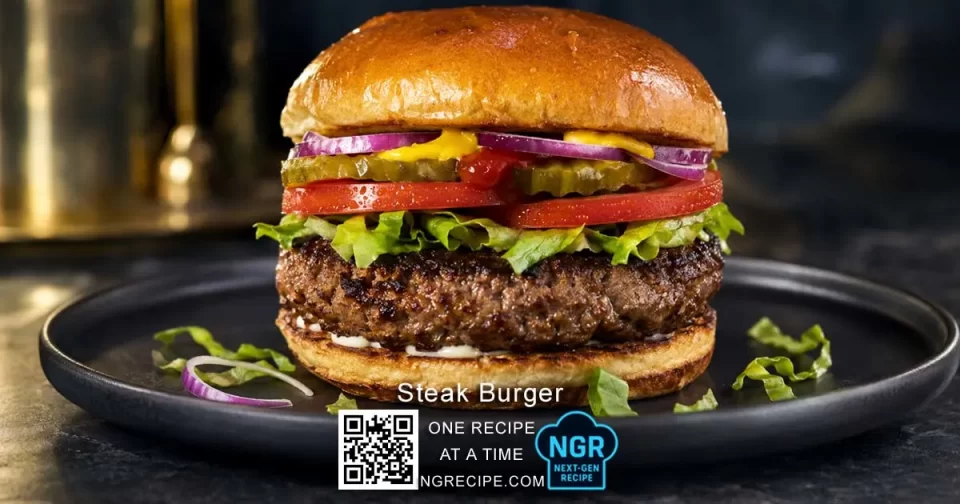
Steak Burger
This steak burger combines juicy ground chuck with beefy ground sirloin, then pan-sears the patties for a deeply browned crust. Toasted buns, crisp vegetables, pickles, and classic condiments complete a satisfying American burger that is approachable enough for beginners and flavorful enough for experienced cooks.
Quick Recipe Card
What This Recipe Is
A steak burger is an American hamburger made with carefully selected ground beef cuts chosen for robust flavor and a satisfying steakhouse character. This version blends ground chuck for moisture and richness with ground sirloin for a leaner, distinctly beefy taste.
The patties are shaped gently, seasoned immediately before cooking, and pan-seared in a hot skillet. The finished burger should have a dark brown exterior, a juicy interior, and enough structure to remain intact inside the bun.
Unlike a steak sandwich, a steak burger uses ground beef formed into a patty rather than a whole steak. The name describes the beef blend and steak-forward eating experience, not a single legally standardized formula.
Ingredients
- 400 g (14 oz) ground chuck, approximately 80% lean
- 200 g (7 oz) ground sirloin, approximately 90% lean
- 6 g (1 teaspoon) fine sea salt
- 2 g (1 teaspoon) coarsely ground black pepper
- 10 ml (2 teaspoons) neutral oil
- 15 g (1 tablespoon) unsalted butter, softened
- 4 burger buns, approximately 75 g (2.6 oz) each
- 60 g (4 tablespoons) mayonnaise
- 60 g (4 tablespoons) ketchup
- 30 g (2 tablespoons) yellow mustard
- 40 g (1.4 oz) lettuce leaves
- 120 g (4.2 oz) tomato, thinly sliced
- 60 g (2.1 oz) red onion, thinly sliced
- 60 g (2.1 oz) dill pickles, sliced
Equipment
- Large mixing bowl
- Digital kitchen scale
- Cutting board
- Sharp knife
- Large heavy skillet or cast-iron pan
- Wide spatula
- Instant-read food thermometer
- Small plate or tray
- Serving plates
Instructions
Step 1:
Place the ground chuck and ground sirloin in a large bowl. Use your fingertips to combine them gently until the two cuts are evenly distributed. Avoid squeezing, kneading, or compacting the meat.
Step 2:
Divide the beef mixture into four equal 150 g (5.3 oz) portions. Shape each portion into a patty approximately 10 cm (4 inches) wide and 2 cm (¾ inch) thick. Press a shallow indentation into the center of each patty to help it remain level during cooking.
Step 3:
Prepare the lettuce, tomato, red onion, and dill pickles. Measure the mayonnaise, ketchup, and yellow mustard so everything is ready before the patties enter the skillet.
Step 4:
Split the burger buns and spread the softened unsalted butter over their cut surfaces. Heat the skillet over medium heat and toast the buns, cut-side down, for 1–2 minutes. Remove them when the surfaces are evenly golden.
Step 5:
Increase the heat to medium-high. Add the neutral oil and heat it until it shimmers. Season both sides of the patties evenly with the fine sea salt and black pepper immediately before cooking.
Step 6:
Place the patties in the hot skillet with space between them. Cook without pressing or moving them for 3–4 minutes, until the undersides develop a dark brown crust and release easily from the pan.
Step 7:
Flip each patty once. Continue cooking for 3–5 minutes, adjusting the heat if the exterior browns too quickly. Cook until the centers reach 71°C (160°F).
Step 8:
Transfer the patties to a clean plate and let them rest for 3 minutes. This brief pause allows the hot juices to settle inside the meat.
Step 9:
Spread mayonnaise over the bottom buns. Add the lettuce, cooked patties, tomato, red onion, and dill pickles. Finish with the ketchup and yellow mustard, cover with the top buns, and serve immediately.
Visual Cooking Cues
- Properly mixed beef looks evenly blended but remains loose rather than paste-like.
- Raw patties should have rough, lightly shaped edges and a visible center indentation.
- The oil is ready when it moves easily across the skillet and appears glossy.
- A well-seared patty develops a dark brown crust without black, bitter patches.
- The first side should release from the skillet with minimal resistance when its crust is ready.
- Clear or lightly golden juices may appear on the surface as the second side cooks.
- Toasted buns should be golden at the edges while remaining soft on the outside.
- The finished patty should feel firm but retain a slight spring when gently touched.
Chef Tips
- Keep the beef cold until shaping so the fat remains dispersed throughout the patties.
- Handle the meat as little as possible. Loose shaping produces a more tender burger.
- Make each raw patty slightly wider than its bun because the meat contracts during cooking.
- Season just before the patties enter the skillet. Early salting can create a firmer, sausage-like texture.
- Preheat the skillet thoroughly to promote browning before the interior overcooks.
- Cook in batches if necessary. Crowding traps steam and weakens the crust.
- Use a wide spatula that supports the entire patty during flipping.
- Rest the cooked patties on a plate rather than inside the buns so released juices do not make the bread soggy.
- Assemble immediately before serving to preserve the contrast between the hot patty, toasted bun, and crisp vegetables.
Common Mistakes
- Overmixing the beef and producing dense, springy patties
- Using very lean beef that lacks enough fat to remain juicy
- Shaping the patties too thick for even skillet cooking
- Forgetting the center indentation and allowing the patties to swell
- Placing the meat in a skillet that has not fully preheated
- Moving the patties before a proper crust has formed
- Pressing the patties with the spatula and forcing out flavorful juices
- Flipping repeatedly instead of allowing each side to brown
- Judging doneness only by exterior color
- Building the burgers too early and making the buns soggy
Troubleshooting
- If the patties fall apart, they may have been shaped too loosely. Apply only enough pressure to hold the edges together.
- If the patties become dense, the meat was probably compressed or overmixed. Use your fingertips and stop mixing as soon as the cuts are distributed.
- If the meat sticks to the skillet, allow it to cook a little longer. A developed crust usually releases more easily.
- If the exterior burns before the center is cooked, reduce the heat to medium and continue cooking gently.
- If the patties turn gray instead of brown, the skillet may be too cool or crowded. Increase the heat and leave more space between patties.
- If the burgers taste dry, check the beef’s fat percentage, shorten the cooking time where safely possible, and avoid pressing the patties.
- If the buns become greasy, rest the cooked patties before assembly and place lettuce beneath the meat as a moisture barrier.
- If the burger slides apart, use thinner vegetable slices and distribute the condiments evenly.
Ingredient Pairings
- Ground chuck pairs naturally with ground sirloin because the chuck contributes fat while the sirloin strengthens the beef flavor.
- Black pepper reinforces the steakhouse character without covering the flavor of the meat.
- Yellow mustard supplies acidity and sharpness that balance the rich patty.
- Ketchup contributes sweetness, tomato flavor, and gentle acidity.
- Mayonnaise adds moisture and helps protect the lower bun from meat juices.
- Dill pickles provide acidity, saltiness, and crunch.
- Lettuce gives the burger a fresh, crisp layer.
- Tomato adds juiciness and mild sweetness.
- Red onion provides sharpness and a contrasting crisp texture.
- Toasted buns complement the seared crust and remain more resilient during assembly.
Substitutions
- Replace the separate ground chuck and ground sirloin with 600 g (1 lb 5 oz) of ground beef containing approximately 15–20% fat.
- Replace fine sea salt with an equal weight of another fine cooking salt.
- Replace the neutral oil with another high-heat cooking oil.
- Use dairy-free spread instead of unsalted butter for a dairy-free adaptation.
- Use gluten-free burger buns for a gluten-free adaptation.
- Use egg-free mayonnaise when avoiding eggs.
- Replace red onion with thinly sliced white or yellow onion for a milder or sharper onion profile.
- Replace dill pickles with another unsweetened cucumber pickle when necessary.
Recipe Family Variations
- Double Steak Burger
- Smash Steak Burger
- Grilled Steak Burger
Serving Suggestions
- Serve each steak burger immediately while the patty is hot and the vegetables remain crisp. Suitable accompaniments include oven-baked fries, potato wedges, a simple green salad, coleslaw, grilled corn, or crisp vegetable sticks.
- For casual gatherings, arrange the vegetables and condiments separately so each person can assemble a burger to taste. Keep the patties hot and covered loosely until serving, but avoid leaving them enclosed long enough to soften their crust.
Dietary Classification
This is a beef-based, high-protein main course. It is not vegetarian or vegan.
The standard recipe contains gluten from the burger buns, dairy from the butter, and commonly egg from the mayonnaise. Individual bun and condiment formulations can contain additional allergens, so packaged ingredients should be checked when cooking for someone with dietary restrictions.
The recipe can be adapted for gluten-free, dairy-free, or egg-free diets by selecting suitable replacements. It is not inherently suitable for low-sodium diets because the salt, buns, pickles, and condiments collectively contribute substantial sodium.
Nutrition Information
Approximate nutrition per serving:
- Calories: 680
- Protein: 35 g
- Carbohydrates: 45 g
- Fat: 40 g
- Saturated Fat: 13 g
- Fiber: 3 g
- Sugar: 10 g
- Sodium: 1,320 mg
Storage / Reheating
Store cooked patties separately from the buns, vegetables, and condiments. Refrigerate the patties in a covered container within 2 hours of cooking and use them within 3 days.
Raw shaped patties can be refrigerated for 1–2 days in a tightly covered container. Keep them on the lowest refrigerator shelf to prevent contact with ready-to-eat foods.
For longer storage, freeze cooked or uncooked patties individually wrapped for up to 3 months. Thaw frozen patties safely in the refrigerator.
Reheat cooked patties in a covered skillet over medium-low heat until the centers reach 74°C (165°F). A small amount of trapped steam can help warm the centers, but uncover the skillet briefly at the end to reduce surface moisture.
Reassemble reheated patties with freshly toasted buns, fresh vegetables, and newly added condiments. Fully assembled burgers do not freeze or reheat well because the vegetables soften and the buns absorb moisture.
FAQ
What makes a steak burger different from an ordinary hamburger?
A steak burger emphasizes a flavorful blend of ground beef cuts associated with steak, such as sirloin, while still retaining enough fat for juiciness. It remains a type of hamburger because its beef is ground and formed into a patty.
Is a steak burger made from a whole steak?
No. A whole steak served in bread is a steak sandwich. A steak burger is made from ground beef, although the beef may include cuts commonly sold as steaks.
Can I use only ground sirloin?
Yes, but ground sirloin is usually leaner than ground chuck. A patty made entirely from lean sirloin can cook more quickly and may be less juicy, so careful heat and time control become especially important.
Why should I make an indentation in each patty?
The center indentation compensates for the contraction that occurs during cooking. It reduces swelling in the middle and helps the patty finish with a flatter, more even shape.
Should I add salt to the beef before shaping?
For this style, season the outside immediately before cooking. Mixing salt throughout the meat can dissolve muscle proteins and create a tighter, springier texture.
Why should I not press the patties while they cook?
Pressing forces rendered fat and meat juices into the skillet. This can reduce moisture inside the patty and create flare-ups when cooking over an open flame.
Can I cook these steak burgers on a grill?
Yes. Cook the patties over a thoroughly preheated grill, turn them once when a crust develops, and verify that the centers reach 71°C (160°F). The primary recipe remains pan-seared.
How do I know when the burgers are safely cooked?
Insert an instant-read thermometer sideways into the center of each patty. Ground beef should reach 71°C (160°F).
Can I prepare the patties ahead of time?
Yes. Shape the patties, cover them, and refrigerate them for up to one day. Season their surfaces only when the skillet is ready.
Why are my burgers smaller than the buns after cooking?
Beef contracts as its proteins tighten and its fat renders. Shape the raw patties slightly wider than the buns to account for this expected shrinkage.
Why This Recipe Works
Ground chuck supplies the fat needed for moisture, richness, and effective browning. Ground sirloin contributes a pronounced beef flavor without making the blend excessively fatty. Their combination gives the burger a balanced steakhouse character.
Gentle handling preserves small spaces within the ground meat. These spaces create a more tender bite than tightly compressed patties.
A hot skillet rapidly evaporates surface moisture and promotes browning. Leaving the first side undisturbed allows a stable crust to form before flipping.
The center indentation controls the patty’s shape as the meat contracts. Resting after cooking reduces the immediate flow of juices when the burger is assembled.
Finally, toasted bread and deliberately layered vegetables manage moisture. The rich patty is balanced by acidic pickles and mustard, sweet ketchup, creamy mayonnaise, and fresh vegetables.
Recipe Identity
The defining identity of this dish is a ground-beef patty with a steak-forward beef blend, cooked as a hamburger and served in a split bun.
Its essential structural elements are:
- A patty made from ground beef cuts selected for flavor and sufficient fat
- Direct high-heat cooking that creates a browned exterior
- A burger bun that encloses the patty
- Condiments or fresh components used in supporting roles
A whole piece of steak served in bread belongs to the steak-sandwich family and falls outside this recipe’s boundary. Likewise, a meatloaf-style patty containing substantial binders represents a different preparation structure.
Dish Classification
Steak burger is classified as an American main-course burger within the broader hamburger family. Its principal protein is beef, its primary structural form is a ground-meat patty, and its standard serving format is a handheld sandwich assembled in a burger bun.
It can function as lunch or dinner and is particularly suited to casual meals, family gatherings, game-day menus, cookouts, and restaurant-inspired home cooking.
Recipe History
The steak burger developed within the broader American hamburger tradition. As hamburgers became established in restaurants and home kitchens, cooks and food businesses increasingly distinguished certain burgers through their beef cuts, patty quality, preparation techniques, and steakhouse presentation.
The term came to suggest a burger with an especially beef-forward character, often involving ground sirloin, chuck, round, or another steak-associated cut. However, the name never developed one universally fixed formula.
Modern steak burgers range from thin, crisp-edged patties to thicker steakhouse-style versions. What connects them is their identity as ground-beef hamburgers designed to emphasize meat quality and pronounced beef flavor.
Cultural Notes
In American food culture, the steak burger often occupies a middle position between an everyday hamburger and a formal steakhouse meal. It offers the familiar, handheld format of a burger while signaling attention to beef selection, browning, and presentation.
The name may carry different meanings between households, diners, restaurants, and regions. Some versions use a single beef cut, while others rely on a blend. Some are griddled thin, and others are formed into thicker patties.
Because the term is flexible, clarity comes from describing the actual beef blend and cooking technique rather than assuming every steak burger follows the same formula.
Culinary Context
This recipe uses the practical strengths of skillet burger cooking: close temperature control, reliable surface contact, and efficient crust development. It is suitable for home kitchens where an outdoor grill may not be available.
The ground chuck and sirloin blend connects classic hamburger technique with steakhouse flavor priorities. Traditional condiments remain restrained enough to support the beef rather than overwhelm it.
Within a wider meal, the burger works best with fresh, crisp, acidic, or lightly seasoned sides that counterbalance its richness.
Advanced Cooking Knowledge Open detailed cooking science and reference notes
Flavor, Texture, and Aroma Profile
The dominant flavor is deeply savory beef with a pronounced roasted character from pan-searing. Ground sirloin contributes a clean, steak-forward taste, while ground chuck supplies richer, fattier notes.
The exterior should be browned and lightly crisp. The center should remain juicy, tender, and cohesive without becoming rubbery.
Toasted buttered buns contribute a warm, nutty aroma. Black pepper adds gentle pungency, while the pickles, mustard, onion, and tomato create fresh, acidic aromatic contrasts.
Flavor Balance
Richness comes from the beef fat, mayonnaise, and butter. Acidity from the mustard, ketchup, tomato, and dill pickles prevents that richness from feeling heavy.
Salt strengthens the natural savoriness of the beef. Mild sweetness from the bun and ketchup rounds out the sharper mustard, onion, and pickle flavors.
The fresh lettuce and tomato lighten the overall profile, while black pepper reinforces the burger’s steakhouse character.
Flavor Components
- Savory: Ground chuck and ground sirloin
- Rich: Beef fat, mayonnaise, and unsalted butter
- Salty: Fine sea salt, dill pickles, and prepared condiments
- Acidic: Yellow mustard, ketchup, tomato, and dill pickles
- Sweet: Burger buns, tomato, and ketchup
- Pungent: Black pepper, yellow mustard, and red onion
- Fresh: Lettuce, tomato, and red onion
- Toasted: Seared beef crust and buttered buns
Ingredient Notes
Ground chuck is valued for its fat content and deep beef flavor. An approximately 80% lean blend offers enough fat to keep a skillet-cooked patty moist.
Ground sirloin is leaner and contributes a distinct, clean beef flavor. Combining it with chuck prevents the final texture from becoming excessively fatty or dry.
Fine sea salt distributes evenly across the patty surface. Coarsely ground black pepper contributes noticeable aroma and gentle heat.
Neutral oil supports high-temperature searing without introducing a dominant flavor. Unsalted butter is reserved for the buns, where its milk solids encourage flavorful browning.
The vegetables should be dry before assembly. Excess surface moisture can soften the toasted buns and cause the layers to slide.
Ingredient Science
Ground meat exposes more surface area than an intact steak. This supports rapid browning but also makes complete cooking and careful handling especially important.
Fat melts during cooking, lubricating the meat’s protein structure and carrying flavor compounds. Too little fat can produce a dry burger, while excessive fat can cause substantial shrinkage.
Salt applied to the surface seasons the crust without extensively changing the internal protein structure. When salt is mixed deeply into ground meat and left to rest, it can encourage a tighter texture.
A dry patty surface browns more effectively because less energy is spent evaporating water. Direct contact with a hot skillet then promotes the reactions responsible for roasted color, aroma, and flavor.
Ingredient Roles
- Ground chuck: Supplies moisture, fat, structure, and rich beef flavor
- Ground sirloin: Adds lean structure and a pronounced steak-like beef character
- Fine sea salt: Seasons the beef and strengthens savory perception
- Black pepper: Adds aroma and mild pungency
- Neutral oil: Improves skillet contact and reduces sticking
- Unsalted butter: Promotes bun browning and adds richness
- Burger buns: Hold the assembled components and absorb controlled amounts of juice
- Mayonnaise: Adds creaminess and forms a moisture barrier
- Ketchup: Provides sweetness, acidity, and tomato flavor
- Yellow mustard: Adds acidity and sharpness
- Lettuce: Contributes freshness and crisp texture
- Tomato: Adds moisture, acidity, and mild sweetness
- Red onion: Adds pungency and crunch
- Dill pickles: Supply saltiness, acidity, and crispness
Ingredient Classification
- Primary protein: Ground chuck and ground sirloin
- Cooking fat: Neutral oil
- Dairy component: Unsalted butter
- Bread component: Burger buns
- Creamy condiment: Mayonnaise
- Tomato condiment: Ketchup
- Sharp condiment: Yellow mustard
- Leafy component: Lettuce
- Fresh produce: Tomato and red onion
- Pickled component: Dill pickles
- Primary seasonings: Fine sea salt and black pepper
Preparation Techniques
Gentle mixing distributes the beef cuts without creating a compressed paste. Equal portioning promotes consistent cooking among all four patties.
Light shaping preserves tenderness, while smoothing unstable cracks around the edges keeps the patties intact. The shallow center indentation manages contraction during cooking.
Preparing the vegetables and condiments before searing supports efficient assembly. The cooked patties can then be served while their crust and interior are at their best.
Cooking Techniques
Pan-searing uses direct contact with a hot skillet to create an evenly browned crust. The meat is cooked mostly undisturbed and flipped only after the first side releases naturally.
Toasting strengthens the cut surfaces of the buns, adds flavor, and slows moisture absorption.
Resting gives the temperature and internal juices a brief opportunity to redistribute. Final assembly places the lettuce beneath the patty to help protect the lower bun.
Heat Management
Begin with medium heat for the buttered buns so their surfaces brown without scorching. Remove them before increasing the skillet to medium-high for the patties.
The skillet must be hot enough to brown the meat quickly but not so hot that the exterior burns before the center cooks. If smoke becomes excessive or the crust darkens too rapidly, reduce the heat to medium.
A heavy skillet retains heat better when cold patties are added. When using a lighter pan, cooking in batches may be necessary to prevent a sharp temperature drop.
Texture Development
Minimal handling produces a looser protein structure and a tender bite. Compacting the beef removes small spaces and makes the cooked patty denser.
A hot, dry cooking surface creates the desired crust. Moving the patty too soon interrupts this development and may tear its surface.
Resting preserves more moisture inside the meat. Toasted buns, crisp pickles, lettuce, onion, and tomato create contrast with the juicy patty.
Cooking Time Control
Patty thickness, starting temperature, skillet material, and stove strength can all change the required cooking time. The stated times are practical estimates rather than substitutes for temperature verification.
Begin checking the centers after approximately 6 total minutes of cooking. Insert the thermometer from the side so its sensing area reaches the middle of the patty.
Continue cooking until each patty reaches 71°C (160°F). Thicker patties may require lower heat and additional time after their crusts have formed.
Flavor Pairing Logic
Beef benefits from ingredients that either reinforce savoriness or cut through richness. Black pepper reinforces the steakhouse profile, while mustard and pickles provide the acidity needed to balance rendered beef fat.
Mayonnaise contributes creaminess without strong sweetness. Ketchup supplies a familiar sweet-acidic bridge between the rich meat and fresh tomato.
Onion brings pungency, lettuce adds crisp neutrality, and tomato contributes fresh acidity. The toasted bun connects these contrasting elements through mild sweetness and roasted flavor.
Leftover Ideas
Chop reheated leftover patties and serve them over a crisp salad with the remaining tomato, red onion, and pickles.
Crumble the cooked beef into a warm grain bowl or fold it into a simple breakfast hash. Keep the flavor additions restrained so the original beef character remains recognizable.
Leftover toasted buns can be cut into cubes and dried for bread crumbs or crisp salad toppings. Unused fresh vegetables can be added to sandwiches or side salads.
Cooking Safety Notes
Keep raw ground beef refrigerated until shortly before cooking. Wash hands thoroughly after handling it and clean every surface or utensil that contacts the raw meat.
Use separate plates for raw and cooked patties. Never return cooked burgers to an unwashed tray that previously held raw beef.
Cook every patty to an internal temperature of 71°C (160°F). Check through the side of the patty to reach its center accurately.
Refrigerate leftovers within 2 hours, or within 1 hour in very hot conditions. Reheat cooked patties to 74°C (165°F).
Sustainability Notes
Buy only the amount of beef required and freeze unused portions promptly to prevent food waste. Choosing locally appropriate beef options and using smaller, accurately portioned patties can reduce unnecessary consumption.
Use the lettuce, tomato, onion, and pickles across additional meals so opened ingredients are not discarded. Vegetable trimmings that remain clean and suitable can be reserved for other preparations or composted.
Toast only the buns needed for the current meal. Untoasted extras retain better quality for later use or freezing.
Recipe Classification
Primary dish type: Burger
Parent family: Hamburger
Specific recipe identity: Steak Burger
Cuisine: American
Country: United States
Meal role: Main Course
Primary protein: Beef
Primary dairy: Unsalted Butter
Bread component: Burger Buns
Fresh components: Lettuce, Tomato, Red Onion
Pickled component: Dill Pickles
Condiment profile: Mayonnaise, Ketchup, Yellow Mustard
Cooking methods: Pan-Searing, Toasting, Assembling
Serving style: Hot Assembled Burger
Difficulty level: Easy
Occasions: Weeknight Dinner, Family Dinner, Game Day, Cookout
