Beer-Battered Fish and Chips
A classic British favorite featuring flaky white fish coated in a light, crispy beer batter, served with golden fried chips. This dish is known for its crunchy exterior, tender interior, and satisfying balance of flavors.
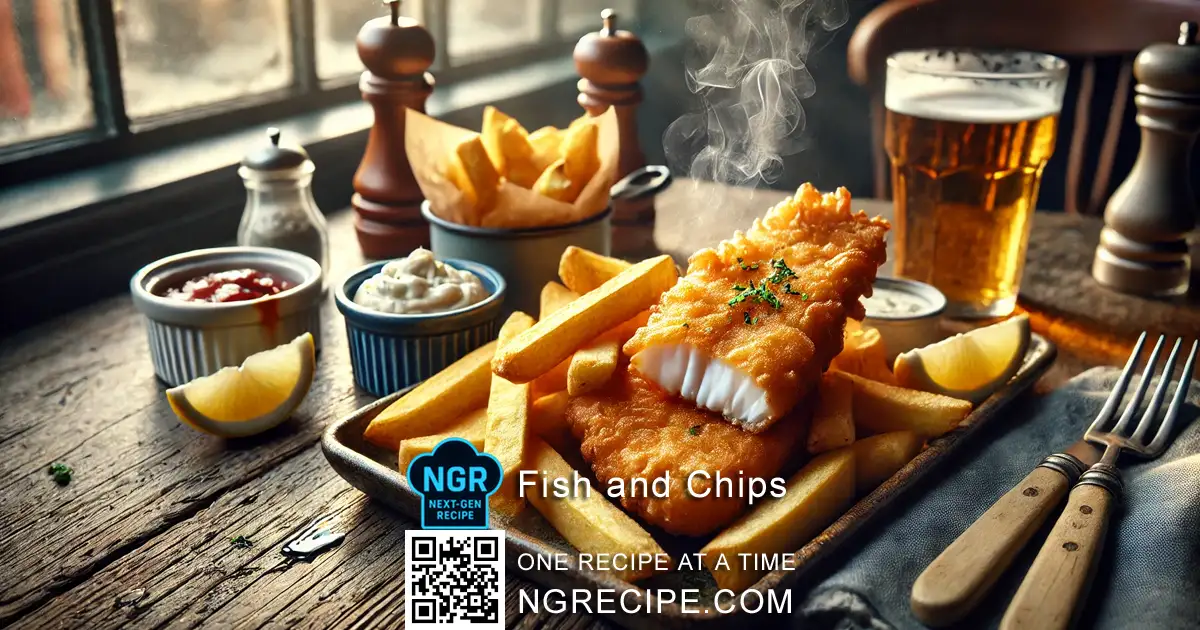
Quick Recipe Card
What This Recipe Is
Beer-Battered Fish and Chips is a deep-fried seafood dish where fresh white fish fillets are coated in a beer-based batter and fried until crisp, paired with thick-cut fried potatoes (chips).
Ingredients
- 4 white fish fillets (cod or haddock), about 150 g each (5 oz)
- 800 g potatoes, peeled and cut into thick chips (1.8 lb)
- 150 g all-purpose flour (1 cup)
- 40 g cornstarch (1/3 cup)
- 250 ml cold beer (1 cup)
- 5 g baking powder (1 tsp)
- 5 g salt (1 tsp)
- 2 g black pepper (1/2 tsp)
- 1 L vegetable oil for frying (4 cups)
Equipment
- Deep frying pan or fryer
- Slotted spoon
- Mixing bowl
- Knife and cutting board
- Thermometer (recommended)
- Paper towels
Instructions
Step 1:
Heat oil to 150°C (300°F). Fry potatoes for 5–6 minutes until soft but not browned. Remove and rest.
Step 2:
Increase oil temperature to 180°C (356°F).
Step 3:
In a bowl, mix flour, cornstarch, baking powder, salt, and pepper.
Step 4:
Gradually whisk in cold beer to form a smooth batter.
Step 5:
Pat fish fillets dry and lightly dust with flour.
Step 6:
Dip fish into batter, coating evenly.
Step 7:
Fry fish in hot oil for 4–6 minutes until golden and crisp. Remove and drain.
Step 8:
Fry chips again at 180°C (356°F) for 3–4 minutes until golden and crispy.
Step 9:
Drain chips and season with salt.
Step 10:
Serve fish and chips hot.
Visual Cooking Cues
- Batter turns golden and crisp
- Fish floats when nearly cooked
- Chips become deep golden with crisp edges
Chef Tips
- Keep batter cold for best texture
- Use fresh oil for clean flavor
- Serve immediately for maximum crispness
Common Mistakes
- Oil too cold causing soggy batter
- Overmixing batter leading to toughness
- Wet fish preventing batter adhesion
Troubleshooting
- Batter not crisp: Ensure oil is hot and batter is cold
- Fish breaking: Handle gently and avoid overcrowding
- Greasy texture: Maintain proper oil temperature
Ingredient Pairings
- Lemon wedges
- Malt vinegar
- Tartar sauce
Substitutions
- Beer → sparkling water (non-alcoholic)
- Cod → haddock, pollock
- Cornstarch → rice flour
Recipe Family Variations
- Spiced batter with paprika or garlic powder
- Gluten-free version using rice flour
- Air fryer adaptation (less traditional)
Serving Suggestions
- Serve with lemon wedges and tartar sauce
- Pair with coleslaw or mushy peas
Dietary Classification
- Pescatarian
- Not gluten-free (unless modified)
- Not low-fat
Nutrition Information
- Calories: ~650 kcal
- Protein: ~30 g
- Fat: ~35 g
- Carbohydrates: ~55 g
- Fiber: ~5 g
- Sodium: ~600 mg
Storage / Reheating
Storage
- Best eaten fresh
- Refrigerate leftovers up to 2 days
Reheating
- Reheat in oven at 180°C (356°F) for 10 minutes
- Avoid microwaving to maintain crispness
FAQ
Can I make batter without beer?
Yes, use sparkling water for similar lightness.
Why is my batter not crispy?
Oil may be too cold or batter too warm.
Can I bake instead of fry?
Yes, but texture will differ significantly.
Why This Recipe Works
- Carbonation in beer creates a light, airy batter
- Cold batter helps achieve crispiness
- Proper oil temperature ensures even frying without greasiness
- Starch from potatoes forms a crisp exterior with soft centers
Recipe Identity
- Origin: United Kingdom
- Core Technique: Deep frying with aerated batter
- Signature Element: Light, crispy beer-infused coating
Dish Classification
- Dish type: Fried seafood dish
- Course: Main course
- Meal type: Lunch, Dinner
- Traditional or modern dish: Traditional
- Street food or home cooking: Both
- Festival or everyday food: Everyday food
Recipe History
Fish and chips became popular in the United Kingdom in the 19th century, combining fried fish introduced by Jewish immigrants with chipped potatoes. Beer batter evolved as a way to create a lighter, crispier coating using carbonation.
Cultural Notes
- Traditionally wrapped in paper in the UK
- Often served with malt vinegar and salt
Advanced Cooking Knowledge Open detailed cooking science and reference notes
Flavor, Texture, and Aroma Profile
- Flavor: Mild, savory, slightly malty
- Texture: Crispy exterior, flaky fish, soft interior chips
- Aroma: Warm fried notes with subtle beer fragrance
Flavor Balance
- Salt enhances the fish and batter
- Mild sweetness from malt in beer
- Light bitterness from beer balances richness
Flavor Components
- Sweet: Mild (from beer malt)
- Salt: Moderate
- Acid: Optional (lemon or vinegar when serving)
- Bitter: Light (beer)
- Umami: From fish
- Aromatic elements: Fried batter, malt aroma
Ingredient Notes
- Use firm white fish like cod or haddock
- Choose starchy potatoes (e.g., Russet) for best texture
- Cold beer improves batter crispness
Ingredient Science
- Beer carbonation creates bubbles, making batter light
- Cornstarch reduces gluten formation, improving crispness
- Baking powder adds additional aeration
Ingredient Roles
- Fish: Main protein
- Flour: Structure for batter
- Cornstarch: Crisp texture
- Beer: Flavor and aeration
- Baking powder: Lift
- Potatoes: Carbohydrate base
- Oil: Cooking medium
Ingredient Classification
- Protein: Fish
- Carbohydrate: Potatoes, flour
- Fat: Oil
- Flavoring: Beer, salt, pepper
Preparation Techniques
- Cutting potatoes evenly for uniform cooking
- Patting fish dry before battering
- Mixing batter lightly to avoid overdeveloping gluten
Cooking Techniques
- Double frying chips for crisp texture
- Deep frying fish at controlled temperature
- Batter coating immediately before frying
Heat Management
- Low heat stages: Initial potato cooking at ~150°C (300°F)
- Medium heat stages: Resting between fries
- High heat stages: Final fry at ~180°C (356°F)
- Temperature cues: Oil bubbles actively but not smoking
Texture Development
- Chips: Soft interior, crisp exterior from double frying
- Fish: Airy batter with crunchy crust
Cooking Time Control
- Do not overcrowd fryer
- Fry fish 4–6 minutes until golden
- Chips require two-stage frying
Flavor Pairing Logic
- Acid cuts through fried richness
- Salt enhances crispy elements
- Mild sauces complement fish without overpowering
Global Variations
- Australian fish and chips with chicken salt
- Irish versions often served with mushy peas
- Canadian versions may include gravy sides
Leftover Ideas
- Fish tacos
- Fish sandwich
- Loaded fish fries
Cooking Safety Notes
- Monitor oil temperature to avoid overheating
- Do not overcrowd fryer to prevent splashing
Sustainability Notes
- Choose sustainably sourced fish (e.g., MSC-certified)
- Use local potatoes when possible
