Gluten-Free Fish and Chips
A crisp, golden, and satisfying take on the British classic—this gluten-free fish and chips delivers all the crunch and flavor without wheat, using a light, airy batter that fries beautifully and stays crisp.
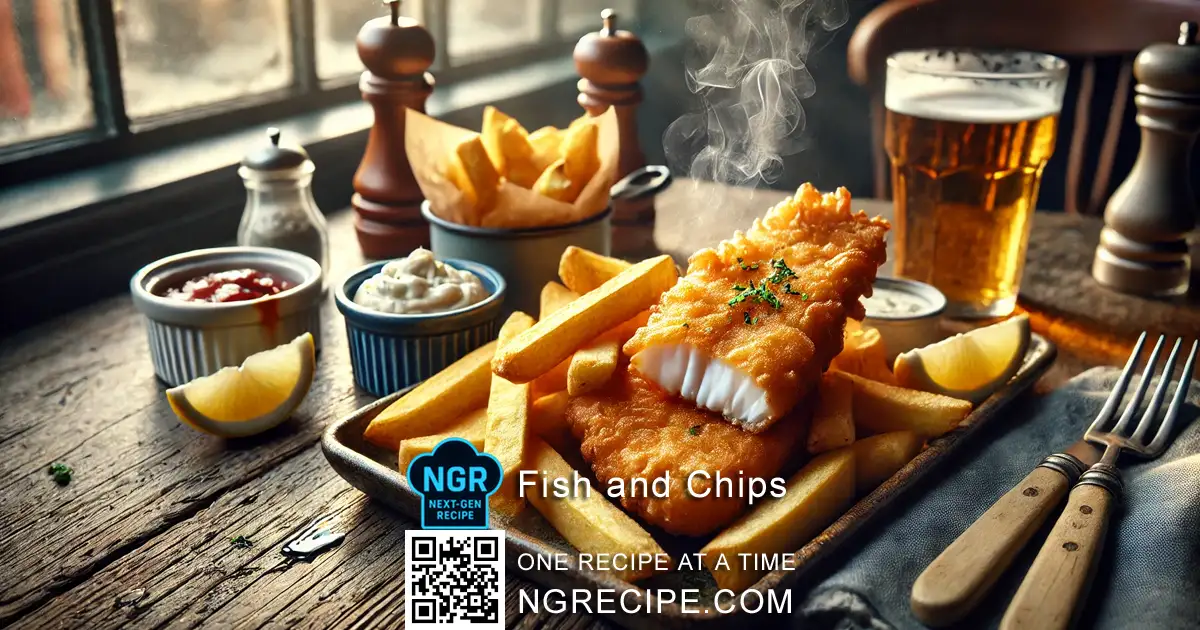
Quick Recipe Card
What This Recipe Is
A gluten-free adaptation of traditional fish and chips using rice flour and cornstarch batter for a light, crisp coating paired with perfectly fried chips.
Ingredients
- 600 g (1.3 lb) white fish fillets (cod or haddock)
- 800 g (1.75 lb) potatoes, peeled and cut into chips
- 120 g (1 cup) rice flour
- 40 g (1/3 cup) cornstarch
- 1 tsp salt (5 g)
- 240 ml (1 cup) sparkling water (cold)
- 1 L (4 cups) vegetable oil for frying
Equipment
- Deep frying pan or fryer
- Mixing bowl
- Whisk
- Slotted spoon
- Thermometer (recommended)
- Paper towels
Instructions
Step 1:
Heat oil to 150°C (300°F) and fry potatoes for 5 minutes until soft but not browned. Remove and set aside.
Step 2:
Increase oil temperature to 180°C (356°F).
Step 3:
In a bowl, mix rice flour, cornstarch, and salt.
Step 4:
Add cold sparkling water and whisk into a smooth batter.
Step 5:
Dip fish fillets into the batter, ensuring full coating.
Step 6:
Carefully place fish into hot oil and fry for 5–7 minutes until golden and crisp.
Step 7:
Remove fish and drain on paper towels.
Step 8:
Fry chips again at 180°C (356°F) for 3–4 minutes until golden and crispy.
Step 9:
Drain chips and season with salt.
Step 10:
Serve immediately with fish.
Visual Cooking Cues
- Batter turns golden and crisp
- Fish floats when cooked
- Chips develop golden edges
Chef Tips
- Keep batter cold for best texture
- Fry in small batches to maintain oil temperature
- Do not overcrowd the pan
Common Mistakes
- Oil too cold causing soggy coating
- Overmixing batter leading to dense texture
- Wet fish preventing batter adhesion
Troubleshooting
- Soggy batter: Increase oil temperature
- Batter falling off: Dry fish thoroughly
- Chips too soft: Double fry properly
Ingredient Pairings
- Lemon wedges
- Malt vinegar
- Tartar sauce
Substitutions
- Rice flour → chickpea flour (different flavor)
- Cornstarch → potato starch
- Cod → tilapia or pollock
Recipe Family Variations
- Add spices like paprika to batter
- Use sweet potatoes for chips
Serving Suggestions
- Serve hot with lemon and dipping sauce
- Pair with simple salad
Dietary Classification
- Gluten-free
- Dairy-free
Nutrition Information
- Calories: ~520 kcal
- Protein: ~28 g
- Fat: ~24 g
- Carbohydrates: ~48 g
- Fiber: ~4 g
- Sodium: ~600 mg
Storage / Reheating
Storage
- Store in refrigerator up to 2 days
Reheating
- Reheat in oven at 180°C (356°F) until crisp
- Avoid microwave to prevent sogginess
FAQ
Can I bake instead of fry?
Yes, but texture will differ
Can I use still water?
Sparkling water is recommended for crispness
Why is my batter not crispy?
Oil temperature may be too low
Why This Recipe Works
- Rice flour and cornstarch create a crisp, gluten-free coating
- Sparkling water adds airiness and lightness
- Proper oil temperature prevents soggy results
Recipe Identity
- Classic British comfort food made gluten-free
- Deep-fried fish with crispy potato chips
- Designed to maintain authentic texture and flavor without gluten
Dish Classification
- Dish type: Fried seafood dish
- Course: Main course
- Meal type: Lunch or dinner
- Traditional or modern dish: Traditional with dietary adaptation
- Street food or home cooking: Both
- Festival or everyday food: Everyday comfort food
Recipe History
Fish and chips originated in the United Kingdom in the 19th century. This version adapts the classic batter to suit gluten-free diets while maintaining the signature crisp texture.
Cultural Notes
- Maintains British tradition while adapting for gluten-free diets
Advanced Cooking Knowledge Open detailed cooking science and reference notes
Flavor, Texture, and Aroma Profile
- Flavor: Mild, savory, slightly salty
- Texture: Crisp exterior, flaky fish, soft interior chips
- Aroma: Light fried aroma with subtle grain notes
Flavor Balance
- Balanced saltiness with neutral fish flavor
- Light crisp coating enhances natural taste
Flavor Components
- Sweet: Minimal (from potatoes)
- Salt: Moderate
- Acid: Optional (lemon or vinegar when serving)
- Bitter: None
- Umami: Present in fish
- Aromatic elements: Light grain and fried aroma
Ingredient Notes
- Use firm white fish to prevent breaking
- Cold sparkling water ensures lighter batter
- Starchy potatoes give better crisp chips
Ingredient Science
- Rice flour provides crispness without gluten
- Cornstarch reduces batter density and improves crunch
- Carbonation creates bubbles for airy texture
Ingredient Roles
- Fish: Protein base
- Potatoes: Carbohydrate component
- Rice flour: Structure
- Cornstarch: Crispness enhancer
- Sparkling water: Leavening effect
- Oil: Cooking medium
Ingredient Classification
- Protein: Fish
- Starch: Potatoes, rice flour
- Binder: Cornstarch
- Liquid: Sparkling water
- Fat: Oil
Preparation Techniques
- Cut potatoes evenly for uniform cooking
- Pat fish dry to help batter stick
- Keep batter cold
Cooking Techniques
- Double frying for chips (optional for extra crispness)
- Deep frying fish in hot oil
- Immediate draining to avoid sogginess
Heat Management
- Low heat stages: Preheating oil
- Medium heat stages: Initial chip frying (150°C / 300°F)
- High heat stages: Final frying (180°C / 356°F)
- Temperature cues: Oil bubbles actively but not smoking
Texture Development
- Crisp batter from high heat
- Flaky fish interior from proper cooking time
- Soft inside chips with crisp exterior
Cooking Time Control
- Fish cooks in 5–7 minutes
- Chips fry in two stages (5 + 3 minutes)
Flavor Pairing Logic
- Acid cuts through fried richness
- Salt enhances crispness and flavor
Global Variations
- Australian: Served with chicken salt
- Indian-inspired: Add spices to batter
- American: Serve with coleslaw
Leftover Ideas
- Fish tacos
- Fish sandwich
Cooking Safety Notes
- Monitor oil temperature carefully
- Avoid water contact with hot oil
Sustainability Notes
- Use sustainably sourced fish
- Reuse oil responsibly
