Margherita Pizza
A classic Italian pizza featuring a soft, airy crust topped with vibrant tomato sauce, creamy mozzarella, and fresh basil—simple ingredients that create a perfectly balanced and iconic dish.
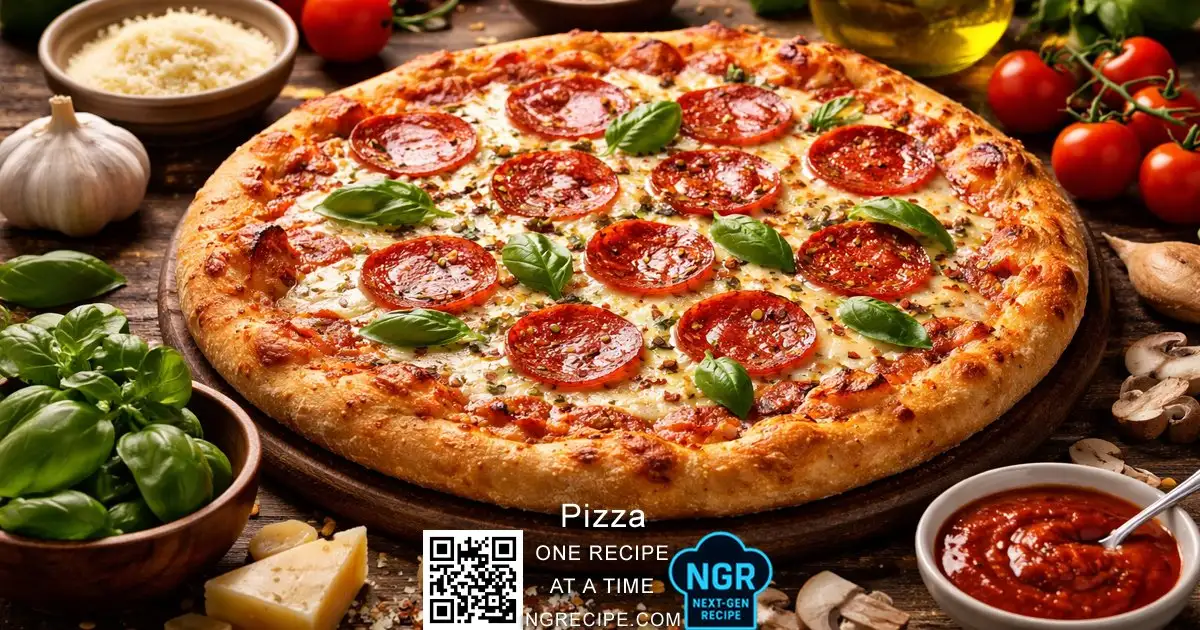
Quick Recipe Card
What This Recipe Is
Margherita Pizza is a traditional Neapolitan-style pizza known for its minimal ingredients and focus on high-quality components. It highlights the natural flavors of tomato, cheese, and herbs over a lightly charred, soft crust.
Ingredients
- 500 g (4 cups) bread flour
- 325 ml (1⅓ cups) water
- 7 g (2¼ tsp) dry yeast
- 10 g (2 tsp) salt
- 10 ml (2 tsp) olive oil
- 200 g (7 oz) canned crushed tomatoes
- 250 g (9 oz) fresh mozzarella cheese
- Fresh basil leaves (10–12 leaves)
- 5 ml (1 tsp) olive oil for topping
Equipment
- Mixing bowl
- Oven or pizza oven
- Baking stone or tray
- Rolling pin or hands for shaping
- Pizza peel (optional)
Instructions
Step 1:
Mix flour, yeast, and water until combined.
Step 2:
Add salt and knead until smooth and elastic (8–10 minutes).
Step 3:
Cover and let the dough rise for 2–24 hours.
Step 4:
Divide dough into two portions and shape into balls.
Step 5:
Preheat oven to 250–300°C (480–570°F).
Step 6:
Stretch dough into a thin round base.
Step 7:
Spread crushed tomatoes evenly over the base.
Step 8:
Add sliced mozzarella cheese.
Step 9:
Bake for 8–10 minutes until crust is golden and cheese melted.
Step 10:
Remove from oven, add basil leaves and drizzle olive oil.
Visual Cooking Cues
- Dough doubles in size after fermentation
- Crust bubbles and puffs during baking
- Cheese fully melted with slight browning
Chef Tips
- Use very hot oven for best results
- Do not overload toppings
- Let dough rest for easier stretching
Common Mistakes
- Using too much sauce causing sogginess
- Underheated oven leading to dense crust
- Overworking dough reducing air pockets
Troubleshooting
- Dough too sticky: Add small amount of flour
- Dough not rising: Check yeast activity
- Soggy base: Reduce sauce and increase oven heat
Ingredient Pairings
- Olive oil
- Garlic
- Parmesan cheese
- Fresh salads
Substitutions
- Mozzarella: Use low-moisture mozzarella if needed
- Fresh basil: Substitute dried basil (less ideal)
- Bread flour: Use all-purpose flour
Recipe Family Variations
- Add garlic-infused oil
- Use buffalo mozzarella
- Thin crust or thicker crust styles
Serving Suggestions
- Serve hot immediately
- Pair with light salad or soft drinks
Dietary Classification
- Vegetarian
Nutrition Information
Approximate per serving:
- Calories: 800
- Protein: 30 g
- Fat: 25 g
- Carbohydrates: 100 g
- Fiber: 4 g
- Sodium: 900 mg
Storage / Reheating
Storage
- Store leftovers in refrigerator up to 2 days
Reheating
- Reheat in oven at 180°C (350°F) for best texture
FAQ
Can I use instant yeast?
Yes, same quantity can be used.
Why is my crust not crispy?
Oven temperature may be too low.
Can I freeze the dough?
Yes, after first fermentation.
Why This Recipe Works
- High hydration dough creates an airy crust
- Fermentation develops flavor and elasticity
- Simple toppings prevent sogginess
- High heat baking ensures quick cooking and proper texture
Recipe Identity
- Origin: Naples, Italy
- Style: Neapolitan pizza
- Core Elements: Dough, tomato sauce, mozzarella, basil, olive oil
Dish Classification
- Dish type: Pizza
- Course: Main course
- Meal type: Lunch, Dinner
- Traditional or modern dish: Traditional
- Street food or home cooking: Both
- Festival or everyday food: Everyday food
Recipe History
Margherita Pizza originated in Naples and is often associated with the colors of the Italian flag—red (tomato), white (mozzarella), and green (basil). It represents one of the purest forms of Italian pizza-making tradition.
Cultural Notes
- Authentic Neapolitan pizza uses minimal toppings
- Simplicity is key to quality
Advanced Cooking Knowledge Open detailed cooking science and reference notes
Flavor, Texture, and Aroma Profile
- Flavor: Fresh, slightly tangy, creamy, and mildly sweet
- Texture: Soft and airy crust with a slightly crisp edge, melted cheese
- Aroma: Herbaceous basil, baked dough, rich tomato
Flavor Balance
Balanced between acidity (tomato), creaminess (mozzarella), and subtle sweetness (dough fermentation).
Flavor Components
- Sweet: Light natural sweetness from dough and tomato
- Salt: Cheese and added salt
- Acid: Tomato sauce
- Bitter: Minimal, slight from basil
- Umami: Tomato and cheese
- Aromatic elements: Basil, olive oil
Ingredient Notes
- Use high-protein flour for better gluten development
- Fresh mozzarella provides optimal melt and moisture
- San Marzano-style tomatoes are preferred for authenticity
Ingredient Science
- Yeast ferments sugars to produce gas, creating airy dough
- Gluten formation gives structure and chew
- Moisture balance prevents soggy crust
Ingredient Roles
- Flour: Structure
- Water: Hydration and gluten formation
- Yeast: Leavening
- Salt: Flavor and gluten control
- Tomato: Base flavor
- Cheese: Fat and creaminess
- Basil: Fresh aroma
Ingredient Classification
- Base: Dough
- Sauce: Tomato
- Dairy: Mozzarella
- Herbs: Basil
- Fat: Olive oil
Preparation Techniques
- Dough kneading for gluten development
- Fermentation for flavor
- Hand stretching for proper structure
Cooking Techniques
- High-temperature baking
- Direct heat exposure
Heat Management
- Low heat stages: Dough fermentation
- Medium heat stages: Preheating oven
- High heat stages: Baking at 250–300°C (480–570°F)
- Temperature cues: Oven fully preheated, crust puffs quickly
Texture Development
- Air pockets form during fermentation
- Rapid baking creates crisp exterior and soft interior
Cooking Time Control
- Bake quickly (8–10 minutes) to avoid drying
- Monitor cheese melting and crust browning
Flavor Pairing Logic
- Acidic tomato pairs with creamy cheese
- Herbal basil enhances freshness
- Olive oil adds richness
Global Variations
- American Margherita: More cheese and thicker crust
- Roman pizza: Crisp, thin base
- Artisan versions with sourdough
Leftover Ideas
- Slice and reheat as snack
- Use as base for new toppings
Cooking Safety Notes
- Handle hot oven carefully
- Ensure proper food hygiene
Sustainability Notes
- Use locally sourced ingredients when possible
- Minimize food waste
