Chicago Thin Crust Pizza
Chicago thin-crust pizza is the crisp, tavern-style side of Chicago pizza culture: a rolled thin dough, a firm crackly base, edge-to-edge toppings, and the classic party-cut into small squares for sharing.
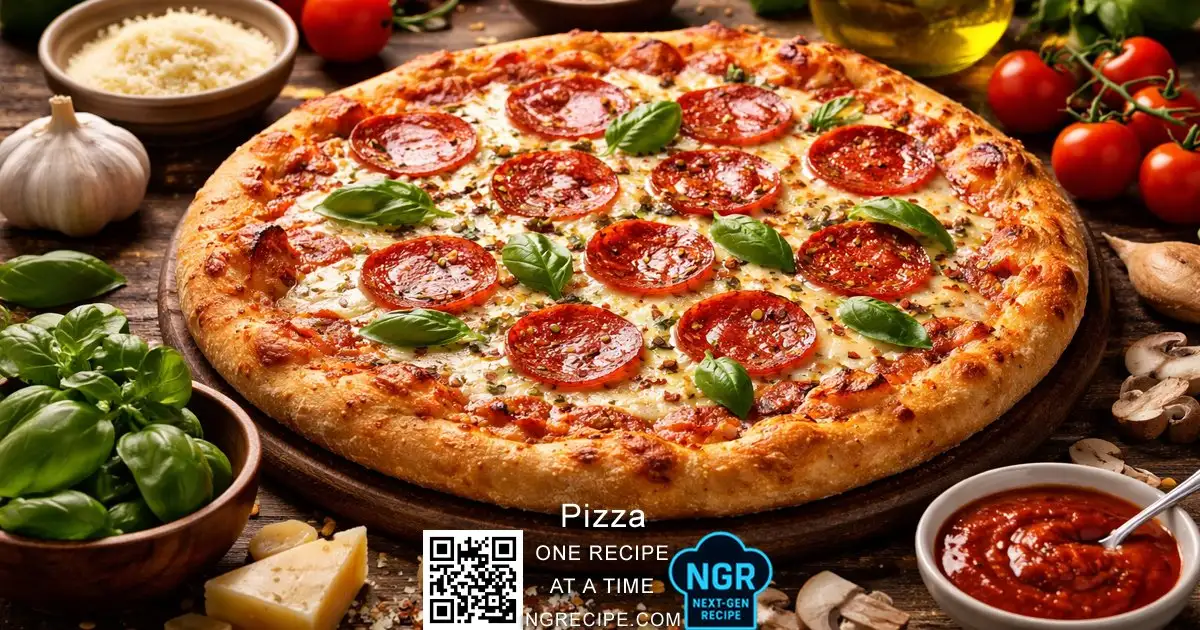
Quick Recipe Card
What This Recipe Is
This recipe is a home-friendly version of Chicago thin-crust pizza in the classic tavern-style spirit. The dough is mixed with oil for tenderness, rolled very thin instead of stretched thick, topped close to the edge, baked until crisp, and cut into small squares rather than large wedges. That square-cut, snackable format is one of the clearest signatures of the style.
Ingredients
- 320 g all-purpose flour (2 2/3 cups)
- 4 g instant yeast (1 1/4 teaspoons)
- 7 g fine salt (1 1/4 teaspoons)
- 5 g granulated sugar (1 teaspoon)
- 25 g olive oil (2 tablespoons)
- 190 g warm water (3/4 cup plus 1 tablespoon)
- 10 g cornmeal or semolina, for dusting (1 tablespoon)
- 200 g crushed tomatoes (3/4 cup plus 2 tablespoons)
- 20 g tomato paste (1 tablespoon)
- 5 g olive oil (1 teaspoon)
- 3 g fine salt (1/2 teaspoon)
- 2 g dried oregano (1 teaspoon)
- 1 g garlic powder (1/4 teaspoon)
- 3 g granulated sugar (1/2 teaspoon)
- 220 g low-moisture mozzarella, shredded (8 ounces)
- 180 g Italian sausage, cooked and crumbled (6 ounces)
- 60 g yellow onion, very thinly sliced (1/2 small onion)
- 20 g finely grated Parmesan cheese (1/4 cup)
Equipment
- Large mixing bowl
- Measuring scale or measuring cups and spoons
- Wooden spoon or dough whisk
- Clean work surface
- Rolling pin
- 2 sheets of parchment paper
- 2 baking sheets or pizza peels
- Pizza stone or steel, or inverted heavy baking sheet
- Small saucepan or bowl for sauce
- Pizza cutter or chef’s knife
Instructions
Step 1:
In a large bowl, combine the all-purpose flour, instant yeast, fine salt, and granulated sugar. Add the olive oil and warm water, then mix until a shaggy dough forms.
Step 2:
Knead the dough for 5 to 7 minutes until smooth and supple. Cover and let it rest for 1 hour at room temperature, or until slightly puffed.
Step 3:
While the dough rests, make the sauce. Stir together the crushed tomatoes, tomato paste, olive oil, fine salt, dried oregano, garlic powder, and granulated sugar until evenly combined. Set aside. Cook the Italian sausage if needed, then let it cool.
Step 4:
Place a pizza stone or steel in the oven and heat the oven to 260°C (500°F). Let the stone or steel heat for at least 30 minutes so the crust can crisp properly.
Step 5:
Divide the dough into 2 equal pieces. Dust the work surface lightly with cornmeal or semolina. Roll one piece into a very thin round about 30 cm (12 inches) wide. Transfer it to parchment paper set on a baking sheet or peel.
Step 6:
Spread half of the sauce thinly over the dough, leaving only a very narrow border. Scatter half of the mozzarella evenly over the top, then add half of the Italian sausage, half of the onion, and half of the Parmesan cheese.
Step 7:
Slide the pizza onto the hot stone or steel and bake for 12 to 14 minutes, until the cheese is bubbling, the edges are browned, and the underside is crisp. Repeat with the second dough piece and the remaining sauce, mozzarella, Italian sausage, onion, and Parmesan cheese.
Step 8:
Let each pizza stand for 2 minutes, then cut into small squares or rectangles. Serve hot.
Visual Cooking Cues
- The dough should feel smooth and easy to roll, not wet or sticky.
- The sauce should be spread thinly, not heavily layered.
- The unbaked pizza should look flat and evenly covered nearly to the edge.
- The baked crust should have browned edges and a firm, crisp underside.
- The cheese should bubble without forming a thick blanket that weighs the crust down.
- The finished pizza should cut cleanly into squares that hold their shape.
Chef Tips
- Roll the dough thinner than you think you need; the style depends on a crisp, delicate base.
- Use low-moisture mozzarella so the crust stays dry and snappy.
- Keep the sauce layer light to avoid steaming the dough.
- Preheat the stone or steel thoroughly for the best bottom color.
- Slice the onion very thinly so it softens before the crust overbakes.
- Let the pizza rest briefly before cutting so the cheese sets slightly.
Common Mistakes
- Using too much sauce, which softens the crust.
- Adding too many toppings, which makes the pizza heavy instead of crisp.
- Rolling unevenly, which causes some sections to burn while others stay pale.
- Baking on a cool surface, which prevents a proper crackly base.
- Cutting immediately out of the oven, which can pull the toppings loose.
Troubleshooting
If the crust is pale underneath, heat the baking stone or steel longer before baking the next pizza.
If the pizza turns soggy in the center, reduce the sauce slightly and make sure the mozzarella is low-moisture.
If the dough shrinks back while rolling, let it rest for 10 minutes and try again.
If the edge browns too quickly, move the pizza to a slightly lower oven rack for the next bake.
If the onion stays too firm, slice it thinner and spread it more evenly.
Ingredient Pairings
- Italian sausage and onion are a classic pairing for this style.
- Parmesan adds extra savory depth without making the pizza heavy.
- A crisp green salad balances the richness of the cheese and sausage.
- Pickled vegetables or giardiniera-style flavors work well on the side.
- Light lager, sparkling water, or lemony soft drinks pair nicely with the crisp crust.
Substitutions
- Use bread flour instead of all-purpose flour for slightly more chew.
- Replace Italian sausage with cooked mushrooms for a meat-free version.
- Use red onion instead of yellow onion for a sharper finish.
- Swap Parmesan for Pecorino Romano for a saltier bite.
- Use semolina instead of cornmeal for dusting if preferred.
Recipe Family Variations
- Chicago Tavern-Style Pizza
- Tavern-Style Sausage Pizza
Serving Suggestions
- Serve cut into small squares on a large platter for sharing.
- Pair with a chopped salad, simple slaw, or roasted peppers.
- Add extra grated Parmesan at the table.
- Serve as part of a casual game-day spread with crisp vegetables and dips.
- Keep the focus on the pizza itself rather than heavy side dishes.
Dietary Classification
- Contains gluten
- Contains dairy
- Contains meat
- Nut-free as written
Nutrition Information
Approximate per serving:
- Calories: 520
- Protein: 24 g
- Carbohydrates: 47 g
- Fat: 25 g
- Saturated Fat: 9 g
- Fiber: 3 g
- Sodium: 980 mg
Nutrition will vary with the sausage, cheese, and exact sauce used.
Storage / Reheating
Refrigerate leftover pizza in an airtight container for up to 3 days.
For the best texture, reheat in a skillet over medium heat for 3 to 5 minutes, or in a 220°C (425°F) oven for 5 to 7 minutes.
Avoid microwaving if possible, because the crust loses its crisp texture.
FAQ
Can I make the dough ahead of time?
Yes. After kneading, cover and refrigerate the dough for up to 24 hours. Let it sit at room temperature for about 30 minutes before rolling.
Why is Chicago thin-crust pizza cut into squares?
The square cut is part of the tavern-style tradition and makes the pizza easy to share and easy to eat in small pieces.
Do I need a pizza stone or steel?
It helps a lot, because this style depends on a firm, crisp bottom. A preheated inverted heavy baking sheet is the next best option.
Can I leave off the sausage?
Yes. You can make a cheese-only version with the same dough, sauce, onion, mozzarella, and Parmesan.
What makes this different from New York-style pizza?
Chicago thin-crust pizza is usually rolled thinner, baked crisper, topped more evenly across the surface, and traditionally cut into squares instead of large foldable slices.
Why This Recipe Works
This recipe works because every part of it supports crispness and balance. The dough includes enough oil to stay tender while still baking firm. The sauce is concentrated and applied lightly. Low-moisture mozzarella melts well without flooding the crust. The sausage and onion bring classic savoriness, but the topping load stays controlled so the crust can remain the star.
Recipe Identity
Chicago thin-crust pizza is a regional American pizza with strong Italian American roots. Its identity is built around thin rolled dough, crisp texture, nearly edge-to-edge topping coverage, and square party-cut serving rather than oversized slices.
Dish Classification
- Dish Type: Pizza
- Regional Style: Chicago thin-crust
- Broader Style Family: Tavern-style pizza
- Texture: Crisp, thin, lightly chewy at the center
- Service Style: Shared, party-cut squares
- Primary Cooking Method: Baking
Recipe History
Chicago’s thin-crust tavern style has deep roots in neighborhood bar culture and everyday local pizza traditions. The square-cut format grew out of tavern service, where small pieces were easy to share and easy to eat with drinks.
Cultural Notes
Outside Chicago, deep-dish often gets the spotlight, but thin-crust tavern-style pizza is widely treated as a core local eating tradition. It is associated with neighborhood pizzerias, family orders, and casual group meals rather than a dramatic special-occasion presentation.
Culinary Context
Chicago thin-crust pizza sits within the broader American regional pizza landscape as a distinctly Midwestern expression: thin, crisp, square-cut, and built for sharing. Its structure and service style make it feel different from deep-dish, New York slices, and pan pizzas, even though all belong to the wider pizza tradition.
Advanced Cooking Knowledge Open detailed cooking science and reference notes
Flavor, Texture, and Aroma Profile
The flavor profile is savory, tomato-forward, and gently sweet from the seasoned tomato base. Mozzarella adds mellow richness, Parmesan sharpens the finish, and sausage contributes peppery depth.
The texture profile is the defining feature: the base should be thin and crisp, with enough structure to stay firm under the toppings.
The aroma should be driven by toasted dough, oregano, warm cheese, and roasted sausage.
Flavor Balance
This pizza balances salt, fat, acidity, and light sweetness.
- Salt comes from the cheese, sausage, and seasoned sauce.
- Fat comes mostly from the mozzarella, Parmesan, olive oil, and sausage.
- Acidity comes from the tomatoes.
- Sweetness is minimal and only supports the tomato flavor.
The goal is a clean, crisp, savory finish rather than a heavy or overly cheesy one.
Flavor Components
- Base flavor: toasted wheat and olive oil
- Sauce flavor: bright tomato with oregano and garlic
- Cheese flavor: mild creamy mozzarella with salty Parmesan
- Topping flavor: savory sausage and sweet onion
Ingredient Notes
Low-moisture mozzarella is better here than fresh mozzarella because it melts evenly and releases less water.
Italian sausage should be fully cooked and crumbled into small pieces so it distributes evenly across the thin crust.
Crushed tomatoes make a better sauce base than a watery tomato puree for this style because the sauce needs concentration.
Ingredient Science
Flour provides the structure that lets the dough roll very thin without tearing too easily.
Yeast produces gas and flavor, giving the crust a light internal texture instead of turning it into a hard cracker.
Oil tenderizes the dough and encourages crisp browning.
Low-moisture cheese limits excess steam and helps the crust stay crisp.
Ingredient Roles
- All-purpose flour: structural base
- Instant yeast: leavening and flavor development
- Salt: seasoning and dough control
- Sugar: mild flavor balance and yeast support
- Olive oil: tenderness and browning
- Crushed tomatoes and tomato paste: concentrated sauce body
- Mozzarella: main melt and richness
- Parmesan: savory finishing note
- Italian sausage: classic topping character
- Onion: sweetness and aromatic lift
Ingredient Classification
- Dough ingredients: all-purpose flour, instant yeast, fine salt, granulated sugar, olive oil, warm water
- Sauce ingredients: crushed tomatoes, tomato paste, olive oil, fine salt, dried oregano, garlic powder, granulated sugar
- Topping ingredients: low-moisture mozzarella, Italian sausage, yellow onion, Parmesan cheese
- Handling ingredient: cornmeal or semolina
Preparation Techniques
The dough is kneaded until smooth, then rested to relax the gluten and make rolling easier.
The onion is sliced very thinly so it cooks fully during the short bake.
The sauce is mixed rather than long-cooked, which keeps the process efficient and the tomato flavor fresh.
Cooking Techniques
This style relies on high-heat baking on a thoroughly preheated surface.
Rolling instead of stretching helps produce the thin, even profile typical of the style.
Light topping distribution is an important technique, not just a preference.
Heat Management
A hot stone or steel is key to bottom crispness.
Bake at 260°C (500°F) for a fast, high-heat finish. If the top browns before the bottom sets, move the pizza slightly lower in the oven on the next round.
Texture Development
Texture comes from thin rolling, restrained sauce use, low-moisture cheese, and strong bottom heat.
Overloading the pizza interrupts all of that and turns the crust soft.
Cooking Time Control
Start checking at 12 minutes. The pizza is ready when the cheese bubbles, the edges brown, and the underside feels firm and crisp.
Very thinly rolled dough may finish a little faster, while a heavier topping load may need the full 14 minutes.
Flavor Pairing Logic
Savory sausage and mild mozzarella create a broad base. Onion adds sweetness, Parmesan adds umami and salt, and the tomato sauce keeps the pizza bright enough to stay balanced.
Because the crust is thin and crisp, bold toppings work best when used in moderation.
Leftover Ideas
- Reheat squares and serve with eggs for a savory breakfast.
- Cut cold leftovers into strips and crisp them in a skillet for a snack.
- Serve reheated squares with a simple salad for a quick lunch.
Cooking Safety Notes
Cook the Italian sausage fully before topping the pizza.
Use care when transferring pizza to and from a very hot stone or steel.
Let the pizza rest briefly before cutting to avoid sliding toppings and steam burns.
Sustainability Notes
Use locally made sausage and cheese when possible.
Onion, flour, and canned tomatoes are pantry-friendly staples with relatively low waste when planned well.
Leftover pizza reheats well, which helps reduce food waste.
