Air Fryer Fish and Chips
A lighter, crispier take on the classic British favorite, Air Fryer Fish and Chips delivers golden-coated fish and perfectly crisp chips with significantly less oil—without sacrificing flavor or texture.
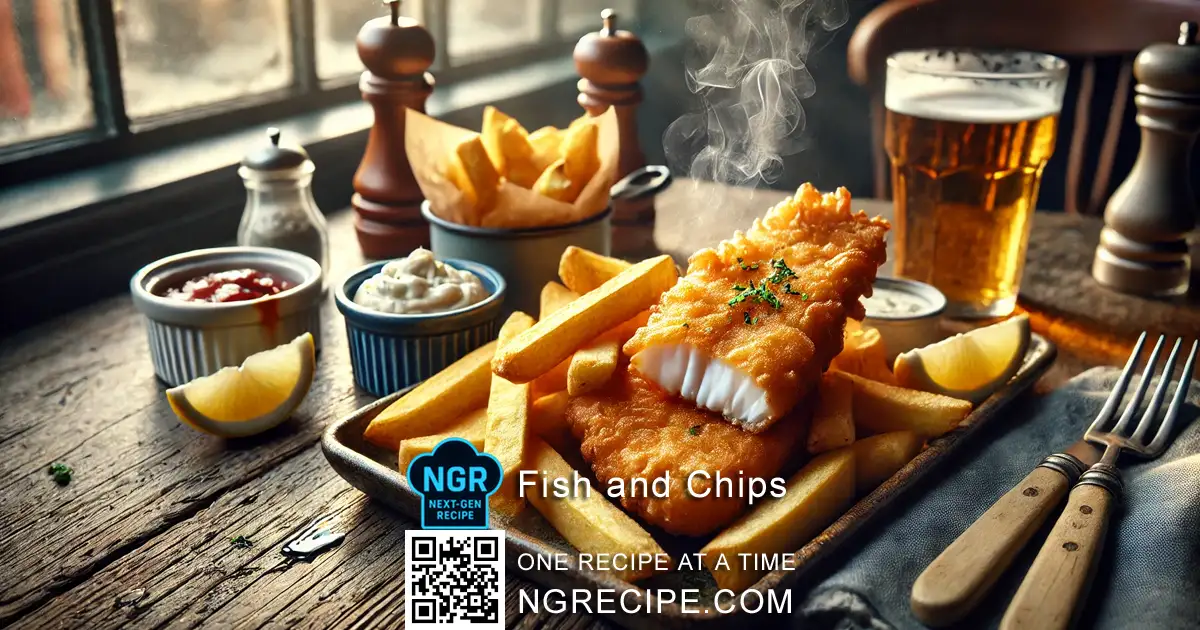
Quick Recipe Card
What This Recipe Is
Air Fryer Fish and Chips is a modern adaptation of the traditional deep-fried British dish, using circulating hot air to achieve a crispy exterior while maintaining a tender, flaky interior.
Ingredients
- 4 white fish fillets (cod or haddock), ~150 g each (5 oz each)
- 500 g potatoes, cut into chips (1.1 lb)
- 60 g all-purpose flour (½ cup)
- 2 large eggs
- 100 g breadcrumbs (1 cup)
- 30 ml oil (2 tbsp)
- 5 g salt (1 tsp)
- 3 g black pepper (½ tsp)
- 3 g paprika (½ tsp, optional)
Equipment
- Air fryer
- Mixing bowls
- Knife and cutting board
- Tongs
- Tray or plate
Instructions
Step 1:
Preheat air fryer to 180°C (356°F).
Step 2:
Toss potato chips with half the oil, salt, and pepper.
Step 3:
Air fry chips for 10 minutes.
Step 4:
Meanwhile, coat fish: first in flour, then egg, then breadcrumbs mixed with paprika.
Step 5:
Lightly brush or spray fish with remaining oil.
Step 6:
Increase air fryer temperature to 200°C (392°F).
Step 7:
Add fish to the basket alongside chips.
Step 8:
Cook for 10 minutes, flipping chips and fish halfway through.
Step 9:
Cook until fish is golden and flakes easily.
Step 10:
Rest for 5 minutes before serving.
Visual Cooking Cues
- Chips: Golden edges and crisp exterior
- Fish: Even golden crust, flakes when pressed
- No visible wet batter
Chef Tips
- Do not overcrowd the air fryer basket
- Use a light oil spray instead of pouring oil
- Preheat for consistent cooking results
Common Mistakes
- Skipping drying fish → soggy coating
- Overloading basket → uneven cooking
- Not flipping → uneven crispness
Troubleshooting
- Not crispy: Increase temperature slightly or cook longer
- Coating falling off: Ensure proper flour layer before egg
- Fish dry: Reduce cooking time
Ingredient Pairings
- Lemon wedges
- Malt vinegar
- Tartar sauce
- Coleslaw
Substitutions
- Fish: Pollock or tilapia
- Breadcrumbs: Crushed cornflakes or gluten-free crumbs
- Flour: Rice flour for gluten-free version
Recipe Family Variations
- Spiced version with chili powder
- Herb crust with parsley
- Gluten-free adaptation
Serving Suggestions
Serve hot with lemon wedges, tartar sauce, and a side salad or peas.
Dietary Classification
- Pescatarian
- Can be made gluten-free
Nutrition Information
Approximate per serving:
- Calories: 420 kcal
- Protein: 28 g
- Fat: 14 g
- Carbohydrates: 42 g
- Fiber: 4 g
- Sodium: 480 mg
Storage / Reheating
Storage
- Refrigerate in airtight container up to 2 days
Reheating
- Reheat in air fryer at 180°C (356°F) for 5–7 minutes
FAQ
Can I use frozen fish?
Yes, but thaw and dry thoroughly before coating.
Why are my chips not crispy?
They may be overcrowded or not coated with enough oil.
Can I skip breadcrumbs?
Breadcrumbs are essential for crisp texture in air frying.
Why This Recipe Works
Air frying circulates hot air rapidly, mimicking deep frying by removing surface moisture and creating a crisp coating. Coating layers (flour, egg, breadcrumbs) ensure adhesion and crunch without excess oil.
Recipe Identity
- Origin: United Kingdom
- Style: Modern, healthier adaptation
- Core Technique: Air frying
- Key Feature: Reduced oil, crispy coating
Dish Classification
- Dish type: Main dish
- Course: Lunch or dinner
- Meal type: Savory meal
- Traditional or modern dish: Modern adaptation
- Street food or home cooking: Both
- Festival or everyday food: Everyday food
Recipe History
Fish and chips originated in the United Kingdom in the 19th century. This air fryer version reflects modern cooking trends prioritizing health, convenience, and reduced oil consumption.
Cultural Notes
This version respects the structure of traditional fish and chips while adapting it for modern kitchen appliances and health-conscious cooking.
Advanced Cooking Knowledge Open detailed cooking science and reference notes
Flavor, Texture, and Aroma Profile
- Flavor: Mild, savory, slightly salty with subtle sweetness from fish
- Texture: Crispy exterior, flaky fish, soft interior chips with crisp edges
- Aroma: Lightly toasted, savory, clean seafood aroma
Flavor Balance
Balanced between saltiness and mild umami, with optional acidic brightness from lemon or vinegar.
Flavor Components
- Sweet: Mild from potatoes
- Salt: From seasoning
- Acid: Optional (lemon, vinegar)
- Bitter: Minimal
- Umami: Fish
- Aromatic elements: Pepper, optional paprika
Ingredient Notes
- Use firm white fish like cod or haddock for best structure
- Starchy potatoes (e.g., Russet) yield crispier chips
- Panko breadcrumbs enhance crunch
Ingredient Science
- Flour dries the fish surface, helping coating stick
- Egg acts as a binding layer
- Breadcrumbs create a structured crust that crisps under hot air
- Oil promotes Maillard browning
Ingredient Roles
- Fish: Protein base
- Potatoes: Carbohydrate component
- Flour/Egg/Breadcrumbs: Coating system
- Oil: Crisping agent
- Seasoning: Flavor enhancement
Ingredient Classification
- Protein: Fish
- Carbohydrates: Potatoes, breadcrumbs
- Fat: Oil
- Seasonings: Salt, pepper, paprika
Preparation Techniques
- Pat fish dry to remove moisture
- Cut potatoes evenly for uniform cooking
- Pre-coat fish using flour → egg → breadcrumbs sequence
Cooking Techniques
- Air frying for both fish and chips
- Light oil coating for crispness
- Batch cooking if needed to avoid overcrowding
Heat Management
- Low heat stages: Not required
- Medium heat stages: Preheating at 180°C (356°F)
- High heat stages: Cooking at 200°C (392°F)
- Temperature cues: Chips should turn golden; fish coating should crisp without burning
Texture Development
- Drying fish prevents soggy coating
- Oil mist enhances crispness
- Proper spacing ensures air circulation
Cooking Time Control
- Chips cook longer than fish; start chips first
- Flip halfway for even crisping
- Avoid overcooking fish to prevent dryness
Flavor Pairing Logic
Acidic elements balance fried richness, while creamy sauces complement the crispy texture.
Global Variations
- Australian: Often served with chicken salt
- Indian-inspired: Spiced batter with turmeric and chili
- American: Served with ketchup and coleslaw
Leftover Ideas
- Fish tacos
- Fish sandwiches
- Loaded fish and chips bowl
Cooking Safety Notes
- Ensure fish reaches safe internal temperature (~63°C / 145°F)
- Avoid cross-contamination between raw fish and other ingredients
Sustainability Notes
- Use sustainably sourced fish (e.g., MSC-certified)
- Minimize oil waste compared to deep frying
