Ambur Biryani
A classic South Indian biryani from Tamil Nadu, Ambur Biryani is known for its minimal spices, deep flavor, and signature use of seeraga samba rice. It delivers a balanced, aromatic dish where tender meat and lightly spiced rice come together in perfect harmony.
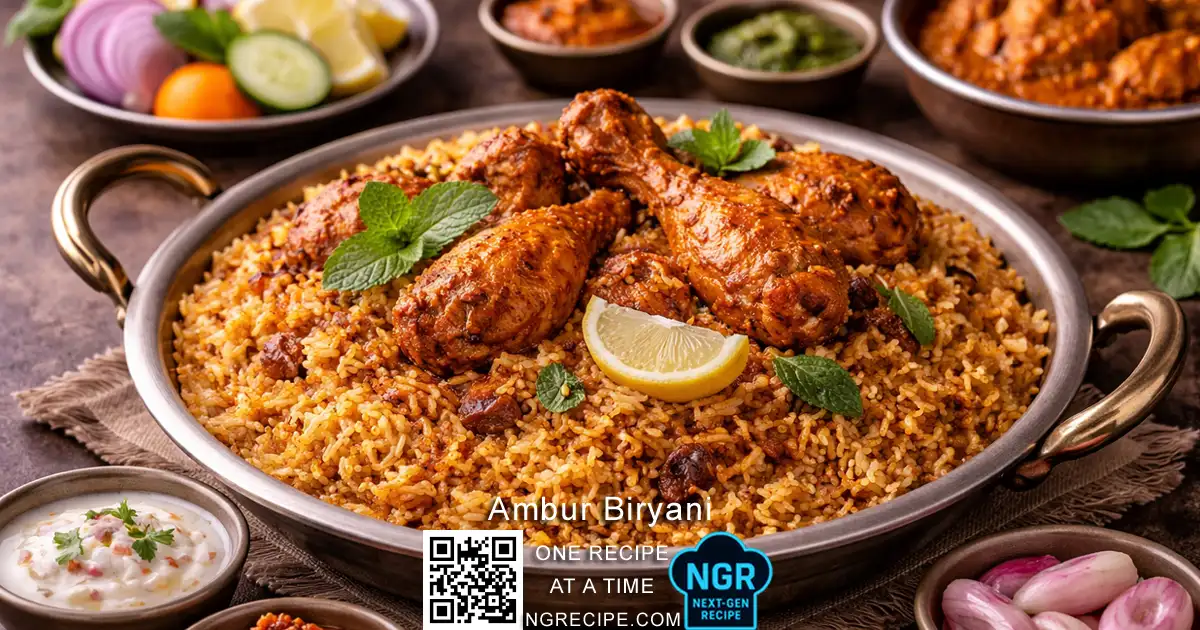
Quick Recipe Card
What This Recipe Is
Ambur Biryani is a traditional Tamil-style biryani that focuses on simplicity, using fewer spices than North Indian biryanis while relying on technique and ingredient quality for depth of flavor.
Ingredients
- 500 g (1.1 lb) chicken, cut into pieces
- 300 g (1½ cups) seeraga samba rice
- 200 g (2 medium) onions, sliced
- 150 g (¾ cup) yogurt
- 2 tbsp ginger-garlic paste
- 4–5 dried red chilies
- 3 tbsp cooking oil
- 2 tbsp ghee
- 1 tsp whole black pepper
- 1 small cinnamon stick
- 2 cloves
- 2 green cardamoms
- 1 bay leaf
- 1 tsp salt (adjust to taste)
- 1 tbsp lemon juice
- 500 ml (2 cups) water
Equipment
- Heavy-bottom pot or handi
- Lid for dum cooking
- Large bowl for soaking rice
- Knife and cutting board
Instructions
Step 1:
Wash and soak rice for 20 minutes, then drain.
Step 2:
Heat oil and ghee in a heavy pot over medium heat.
Step 3:
Add cinnamon, cloves, cardamom, bay leaf, and black pepper; sauté until aromatic.
Step 4:
Add sliced onions and cook until soft and lightly golden.
Step 5:
Stir in ginger-garlic paste and dried red chilies; cook briefly.
Step 6:
Add chicken and salt; cook until the chicken starts releasing moisture.
Step 7:
Mix in yogurt and cook until oil separates slightly.
Step 8:
Add water and bring to a gentle boil.
Step 9:
Add soaked rice and mix gently.
Step 10:
Cook uncovered until water reduces and rice is partially cooked.
Step 11:
Add lemon juice, cover tightly, and cook on low heat (dum) for 15–20 minutes.
Step 12:
Rest for 10 minutes before serving.
Visual Cooking Cues
- Oil separating from gravy indicates proper base
- Rice grains should remain separate and not mushy
- Steam escaping lightly during dum
Chef Tips
- Use a thick-bottomed pot to prevent burning
- Do not over-stir once rice is added
- Maintain low heat during dum
Common Mistakes
- Overcooking rice before dum
- Excess water leading to soggy texture
- High heat during dum causing burning
Troubleshooting
- Rice too soft: Reduce water next time
- Chicken dry: Add more yogurt or reduce cooking time
- Lack of flavor: Adjust salt and chili balance
Ingredient Pairings
- Onion raita
- Brinjal curry
- Boiled eggs
Substitutions
- Seeraga samba rice → Basmati rice
- Chicken → Mutton (longer cooking required)
- Yogurt → Coconut milk (for variation)
Recipe Family Variations
- Spicier version with extra chilies
- Ghee-rich version for deeper aroma
Serving Suggestions
Serve hot with raita and a squeeze of fresh lemon for enhanced flavor.
Dietary Classification
- Non-vegetarian
- Gluten-free
Nutrition Information
- Calories: ~520 kcal
- Protein: ~28 g
- Fat: ~20 g
- Carbohydrates: ~55 g
- Fiber: ~3 g
- Sodium: ~600 mg
Storage / Reheating
Storage
- Refrigerate in an airtight container for up to 2 days
Reheating
- Reheat gently with a splash of water on low heat
FAQ
Can I use basmati rice?
Yes, but texture and flavor will differ.
Why is my biryani mushy?
Too much water or overcooked rice.
Can I make it vegetarian?
Yes, substitute chicken with vegetables or paneer.
Why This Recipe Works
- Uses short-grain aromatic rice for better absorption
- Minimal spices allow clarity of flavor
- Layered cooking ensures even distribution of taste
- Controlled moisture prevents sogginess
Recipe Identity
A heritage dum-style biryani with a slightly tangy and mildly spicy profile, cooked with seeraga samba rice and marinated chicken.
Dish Classification
- Dish type: Rice-based main dish
- Course: Main course
- Meal type: Lunch or dinner
- Traditional or modern dish: Traditional
- Street food or home cooking: Both
- Festival or everyday food: Everyday with festival presence
Recipe History
Ambur Biryani originates from Ambur town in Tamil Nadu and is closely associated with Arcot Nawab cuisine. It evolved as a simplified yet flavorful biryani variant, often served in local eateries and roadside stalls.
Cultural Notes
Ambur Biryani is often served with a simple brinjal curry and is a staple in Tamil Muslim cuisine.
Advanced Cooking Knowledge Open detailed cooking science and reference notes
Flavor, Texture, and Aroma Profile
- Lightly spiced and aromatic
- Soft, separate grains of rice
- Tender, juicy chicken
- Subtle tang from yogurt and lemon
Flavor Balance
Balanced with mild heat, gentle acidity, and savory depth without overwhelming spice.
Flavor Components
- Sweet: Mild from caramelized onions
- Salt: Moderate
- Acid: Yogurt and lemon juice
- Bitter: Minimal
- Umami: Chicken and slow-cooked onions
- Aromatic elements: Ginger, garlic, red chili, whole spices
Ingredient Notes
- Seeraga samba rice is essential for authentic flavor and texture
- Dried red chilies provide heat without overpowering aroma
- Yogurt tenderizes the chicken and adds acidity
Ingredient Science
- Yogurt’s lactic acid breaks down proteins for tenderness
- Short-grain rice absorbs flavor more efficiently
- Fat from ghee enhances aroma compounds
Ingredient Roles
- Chicken: Primary protein
- Rice: Base structure
- Yogurt: Tenderizer and flavor enhancer
- Onions: Sweetness and depth
- Spices: Aroma and mild heat
Ingredient Classification
- Protein: Chicken
- Grain: Rice
- Aromatics: Onion, ginger, garlic
- Fat: Oil, ghee
- Acid: Yogurt, lemon
Preparation Techniques
- Wash and soak rice for 20 minutes
- Slice onions evenly for uniform cooking
- Marinate chicken with yogurt and salt
Cooking Techniques
- Sautéing onions for base flavor
- Simmering chicken to develop gravy
- Dum cooking to finish
Heat Management
- Low heat stages: Dum phase
- Medium heat stages: Cooking onions and chicken
- High heat stages: Initial sauté
- Temperature cues: Gentle bubbling during simmer, no burning
Texture Development
- Controlled moisture ensures fluffy rice
- Slow cooking softens chicken without drying
Cooking Time Control
- Avoid overcooking rice before dum
- Monitor water absorption closely
Flavor Pairing Logic
- Acidic sides balance richness
- Mild sides complement subtle spice
Global Variations
- Middle Eastern rice dishes with similar layering
- Southeast Asian mild spiced rice dishes
Leftover Ideas
- Use as filling for wraps
- Turn into fried rice-style dish
Cooking Safety Notes
- Ensure chicken reaches safe internal temperature (75°C / 167°F)
- Avoid cross-contamination
Sustainability Notes
- Use locally sourced chicken when possible
- Reduce food waste by repurposing leftovers
