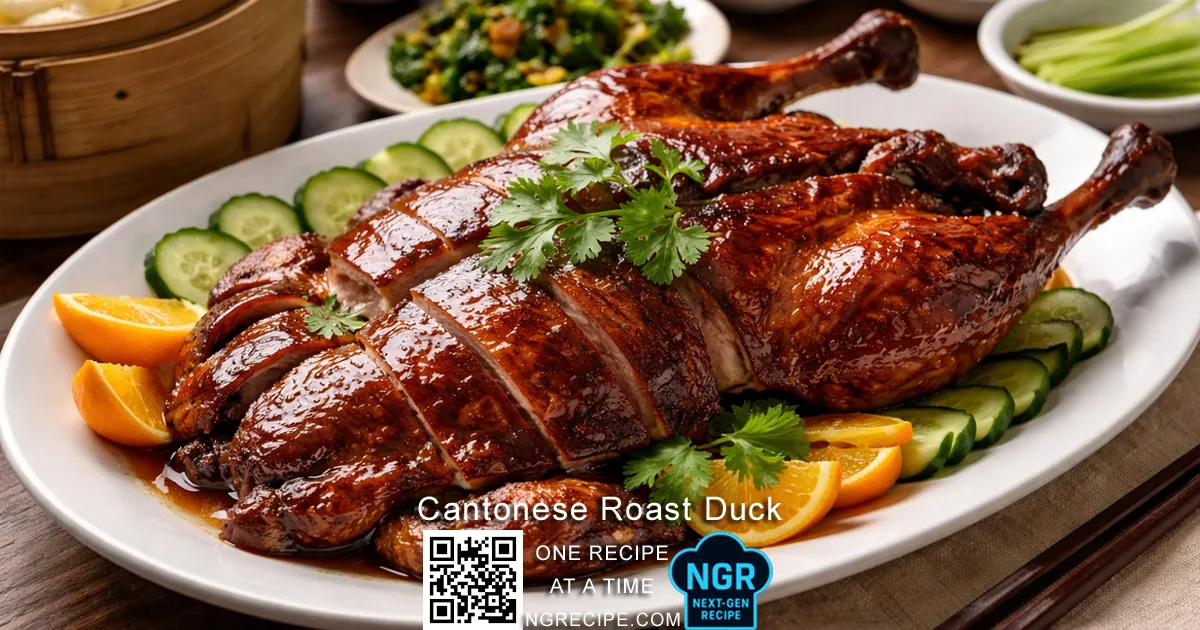
Cantonese Roast Duck
A classic Cantonese masterpiece featuring crispy lacquered skin and juicy, aromatic meat, achieved through careful seasoning, air-drying, and high-heat roasting.
Quick Recipe Card
What This Recipe Is
Cantonese Roast Duck is a traditional Chinese roasted poultry dish known for its glossy, crisp skin and deeply seasoned meat. Unlike Peking duck, it emphasizes full-body roasting and rich marinade absorption.
Ingredients
- 1 whole duck (about 2–2.5 kg / 4.4–5.5 lb)
- 15 ml (1 tbsp) five-spice powder
- 30 ml (2 tbsp) soy sauce
- 15 ml (1 tbsp) oyster sauce
- 10 g (2 tsp) sugar
- 20 ml (1 tbsp + 1 tsp) Shaoxing wine
- 10 ml (2 tsp) sesame oil
- 4 cloves garlic, minced
- 30 ml (2 tbsp) honey
- 15 ml (1 tbsp) rice vinegar
- 1.5 L (6 cups) boiling water
Equipment
- Oven with rack
- Roasting tray
- Hook or rack for air-drying
- Basting brush
Instructions
Step 1:
Clean the duck and pat completely dry.
Step 2:
Mix five-spice powder, soy sauce, oyster sauce, sugar, Shaoxing wine, sesame oil, and garlic.
Step 3:
Rub the mixture inside the duck cavity.
Step 4:
Pour boiling water over the duck skin to tighten it.
Step 5:
Mix honey and rice vinegar, then brush over the duck skin.
Step 6:
Hang or place the duck on a rack and air-dry for 4–6 hours (or overnight in fridge).
Step 7:
Preheat oven to 180°C (356°F).
Step 8:
Roast duck on a rack for 45 minutes.
Step 9:
Increase temperature to 220°C (428°F) and roast for 15 minutes until skin is crisp.
Step 10:
Rest for 10 minutes before carving.
Visual Cooking Cues
- Skin becomes glossy and taut after glazing
- Deep amber color indicates proper caramelization
- Fat dripping signals rendering
Chef Tips
- Ensure duck is completely dry before roasting
- Rotate duck halfway for even color
- Use a rack to allow fat to drip away
Common Mistakes
- Skipping air-drying leads to soggy skin
- Overcrowding oven reduces crisping
- Too much glaze causes burning
Troubleshooting
- Skin not crispy: Increase final heat stage
- Meat dry: Reduce roasting time slightly
- Uneven color: Rotate duck during roasting
Ingredient Pairings
- Steamed rice
- Stir-fried greens
- Hoisin sauce
- Pickled vegetables
Substitutions
- Shaoxing wine → Dry sherry
- Oyster sauce → Soy sauce + sugar
- Rice vinegar → Apple cider vinegar
Recipe Family Variations
- Spicy roast duck with chili paste
- Herbal roast duck with star anise
Serving Suggestions
- Slice with skin attached
- Serve with rice or pancakes
- Accompany with dipping sauces
Dietary Classification
- Non-vegetarian
- High-protein
- Gluten-containing (if soy sauce not gluten-free)
Nutrition Information
- Calories: ~450 kcal
- Protein: ~30 g
- Fat: ~35 g
- Carbohydrates: ~5 g
- Fiber: ~0 g
- Sodium: ~600 mg
Storage / Reheating
Storage
- Refrigerate up to 3 days in airtight container
Reheating
- Reheat in oven at 180°C (356°F) for 10–15 minutes to restore crispness
FAQ
Why is my duck not crispy?
Insufficient drying or low final heat.
Can I skip air-drying?
Not recommended for authentic texture.
Can I use duck pieces?
Yes, but whole duck yields best results.
Why This Recipe Works
Air-drying removes moisture from the skin, allowing it to crisp during roasting. The glaze caramelizes while the marinade penetrates the meat, ensuring both surface crunch and internal flavor.
Recipe Identity
- Origin: Guangdong (Canton), China
- Cuisine: Cantonese
- Core technique: Air-dried roasting with glaze
Dish Classification
- Dish type: Roasted poultry dish
- Course: Main course
- Meal type: Lunch or dinner
- Traditional or modern dish: Traditional
- Street food or home cooking: Both
- Festival or everyday food: Both
Recipe History
Cantonese roast duck originates from southern China and is a staple in Cantonese barbecue shops (siu mei). It evolved as a more accessible alternative to imperial-style roasted duck dishes.
Cultural Notes
- Commonly found in Cantonese barbecue shops
- Often displayed hanging in shop windows
Advanced Cooking Knowledge Open detailed cooking science and reference notes
Flavor, Texture, and Aroma Profile
- Crisp, glassy skin
- Tender, juicy interior
- Deep savory aroma with sweet glaze
Flavor Balance
- Balanced between sweet glaze, salty marinade, and aromatic spices
Flavor Components
- Sweet: Honey
- Salt: Soy sauce
- Acid: Rice vinegar
- Bitter: Minimal (from roasted skin)
- Umami: Duck meat, soy sauce
- Aromatic elements: Five-spice powder, garlic
Ingredient Notes
- Duck with skin intact is essential for crispiness
- Honey provides glaze and caramelization
- Shaoxing wine enhances aroma
Ingredient Science
- Honey caramelizes at high heat, forming glossy crust
- Vinegar tightens skin proteins for crisp texture
- Fat in duck renders slowly, self-basting the meat
Ingredient Roles
- Duck: Primary protein
- Soy sauce: Salt and umami
- Five-spice: Aromatic depth
- Honey: Glaze and color
- Vinegar: Skin tightening
Ingredient Classification
- Protein: Duck
- Aromatics: Garlic, five-spice
- Liquids: Soy sauce, wine, vinegar
- Sweeteners: Honey, sugar
Preparation Techniques
- Cleaning and drying duck thoroughly
- Marinating interior cavity
- Air-drying for skin dehydration
Cooking Techniques
- Scalding skin with boiling water
- Hanging or rack-drying
- High-temperature roasting
Heat Management
- Low heat stages: Initial drying (optional fan stage)
- Medium heat stages: 180°C (356°F) roasting
- High heat stages: Final crisping at 220°C (428°F)
- Temperature cues: Skin turns deep golden brown
Texture Development
- Dry skin before roasting ensures crispness
- Fat rendering creates juicy interior
Cooking Time Control
- Avoid overcooking to prevent dryness
- Monitor skin color and internal temperature (~75°C / 167°F)
Flavor Pairing Logic
- Rich duck pairs with acidity and sweetness
- Crisp skin contrasts soft rice and greens
Global Variations
- Peking Duck (Northern China)
- Roast Duck with Orange Sauce (European adaptation)
Leftover Ideas
- Duck fried rice
- Duck noodle soup
- Duck sandwiches
Cooking Safety Notes
- Ensure internal temperature reaches safe level
- Handle raw poultry hygienically
Sustainability Notes
- Use whole duck to minimize waste
- Rendered fat can be reused
