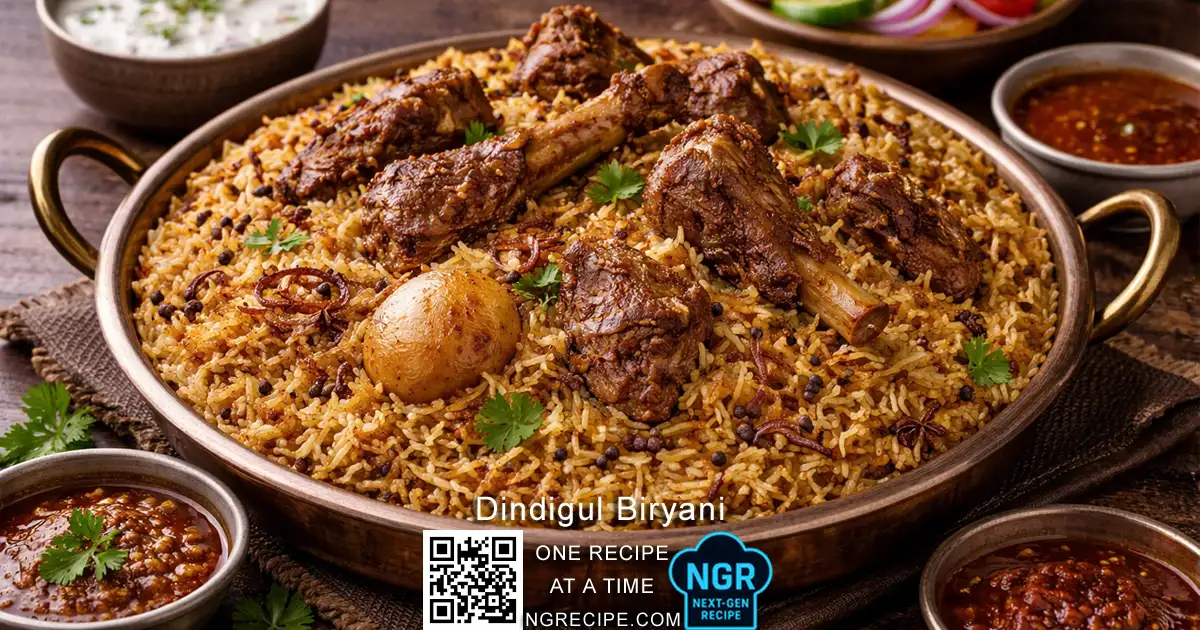
Dindigul Biryani
A bold, tangy, and aromatic South Indian biryani made with small-grained seeraga samba rice, tender goat meat, and a distinctive balance of spices and acidity that sets it apart from other biryanis.
Quick Recipe Card
What This Recipe Is
Dindigul Biryani is a traditional Tamil-style biryani known for its unique tangy flavor, short-grain rice, and deeply spiced meat base cooked using the dum method.
Ingredients
- 500 g (1.1 lb) goat meat, bone-in
- 300 g (1.5 cups) seeraga samba rice
- 200 g (1 cup) onions, finely sliced
- 150 g (¾ cup) tomatoes, chopped
- 100 g (½ cup) curd (yogurt)
- 2 tbsp lemon juice (30 ml)
- 3 tbsp oil (45 ml)
- 2 tbsp ghee (30 ml)
- 2 tbsp ginger garlic paste (30 g)
- 4 green chilies, slit
- 10 g (½ cup) fresh mint leaves
- 10 g (½ cup) fresh coriander leaves
- 1 cinnamon stick
- 3 cloves
- 2 cardamom pods
- 1 bay leaf
- 1 tsp turmeric powder (5 g)
- 2 tsp red chili powder (10 g)
- 1 tsp black pepper powder (5 g)
- Salt to taste
- 600 ml (2.5 cups) water
Equipment
- Heavy-bottom pot or pressure cooker
- Lid for dum cooking
- Mixing bowl
- Knife and cutting board
Instructions
Step 1:
Wash and soak seeraga samba rice for 20 minutes, then drain.
Step 2:
Heat oil and ghee in a heavy-bottom pot over medium heat.
Step 3:
Add cinnamon, cloves, cardamom, and bay leaf; sauté until aromatic.
Step 4:
Add sliced onions and cook until golden brown.
Step 5:
Stir in ginger garlic paste and sauté until raw smell disappears.
Step 6:
Add tomatoes and cook until soft and oil separates.
Step 7:
Add green chilies, turmeric powder, red chili powder, and black pepper powder.
Step 8:
Add goat meat and mix well; cook for 5–7 minutes.
Step 9:
Add curd and lemon juice; mix and cook until slightly thickened.
Step 10:
Pour in water and bring to a boil.
Step 11:
Add soaked rice and salt; mix gently.
Step 12:
Cover and cook on low heat (dum) for 20–25 minutes until rice is done.
Step 13:
Rest for 10 minutes before serving.
Visual Cooking Cues
- Oil separating from masala
- Rice grains visible and not clumped
- Meat easily pulling from bone
Chef Tips
- Use exact water ratio for perfect texture
- Always cook on low heat during dum stage
- Resting improves flavor distribution
Common Mistakes
- Using basmati rice instead of seeraga samba
- Adding too much water
- Cooking on high heat during dum
Troubleshooting
- Rice too soft: Reduce water next time
- Meat tough: Increase cooking time before dum
- Lack of flavor: Adjust salt and acid balance
Ingredient Pairings
- Onion raita
- Boiled eggs
- Lemon wedges
Substitutions
- Goat meat → chicken
- Seeraga samba rice → short-grain rice (closest option)
- Ghee → butter
Recipe Family Variations
- Chicken Dindigul Biryani
- Egg Dindigul Biryani
Serving Suggestions
Serve hot with raita, boiled eggs, and a fresh salad.
Dietary Classification
- Non-vegetarian
- Gluten-free
Nutrition Information
- Calories: ~520 kcal
- Protein: ~28 g
- Fat: ~22 g
- Carbohydrates: ~50 g
- Fiber: ~3 g
- Sodium: ~600 mg
Storage / Reheating
Storage
Refrigerate in an airtight container for up to 2 days.
Reheating
Reheat with a splash of water over low heat to restore moisture.
FAQ
Can I use basmati rice?
It changes authenticity but can be used if needed.
Why is my biryani not tangy enough?
Increase lemon juice slightly.
Can I make it vegetarian?
Yes, replace meat with vegetables or paneer.
Why This Recipe Works
- Seeraga samba rice absorbs flavor better than long-grain rice
- Acidic marinade tenderizes meat and enhances depth
- Controlled water ratio prevents sogginess
- Dum cooking locks in aroma and moisture
Recipe Identity
A regional South Indian biryani defined by seeraga samba rice, yogurt-based marinade, and a bright acidic profile from lemon juice.
Dish Classification
- Dish type: Rice-based main dish
- Course: Main course
- Meal type: Lunch or dinner
- Traditional or modern dish: Traditional
- Street food or home cooking: Both
- Festival or everyday food: Both
Recipe History
Originating from Dindigul in Tamil Nadu, this biryani gained popularity through small eateries and has become one of South India’s most recognized biryani styles.
Cultural Notes
Dindigul biryani is often served in local Tamil eateries known for its consistent tangy taste and rich aroma.
Advanced Cooking Knowledge Open detailed cooking science and reference notes
Flavor, Texture, and Aroma Profile
- Tangy and mildly spicy
- Rich and savory
- Aromatic with layered spice notes
- Moist yet separate grains of rice
- Tender, juicy meat
Flavor Balance
Balanced between acidity (lemon, yogurt), spice (chilies, pepper), and umami (meat, whole spices).
Flavor Components
- Sweet: Minimal from onions
- Salt: Controlled seasoning
- Acid: Lemon juice and yogurt
- Bitter: Very mild from whole spices
- Umami: Goat meat and browned onions
- Aromatic elements: Cinnamon, cloves, bay leaf, mint
Ingredient Notes
- Seeraga samba rice is essential for authenticity
- Goat meat gives the best flavor; chicken is an alternative
- Fresh lemon juice provides signature tanginess
Ingredient Science
- Yogurt contains lactic acid that tenderizes meat
- Small-grain rice absorbs spices more efficiently
- Fat from ghee enhances aroma retention
Ingredient Roles
- Rice: Base and flavor carrier
- Meat: Primary protein and umami source
- Spices: Depth and aroma
- Acid elements: Balance richness
Ingredient Classification
- Grain: Seeraga samba rice
- Protein: Goat meat
- Aromatics: Onion, garlic, ginger
- Spices: Whole and ground spices
- Herbs: Mint, coriander
Preparation Techniques
- Wash and soak rice for 20 minutes
- Marinate meat with yogurt, spices, and lemon juice
- Slice onions evenly for uniform browning
Cooking Techniques
- Sautéing aromatics
- Pressure cooking or simmering meat
- Dum cooking for final integration
Heat Management
- Low heat stages: Dum cooking
- Medium heat stages: Cooking meat
- High heat stages: Initial sauté
- Temperature cues: Oil separates from masala
Texture Development
- Rice should be fluffy and separate
- Meat should be tender and juicy
- Avoid overcooking to prevent mushiness
Cooking Time Control
- Meat should be cooked until just tender before adding rice
- Dum cooking should be controlled to avoid burning
Flavor Pairing Logic
Acidic sides balance richness, while cooling yogurt complements spice.
Global Variations
- Compared to Hyderabadi biryani: less spicy, more tangy
- Compared to Lucknowi biryani: more robust and rustic
Leftover Ideas
- Biryani fried rice
- Stuffed wraps
Cooking Safety Notes
- Ensure meat is fully cooked before serving
- Maintain hygiene when handling raw meat
Sustainability Notes
- Use locally sourced meat and herbs
- Avoid food waste by repurposing leftovers
