Fish and Chips
Fish and Chips is a classic British dish consisting of white fish fillets coated in a light, crispy batter and deep-fried until golden, served alongside thick-cut fried potatoes. Known for its crunchy exterior and flaky interior, it remains one of the most iconic comfort foods in the United Kingdom.
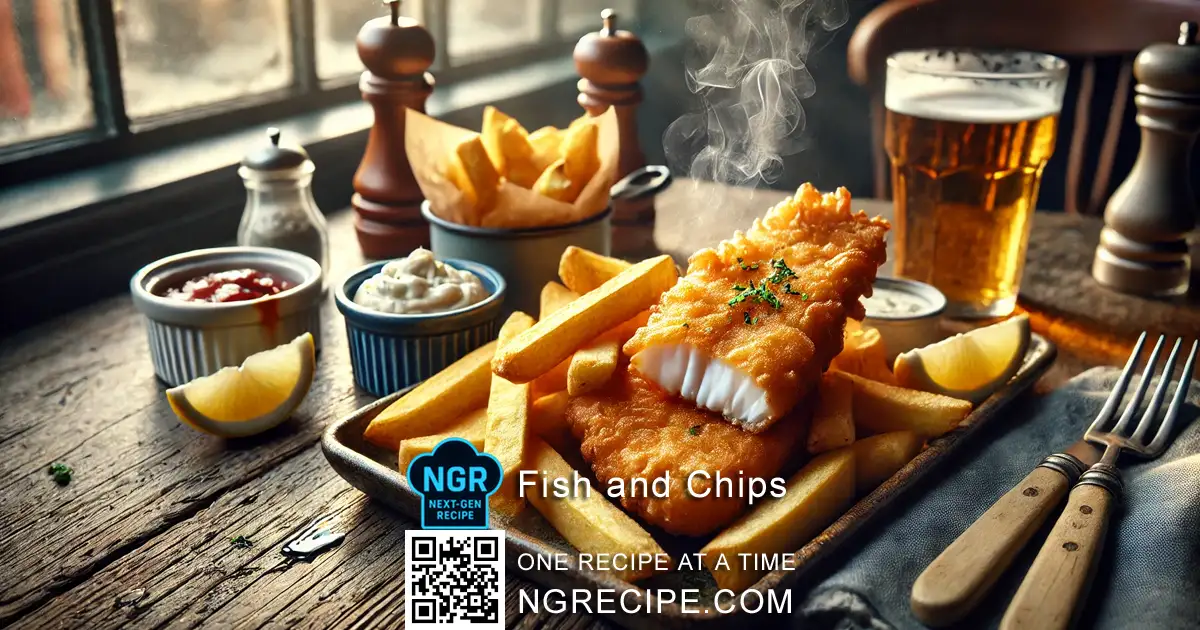
Quick Recipe Card
What This Recipe Is
Fish and Chips is a deep-fried seafood and potato dish widely associated with British culinary culture. It pairs battered white fish with fried potato chips (thick fries). The hallmark of the dish is a crisp batter that protects delicate fish during frying while keeping the interior moist and flaky.
Ingredients
- 600 g white fish fillets such as cod or haddock (1.3 lb)
- 150 g all-purpose flour (1 cup)
- 240 ml cold beer (1 cup)
- 1 tsp baking powder
- 1 tsp salt
- 4 large potatoes about 800 g (1.7 lb)
- 1 L vegetable oil for frying (about 4 cups)
Equipment
- Deep frying pot or deep fryer
- Slotted spoon or spider strainer
- Mixing bowl
- Knife and cutting board
- Paper towels
Instructions
Step 1:
Peel potatoes and cut into thick chips.
Step 2:
Rinse chips under cold water to remove excess starch.
Step 3:
Pat chips dry thoroughly with paper towels.
Step 4:
Heat vegetable oil in a deep fryer or heavy pot to 180 °C (356 °F).
Step 5:
In a bowl combine flour, baking powder, and salt.
Step 6:
Slowly whisk in cold beer until a smooth batter forms.
Step 7:
Lightly coat fish fillets in a small amount of flour from the ingredient list.
Step 8:
Dip fish into the batter ensuring full coverage.
Step 9:
Carefully place fish in the hot oil and fry for 4–6 minutes until golden and crisp.
Step 10:
Remove fish and drain on paper towels.
Step 11:
Fry the potato chips in the same oil for 5–7 minutes until golden and crisp.
Step 12:
Remove chips and drain on paper towels.
Step 13:
Season fish and chips with salt and serve immediately.
Visual Cooking Cues
- Batter turns golden and crisp.
- Fish flakes easily when gently pressed.
- Chips develop a golden color and firm exterior.
Chef Tips
- Always keep batter cold to improve crispness.
- Fry fish immediately after battering to prevent coating separation.
Common Mistakes
- Oil temperature too low causing greasy batter.
- Wet fish surface causing batter to slip.
- Overcrowding fryer lowering oil temperature.
Troubleshooting
- Batter not crisping: Ensure oil is hot enough and batter is cold.
- Fish breaking apart: Use firm white fish and avoid overhandling.
- Soggy results: Drain on paper towels and avoid stacking fish.
- Oil temperature problems: Use a thermometer to maintain consistent heat.
Ingredient Pairings
- Malt vinegar
- Lemon wedges
- Tartar sauce
- Mushy peas
Substitutions
- Replace beer with sparkling water for a similar batter texture.
- Replace cod with haddock or pollock.
Recipe Family Variations
- Panko-coated fish
- Gluten-free batter using rice flour
Serving Suggestions
- Serve hot with malt vinegar and lemon wedges.
- Accompany with tartar sauce or mushy peas.
Dietary Classification
- Contains gluten
- Contains seafood
Nutrition Information
Approximate per serving:
- Calories: 650 kcal
- Protein: 32 g
- Fat: 32 g
- Carbohydrates: 60 g
- Fiber: 5 g
- Sodium: 720 mg
Storage / Reheating
Storage
Store leftover fish and chips in an airtight container in the refrigerator for up to 2 days.
Reheating
Reheat in an oven at 180 °C (356 °F) for 10 minutes to restore crispness.
FAQ
Why use beer in batter?
Beer provides carbonation which helps produce a lighter, crispier coating.
What fish works best?
Cod and haddock are traditional due to their mild flavor and flaky texture.
Why rinse potatoes before frying?
Rinsing removes excess starch which helps achieve crisp chips.
Why This Recipe Works
- A light batter creates a protective layer that crisps quickly in hot oil.
- Dry fish surfaces help batter adhere and prevent breakage.
- Proper oil temperature ensures rapid crust formation without absorbing excess oil.
- Thick potato cuts allow a soft interior and crisp exterior after frying.
Recipe Identity
- Origin: United Kingdom
- Cuisine: British
- Core concept: Deep-fried battered fish with fried potatoes
- Typical serving style: Hot, freshly fried with salt and vinegar
Dish Classification
- Dish type
- Fried seafood dish
- Course
- Main course
- Meal type
- Lunch
- Dinner
- Traditional or modern dish
- Traditional
- Street food or home cooking
- Street food
- Home cooking
- Festival or everyday food
- Everyday comfort food
Recipe History
Fish and Chips became popular in the United Kingdom during the 19th century. Fried fish traditions from Jewish immigrants combined with fried potato dishes introduced earlier in Europe. The pairing quickly became a staple of British working-class meals and remains one of the country’s most recognized foods.
Cultural Notes
Fish and chips are traditionally served wrapped in paper in British takeaway shops known as “chippies.”
Culinary Context
Typical region where this recipe is most popular
United Kingdom
Common accompaniments
Malt vinegar
Mushy peas
Tartar sauce
Typical cooking environment
Street food shop
Home kitchen
Restaurant
Advanced Cooking Knowledge Open detailed cooking science and reference notes
Flavor, Texture, and Aroma Profile
- Flavor
- Savory
- Mildly salty
- Texture
- Crisp exterior
- Flaky fish interior
- Soft potato interior
- Aroma
- Fresh fried batter
- Mild seafood aroma
Flavor Balance
The dish balances mild fish flavor with savory batter and lightly salted chips. Vinegar adds acidity to cut through the richness of the fried components.
Flavor Components
- Sweet
- Natural sweetness from potatoes
- Salt
- Salt seasoning
- Acid
- Malt vinegar or lemon
- Bitter
- Minimal
- Umami
- White fish
- Aromatic elements
- Mild grain aroma from batter
Ingredient Notes
- Cod and haddock are traditional choices because they remain flaky after frying.
- Cold beer helps create a light batter structure.
Ingredient Science
Batter made with carbonation expands rapidly in hot oil, forming a porous crisp crust. Starch gelatinization and moisture evaporation help the coating remain crunchy.
Ingredient Roles
- White fish – main protein component
- Flour – batter structure
- Beer – carbonation and flavor
- Baking powder – extra lightness
- Potatoes – starchy side component
- Oil – frying medium
Ingredient Classification
- Protein
- White fish
- Starch
- Potatoes
- Dry ingredients
- Flour
- Baking powder
- Liquids
- Beer
- Cooking medium
- Vegetable oil
Preparation Techniques
- Cut potatoes into thick chips.
- Pat fish fillets dry to remove surface moisture.
- Mix batter just before frying to maintain carbonation.
Cooking Techniques
- Deep frying
- Batter frying
Heat Management
Low heat stages
- Holding cooked fish warm if needed
Medium heat stages
- Initial warming of frying oil
High heat stages
- Frying fish and chips at 180 °C (356 °F)
Temperature cues
- Batter should sizzle immediately when added to oil.
Texture Development
Rapid frying creates a crisp outer crust while preserving moisture in the fish. Potato chips develop a crispy shell and soft interior.
Cooking Time Control
Fish fillets typically cook within 4–6 minutes depending on thickness. Overcooking leads to dry fish.
Flavor Pairing Logic
Acidic condiments balance the richness of fried fish and potatoes.
Global Variations
- Australian fish and chips served with lemon and tartar sauce
- Canadian versions sometimes served with gravy
- New Zealand variations include hoki fish
Leftover Ideas
- Fish and chip sandwich
- Fish tacos using leftover fish
Cooking Safety Notes
- Avoid water contact with hot oil.
- Use long utensils when frying.
Sustainability Notes
Choose sustainably sourced white fish from responsible fisheries when available.
Recipe Classification
Primary cooking method
Deep frying
Secondary cooking method
Batter frying
Primary ingredient category
Seafood
Cooking vessel used
Deep fryer
Serving temperature
Hot
Meal context
Casual lunch or dinner
