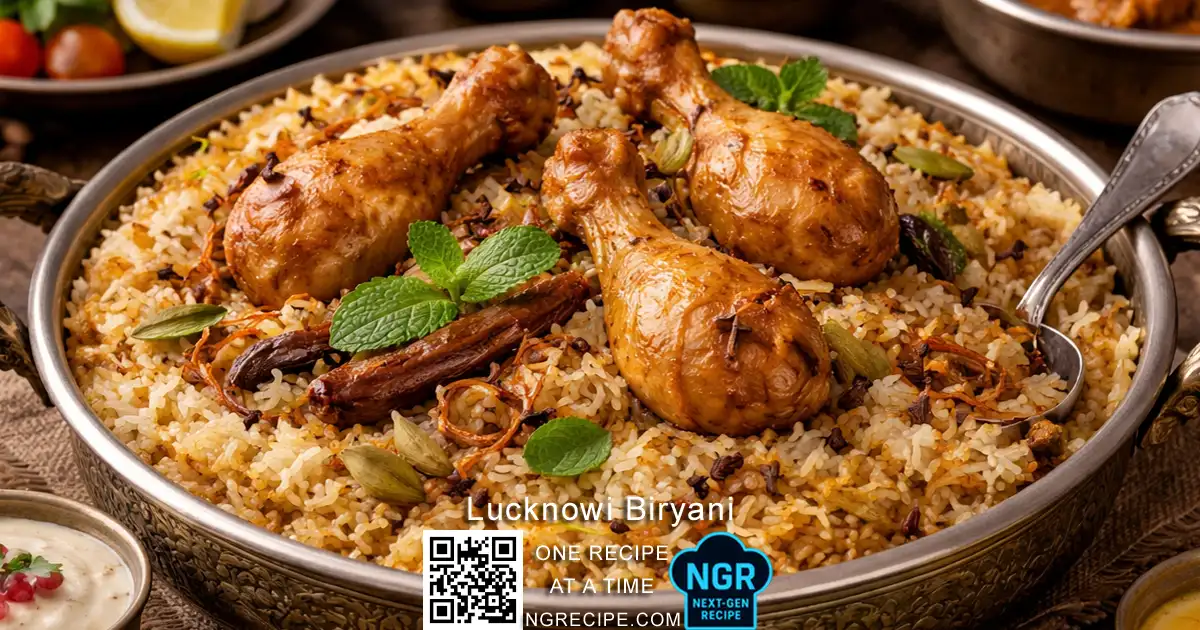
Lucknowi Biryani
A delicately spiced, aromatic rice and meat dish from the royal kitchens of Awadh, known for its refined flavors, subtle fragrance, and signature “dum” slow-cooking technique.
Quick Recipe Card
What This Recipe Is
Lucknowi Biryani, also called Awadhi Biryani, is a layered rice dish where partially cooked basmati rice and marinated chicken are cooked together in a sealed pot. Unlike spicier biryanis, it focuses on elegance, aroma, and balance rather than heat.
Ingredients
- 500 g basmati rice (2.5 cups)
- 700 g chicken, bone-in (1.5 lb)
- 200 g yogurt (¾ cup)
- 3 medium onions, thinly sliced
- 4 tbsp ghee (¼ cup)
- 2 tbsp oil (2 tbsp)
- 1 tsp ginger paste (1 tsp)
- 1 tsp garlic paste (1 tsp)
- 1 tsp salt (adjust to taste)
- ½ tsp turmeric powder (½ tsp)
- 1 tsp red chili powder (1 tsp)
- 1 tsp garam masala (1 tsp)
- 4 green cardamom pods
- 4 cloves
- 1 cinnamon stick (5 cm / 2 inch)
- 1 bay leaf
- ¼ tsp saffron soaked in 2 tbsp warm milk
- 1 tbsp kewra water (optional)
- 2 tbsp chopped fresh coriander
- 2 tbsp chopped fresh mint
Equipment
- Heavy-bottom pot or handi with lid
- Large pan for frying onions
- Mixing bowl
- Strainer
Instructions
Step 1:
Wash and soak basmati rice for 30 minutes, then parboil until 70% cooked and drain.
Step 2:
Fry sliced onions in oil until golden brown and set aside.
Step 3:
In a bowl, marinate chicken with yogurt, ginger paste, garlic paste, turmeric, chili powder, salt, and garam masala.
Step 4:
Heat ghee in a heavy pot, add whole spices (cardamom, cloves, cinnamon, bay leaf).
Step 5:
Add marinated chicken and cook on medium heat until partially cooked.
Step 6:
Layer half the rice over the chicken.
Step 7:
Add fried onions, mint, coriander, saffron milk, and kewra water.
Step 8:
Add remaining rice and repeat garnish.
Step 9:
Seal the pot tightly and cook on low heat for 25–30 minutes.
Step 10:
Rest for 10 minutes before opening and gently fluff.
Visual Cooking Cues
- Rice grains remain long and separate
- Steam escapes gently during dum
- Chicken appears tender and coated with spices
Chef Tips
- Seal lid with dough for authentic dum
- Do not stir during dum cooking
- Use low heat to prevent burning
Common Mistakes
- Overcooking rice before layering
- Too much water causing soggy texture
- High heat during dum stage
Troubleshooting
- Soggy biryani: Reduce water and ensure proper rice draining
- Dry biryani: Add a few tablespoons of warm milk before dum
- Burnt bottom: Use a thick pan or heat diffuser
Ingredient Pairings
- Raita
- Salad
- Pickles
Substitutions
- Chicken → Lamb
- Ghee → Butter (less authentic)
- Kewra water → Rose water (small amount)
Recipe Family Variations
- Chicken Lucknowi Biryani
- Mutton Lucknowi Biryani
- Vegetable Awadhi Biryani
Serving Suggestions
- Serve hot with chilled raita and fresh salad
Dietary Classification
- Non-vegetarian
- Gluten-free
Nutrition Information
- Calories: ~520 kcal
- Protein: ~28 g
- Fat: ~22 g
- Carbohydrates: ~50 g
- Fiber: ~3 g
- Sodium: ~700 mg
Storage / Reheating
Storage
- Refrigerate up to 2 days in airtight container
Reheating
- Reheat gently with a splash of water on low heat
FAQ
Can I skip saffron?
Yes, but aroma will be reduced.
Why is my rice sticky?
Overcooked or excess water.
Can I use boneless chicken?
Yes, but flavor will be lighter.
Why This Recipe Works
- Dum cooking traps steam, infusing flavor deeply
- Layering ensures even distribution of spices and moisture
- Yogurt tenderizes the chicken while adding subtle tang
- Controlled heat prevents burning and preserves aroma
Recipe Identity
- Origin: Lucknow, Uttar Pradesh, India
- Style: Dum-cooked layered biryani
- Signature: Mild spices, fragrant rice, tender meat
Dish Classification
- Dish type: Rice-based meat dish
- Course: Main course
- Meal type: Lunch, Dinner
- Traditional or modern dish: Traditional
- Street food or home cooking: Both
- Festival or everyday food: Festival and special occasions
Recipe History
Lucknowi Biryani originates from the royal Awadhi kitchens of the Nawabs. Influenced by Persian cooking, it emphasizes refinement, fragrance, and slow cooking rather than strong spices, making it one of the most elegant biryani styles.
Cultural Notes
- Traditionally cooked in sealed pots over charcoal
- Represents royal Awadhi culinary refinement
Advanced Cooking Knowledge Open detailed cooking science and reference notes
Flavor, Texture, and Aroma Profile
- Flavor: Mildly spiced, aromatic, slightly creamy
- Texture: Fluffy rice, tender chicken, silky onions
- Aroma: Saffron, kewra, ghee, whole spices
Flavor Balance
- Gentle spice warmth balanced with aromatic sweetness and richness
Flavor Components
- Sweet: Fried onions, saffron
- Salt: Balanced seasoning
- Acid: Yogurt marinade
- Bitter: Minimal (from lightly caramelized onions)
- Umami: Chicken and slow cooking
- Aromatic elements: Cardamom, cinnamon, cloves, saffron, kewra water
Ingredient Notes
- Use aged basmati rice for better grain separation
- Bone-in chicken provides deeper flavor
- Kewra water adds authentic floral aroma
Ingredient Science
- Yogurt enzymes break down protein, tenderizing meat
- Saffron releases color and aroma when soaked in warm liquid
- Ghee enhances fat-soluble flavor compounds
Ingredient Roles
- Rice: Structure and bulk
- Chicken: Protein and umami
- Yogurt: Tenderizer and flavor base
- Whole spices: Aromatic backbone
- Ghee: Richness and aroma
Ingredient Classification
- Grains: Basmati rice
- Protein: Chicken
- Dairy: Yogurt, ghee
- Aromatics: Onion, spices, herbs
Preparation Techniques
- Marination for flavor infusion
- Partial boiling of rice
- Deep frying onions until golden
Cooking Techniques
- Layering rice and meat
- Dum cooking (sealed slow cooking)
- Gentle steaming
Heat Management
- Low heat stages: Dum cooking
- Medium heat stages: Cooking chicken base
- High heat stages: Frying onions
- Temperature cues: Gentle steam, no burning smell
Texture Development
- Fluffy rice achieved by parboiling
- Tender chicken from slow cooking
- Slight crispness from fried onions
Cooking Time Control
- Rice cooked to 70% before layering
- Dum stage strictly timed to avoid overcooking
Flavor Pairing Logic
- Cooling yogurt balances spice
- Acidic pickles enhance richness
Global Variations
- Hyderabadi Biryani (spicier, stronger flavors)
- Kolkata Biryani (includes potato and egg)
Leftover Ideas
- Biryani fried rice
- Stuffed wraps
Cooking Safety Notes
- Ensure chicken reaches safe internal temperature
- Avoid leaving cooked rice at room temperature for long
Sustainability Notes
- Use locally sourced rice and poultry
- Minimize food waste by reusing leftovers
