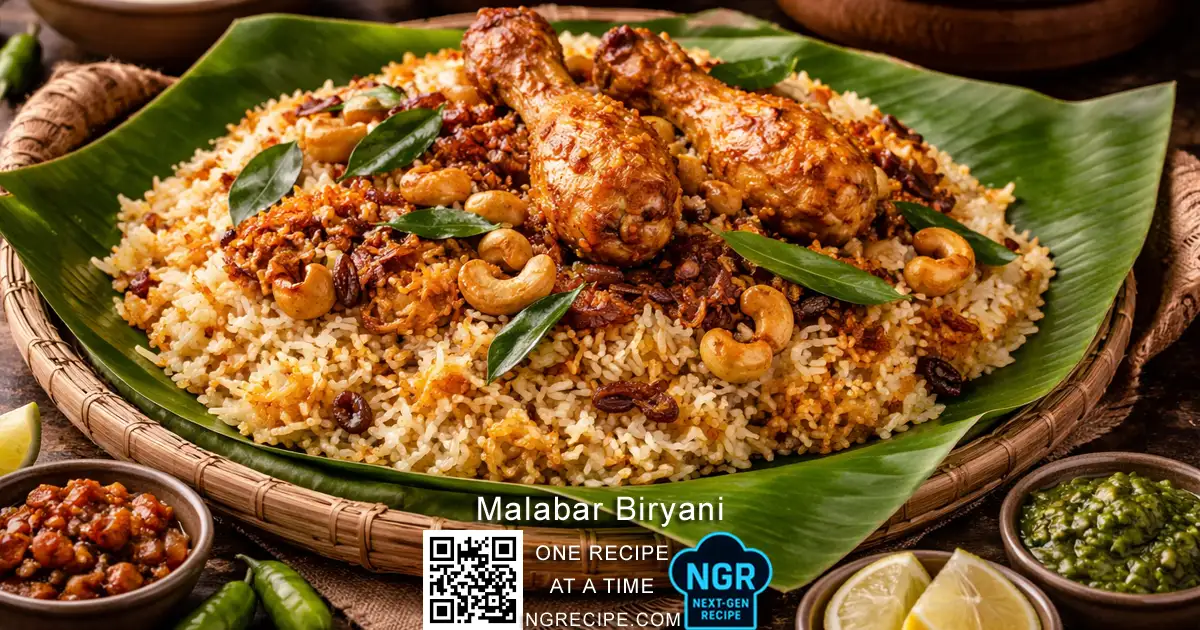
Malabar Biryani
A fragrant, mildly spiced rice dish from Kerala’s Malabar region, Malabar Biryani is known for its delicate flavors, short-grain rice, and aromatic layering technique that creates a rich yet balanced culinary experience.
Quick Recipe Card
What This Recipe Is
Malabar Biryani is a traditional layered rice dish made with short-grain rice (Kaima/Jeerakasala), tender chicken, aromatic spices, fried onions, and ghee, cooked using the dum method for depth of flavor.
Ingredients
- 500 g chicken (1.1 lb), cut into pieces
- 300 g Kaima rice (1.5 cups)
- 3 tablespoons ghee (45 ml / 3 tbsp)
- 2 large onions (200 g / 7 oz), thinly sliced
- 2 tomatoes (150 g / 5 oz), chopped
- 150 g yogurt (½ cup)
- 2 tablespoons ginger-garlic paste (30 g / 2 tbsp)
- 3 green chilies (15 g / 0.5 oz), slit
- 1 teaspoon turmeric powder (5 g / 1 tsp)
- 2 teaspoons biryani masala (10 g / 2 tsp)
- 4 cardamom pods
- 4 cloves
- 1 cinnamon stick
- 2 bay leaves
- Salt to taste (approx. 10 g / 2 tsp)
- 500 ml water (2 cups)
- Fresh coriander leaves (20 g / 0.7 oz), chopped
- Fresh mint leaves (20 g / 0.7 oz), chopped
- Juice of 1 lemon (15 ml / 1 tbsp)
Equipment
- Heavy-bottom pot or Dutch oven
- Frying pan
- Lid or dough for sealing
- Mixing bowl
Instructions
Step 1:
Wash and soak rice for 20 minutes, then boil in salted water until 70% cooked. Drain and set aside.
Step 2:
Heat ghee and fry sliced onions until golden brown. Remove half for garnish.
Step 3:
In the same pot, add whole spices, ginger-garlic paste, green chilies, and sauté.
Step 4:
Add chicken, turmeric, salt, and cook until partially done.
Step 5:
Add tomatoes and cook until soft.
Step 6:
Stir in yogurt and biryani masala, cook until oil separates.
Step 7:
Layer partially cooked rice over the chicken mixture.
Step 8:
Sprinkle fried onions, coriander, mint, and lemon juice.
Step 9:
Cover tightly and cook on low heat (dum) for 20 minutes.
Step 10:
Rest for 10 minutes before serving.
Visual Cooking Cues
- Onions: Deep golden brown
- Chicken: Oil separates from gravy
- Rice: Fluffy and separate grains
Chef Tips
- Use low heat for dum to avoid burning
- Do not overmix after layering
- Use fresh spices for better aroma
Common Mistakes
- Overcooking rice before dum
- Using too much water
- High heat during dum
Troubleshooting
- Rice too soft: Reduce boiling time
- Dry biryani: Add a splash of warm water before dum
- Bland taste: Adjust salt and spice before layering
Ingredient Pairings
- Raita
- Pickles
- Boiled eggs
Substitutions
- Chicken → Mutton
- Kaima rice → Basmati (less authentic)
- Ghee → Neutral oil
Recipe Family Variations
- Egg Malabar Biryani
- Fish Malabar Biryani
Serving Suggestions
Serve hot with raita, salad, and lemon wedges.
Dietary Classification
- Non-vegetarian
- Gluten-free
Nutrition Information
- Calories: ~550 kcal
- Protein: 28 g
- Fat: 22 g
- Carbohydrates: 55 g
- Fiber: 3 g
- Sodium: ~800 mg
Storage / Reheating
Storage
Refrigerate up to 3 days in an airtight container.
Reheating
Reheat on low heat with a splash of water or steam.
FAQ
Can I use basmati rice?
Yes, but it changes authenticity and texture.
Why is my biryani dry?
Insufficient moisture or overcooking during dum.
Can I make it ahead?
Yes, flavors improve after resting.
Why This Recipe Works
- Short-grain rice absorbs flavors without becoming mushy
- Yogurt tenderizes the chicken
- Layering ensures even flavor distribution
- Dum cooking locks in aroma and moisture
Recipe Identity
- Origin: Malabar region, Kerala, India
- Cuisine: South Indian (Kerala Muslim cuisine)
- Core Technique: Layering and dum cooking
- Signature Feature: Use of short-grain fragrant rice and mild spice profile
Dish Classification
- Dish type: Rice-based layered dish
- Course: Main course
- Meal type: Lunch or dinner
- Traditional or modern dish: Traditional
- Street food or home cooking: Both
- Festival or everyday food: Both (especially Ramadan and celebrations)
Recipe History
Malabar Biryani evolved through Arab trade influence in Kerala, combining Middle Eastern techniques with local spices and rice varieties. It is especially popular among the Mappila Muslim community.
Cultural Notes
Malabar Biryani is central to Kerala Muslim celebrations and reflects centuries of trade and cultural exchange.
Advanced Cooking Knowledge Open detailed cooking science and reference notes
Flavor, Texture, and Aroma Profile
- Flavor: Mildly spiced, aromatic, slightly sweet from fried onions
- Texture: Soft, fluffy rice with tender, juicy chicken
- Aroma: Rich with ghee, cardamom, cinnamon, and fried onions
Flavor Balance
Balanced between aromatic spices, mild heat, and richness from ghee and yogurt.
Flavor Components
- Sweet: Fried onions
- Salt: Salt and seasoning
- Acid: Yogurt
- Bitter: Minimal
- Umami: Chicken
- Aromatic elements: Cardamom, cinnamon, cloves, curry leaves
Ingredient Notes
- Kaima rice is essential for authenticity
- Ghee enhances aroma and richness
- Yogurt provides tenderness and mild tang
Ingredient Science
- Yogurt breaks down proteins for softer meat
- Ghee carries fat-soluble spice compounds
- Short-grain rice releases starch for better binding
Ingredient Roles
- Rice: Base structure
- Chicken: Protein and flavor
- Spices: Aroma and depth
- Yogurt: Tenderizer and acidity
- Ghee: Flavor enhancer
Ingredient Classification
- Grains: Rice
- Protein: Chicken
- Dairy: Yogurt, ghee
- Aromatics: Onion, garlic, ginger
- Spices: Whole and ground spices
Preparation Techniques
- Washing and soaking rice
- Slicing onions evenly
- Marinating chicken
Cooking Techniques
- Frying onions
- Simmering chicken
- Layering rice and meat
- Dum (sealed cooking)
Heat Management
- Low heat stages: Dum cooking
- Medium heat stages: Chicken cooking
- High heat stages: Frying onions
- Temperature cues: Gentle steam without burning
Texture Development
- Fried onions add crispness
- Dum cooking ensures fluffy rice
Cooking Time Control
- Avoid overcooking rice before layering
- Control dum time to prevent dryness
Flavor Pairing Logic
Cooling sides balance the rich, aromatic rice.
Global Variations
- Middle Eastern mandi-style rice
- Pakistani biryani (spicier)
Leftover Ideas
- Biryani fried rice
- Stuffed wraps
Cooking Safety Notes
- Ensure chicken reaches safe internal temperature (75°C / 167°F)
- Avoid leaving cooked rice at room temperature for long
Sustainability Notes
- Use locally sourced chicken and spices
- Minimize food waste by reusing leftovers
