Nanjing Salted Duck
A traditional Chinese delicacy known for its tender texture, delicate saltiness, and aromatic spice infusion, prepared through careful brining and gentle poaching.
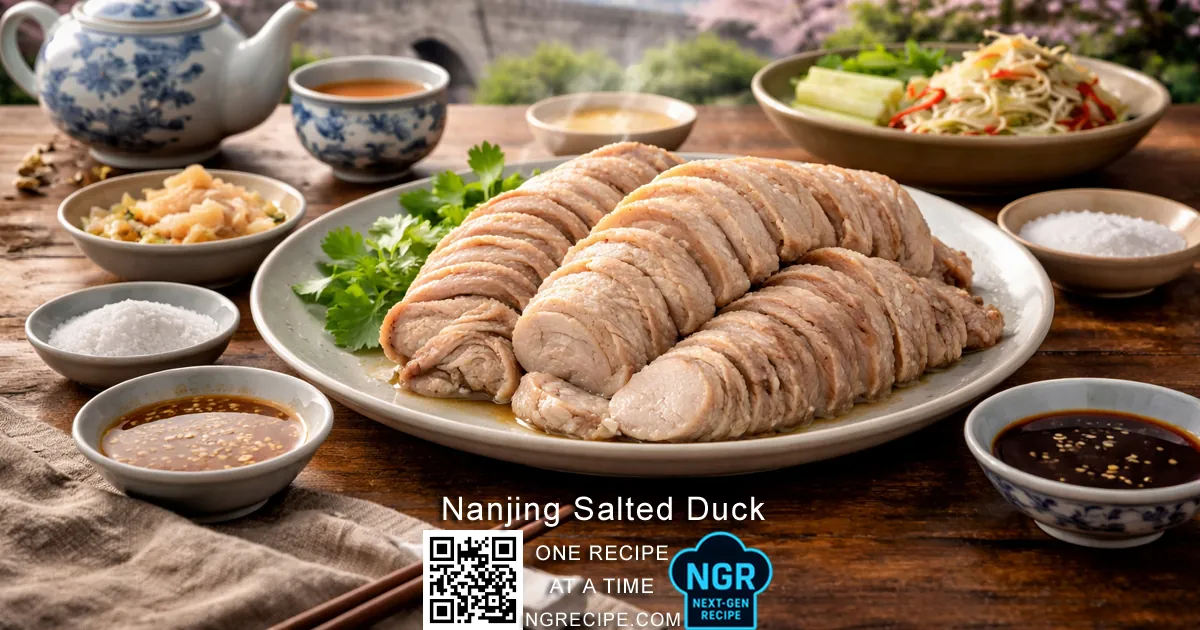
Quick Recipe Card
What This Recipe Is
Nanjing Salted Duck is a classic cold-served duck dish from Jiangsu cuisine, featuring lightly cured meat infused with aromatics and cooked at controlled temperatures to preserve juiciness.
Ingredients
- 1 whole duck (about 2 kg / 4.4 lb)
- 40 g salt (2.5 tbsp)
- 1 tbsp Sichuan peppercorn
- 2 star anise
- 5 slices ginger
- 3 scallions, cut into sections
- 2 L water (8 cups)
Equipment
- Large pot
- Rack or hook for air drying
- Knife and cutting board
Instructions
Step 1:
Clean the duck thoroughly and pat dry.
Step 2:
Rub the duck evenly with salt and crushed Sichuan peppercorn.
Step 3:
Place the duck in a cool place and cure for 10–12 hours.
Step 4:
Rinse off excess salt and hang or place the duck on a rack to air dry for 2–3 hours.
Step 5:
In a large pot, add water, ginger, scallion, and star anise.
Step 6:
Heat the water to about 85°C (185°F).
Step 7:
Submerge the duck and maintain gentle heat without boiling.
Step 8:
Poach for 45–60 minutes until cooked through.
Step 9:
Remove the duck and allow it to cool naturally.
Step 10:
Chop into pieces and serve.
Visual Cooking Cues
- Skin appears slightly tightened and pale golden
- Meat feels firm but springy
- Clear juices when pierced
Chef Tips
- Maintain low temperature to keep meat tender
- Do not skip air drying for best texture
Common Mistakes
- Boiling instead of poaching
- Over-salting during curing
- Skipping drying stage
Troubleshooting
- Duck too salty: Reduce curing time or rinse more thoroughly
- Tough meat: Lower cooking temperature
- Bland flavor: Ensure proper curing time
Ingredient Pairings
- Steamed rice
- Light dipping salt or soy sauce
- Pickled vegetables
Substitutions
- Sichuan peppercorn → black pepper (milder aroma)
- Star anise → cinnamon stick (slight variation)
Recipe Family Variations
- Tea-smoked salted duck
- Herbal salted duck
Serving Suggestions
- Serve at room temperature
- Slice evenly for presentation
Dietary Classification
- High-protein
- Gluten-free
Nutrition Information
- Calories: ~420 kcal
- Protein: ~28 g
- Fat: ~34 g
- Carbohydrates: ~1 g
- Fiber: 0 g
- Sodium: Moderate
Storage / Reheating
Storage
- Refrigerate up to 3 days
- Store in airtight container
Reheating
- Steam gently at low heat
- Avoid microwave to preserve texture
FAQ
Is this dish very salty?
No, it is lightly salted with balanced flavor.
Can I roast instead of poach?
Traditional method uses poaching for tenderness.
Can I use duck pieces?
Whole duck is preferred for even curing.
Why This Recipe Works
- Controlled brining ensures even seasoning without overpowering saltiness
- Air drying enhances skin texture and flavor absorption
- Low-temperature poaching preserves tenderness and prevents dryness
Recipe Identity
A heritage Chinese preparation emphasizing balance, subtle seasoning, and precise temperature control rather than heavy sauces or intense spices.
Dish Classification
- Dish type: Meat dish
- Course: Main course
- Meal type: Lunch, Dinner
- Traditional or modern dish: Traditional
- Street food or home cooking: Both
- Festival or everyday food: Both
Recipe History
Originating from Nanjing in Jiangsu Province, this dish dates back over 2,000 years and is a signature of Huaiyang cuisine, known for its refined techniques and balanced flavors.
Cultural Notes
- Considered one of Nanjing’s “Four Famous Dishes”
- Known locally as “Salted Duck of Jinling”
Advanced Cooking Knowledge Open detailed cooking science and reference notes
Flavor, Texture, and Aroma Profile
- Flavor: Lightly salty with aromatic spice notes
- Texture: Tender, juicy, slightly firm skin
- Aroma: Warm spices, ginger, and subtle duck richness
Flavor Balance
- Mild saltiness balanced with gentle spice infusion and natural umami from duck
Flavor Components
- Sweet: Minimal
- Salt: Moderate
- Acid: None
- Bitter: None
- Umami: High
- Aromatic elements: Sichuan peppercorn, star anise, ginger, scallion
Ingredient Notes
- Use fresh duck with intact skin for best texture
- Sichuan peppercorn adds mild numbing aroma, not heat
Ingredient Science
- Salt penetrates muscle fibers, enhancing flavor and moisture retention
- Aromatics infuse during poaching, creating layered flavor
Ingredient Roles
- Duck: Primary protein and flavor base
- Salt: Curing agent and flavor enhancer
- Spices: Aromatic complexity
- Water: Gentle cooking medium
Ingredient Classification
- Protein: Duck
- Seasoning: Salt
- Aromatics: Ginger, scallion, spices
- Liquid: Water
Preparation Techniques
- Cleaning and trimming duck
- Dry salting (curing)
- Air drying
Cooking Techniques
- Gentle poaching
- Infusion cooking
Heat Management
- Low heat stages: Poaching at ~80–90°C (176–194°F)
- Medium heat stages: Initial water heating
- High heat stages: None
- Temperature cues: Water should not boil vigorously
Texture Development
- Air drying tightens skin
- Low heat cooking prevents tough fibers
Cooking Time Control
- Maintain steady low temperature
- Avoid overcooking to prevent dryness
Flavor Pairing Logic
- Mild duck flavor pairs with neutral or lightly acidic sides
Global Variations
- Chinese white-cut duck
- Cantonese poached duck
Leftover Ideas
- Duck rice bowls
- Duck noodle soup
Cooking Safety Notes
- Ensure duck reaches safe internal temperature (~75°C / 167°F)
- Avoid cross-contamination
Sustainability Notes
- Use whole duck to minimize waste
- Utilize bones for broth
