Oven-Baked Fish and Chips
A healthier take on the British classic, oven-baked fish and chips delivers crispy coated fish and golden potatoes without deep frying, while maintaining satisfying texture and flavor.
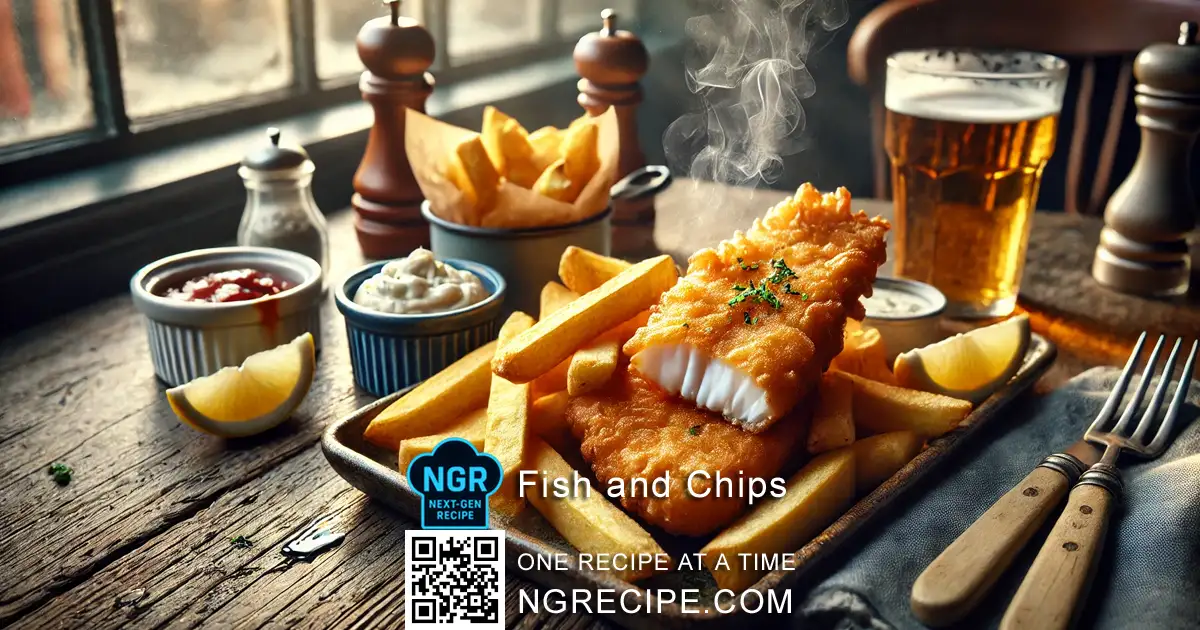
Quick Recipe Card
What This Recipe Is
Oven-Baked Fish and Chips is a lighter version of the traditional British dish where fish fillets and potato chips are baked instead of deep-fried, using controlled heat and coating techniques to achieve crispness.
Ingredients
- 600 g white fish fillets (1.3 lb, cod or haddock)
- 800 g potatoes (1.8 lb, peeled and cut into chips)
- 60 g all-purpose flour (½ cup)
- 2 large eggs
- 100 g breadcrumbs (1 cup, preferably panko)
- 30 ml vegetable oil (2 tbsp)
- 5 g salt (1 tsp)
- 3 g black pepper (½ tsp)
Equipment
- Baking tray
- Wire rack (optional)
- Mixing bowls
- Knife and cutting board
- Oven
Instructions
Step 1:
Preheat oven to 220°C (428°F).
Step 2:
Toss potatoes with half the oil and a pinch of salt.
Step 3:
Spread potatoes on a baking tray and bake for 15 minutes.
Step 4:
Prepare coating stations: flour, beaten eggs, breadcrumbs mixed with salt and pepper.
Step 5:
Coat fish: dredge in flour, dip in egg, then coat with breadcrumbs.
Step 6:
Remove tray, turn potatoes, and place coated fish on tray.
Step 7:
Drizzle remaining oil over fish and potatoes.
Step 8:
Bake for 15 minutes until fish is golden and flakes easily.
Step 9:
Rest for 5 minutes before serving.
Visual Cooking Cues
- Chips: Golden edges and crisp exterior
- Fish: Even golden coating, flakes easily when pressed
Chef Tips
- Use a wire rack for better air circulation
- Preheat tray for crispier chips
- Avoid overcrowding
Common Mistakes
- Skipping preheating
- Wet fish causing coating failure
- Overcrowding tray
Troubleshooting
- Not crispy: Increase oven temperature slightly
- Fish breaking: Use thicker fillets
- Soggy chips: Spread evenly and avoid stacking
Ingredient Pairings
- Lemon wedges
- Tartar sauce
- Malt vinegar
Substitutions
- Fish: Pollock instead of cod
- Breadcrumbs: Crushed cornflakes
- Oil: Olive oil
Recipe Family Variations
- Spiced coating with paprika
- Herb breadcrumb coating
- Whole wheat breadcrumb version
Serving Suggestions
- Serve hot with lemon wedges and sauce
- Pair with peas or salad
Dietary Classification
- Pescatarian
- Reduced-fat
Nutrition Information
- Calories: ~420 kcal
- Protein: 28 g
- Fat: 12 g
- Carbohydrates: 45 g
- Fiber: 4 g
- Sodium: 450 mg
Storage / Reheating
Storage
- Refrigerate up to 2 days
Reheating
- Reheat in oven at 180°C (356°F) for 10 minutes
FAQ
Can I use frozen fish?
Yes, thaw completely and pat dry.
Why are my chips not crispy?
Ensure high heat and enough spacing.
Can I skip egg?
Egg is essential for coating adhesion.
Why This Recipe Works
- Dry coating ensures crisp texture in oven
- High-temperature baking mimics frying conditions
- Oil coating promotes browning and crunch
- Even spacing prevents steaming
Recipe Identity
- Origin: United Kingdom
- Cuisine: British
- Cooking Style: Oven-baked
- Core Elements: Breaded fish + roasted potato chips
Dish Classification
- Dish type: Main dish
- Course: Main course
- Meal type: Lunch, Dinner
- Traditional or modern dish: Modern adaptation
- Street food or home cooking: Home cooking
- Festival or everyday food: Everyday food
Recipe History
Fish and chips originated in the United Kingdom in the 19th century. The oven-baked variation emerged as a modern, health-conscious adaptation to reduce oil usage while maintaining the essence of the dish.
Cultural Notes
- Maintains British identity while adapting to modern health preferences
Advanced Cooking Knowledge Open detailed cooking science and reference notes
Flavor, Texture, and Aroma Profile
- Flavor: Mild, savory, slightly earthy
- Texture: Crispy exterior, flaky fish interior, soft-centered chips
- Aroma: Toasted breadcrumbs, roasted potatoes, light marine notes
Flavor Balance
- Balanced saltiness with mild umami and light starch sweetness
Flavor Components
- Sweet: Potatoes
- Salt: Seasoning
- Acid: Optional lemon
- Bitter: Minimal
- Umami: Fish
- Aromatic elements: Pepper, toasted coating
Ingredient Notes
- Use firm white fish to prevent breaking
- Starchy potatoes yield better interior texture
- Panko breadcrumbs create extra crispiness
Ingredient Science
- Flour dries surface for adhesion
- Egg acts as binder
- Breadcrumbs create structure for crisp crust
- Oil enables Maillard browning in oven
Ingredient Roles
- Fish: Protein base
- Potatoes: Carbohydrate base
- Flour/Egg/Breadcrumbs: Coating system
- Oil: Heat transfer and crisping agent
Ingredient Classification
- Protein: Fish
- Carbohydrates: Potatoes, flour, breadcrumbs
- Fat: Oil
- Seasoning: Salt, pepper
Preparation Techniques
- Cutting potatoes evenly for uniform cooking
- Patting fish dry before coating
- Preheating oven to ensure immediate crisping
Cooking Techniques
- Baking at high temperature
- Coating using dredge method
- Turning halfway for even browning
Heat Management
- Low heat stages: None
- Medium heat stages: Initial chip softening phase
- High heat stages: Crisping at 220°C (428°F)
- Temperature cues: Golden brown coating
Texture Development
- Drying fish ensures crisp coating
- Oil-coated chips crisp externally while soft inside
Cooking Time Control
- Chips start first due to longer cook time
- Fish added later to prevent overcooking
Flavor Pairing Logic
- Acid cuts richness
- Creamy sauces balance crisp texture
Global Variations
- Australian baked fish and chips
- Indian spiced baked fish
- Canadian oven fish and fries
Leftover Ideas
- Fish sandwiches
- Fish tacos
- Loaded fish fries
Cooking Safety Notes
- Ensure fish reaches safe internal temperature
- Handle raw fish hygienically
Sustainability Notes
- Use sustainably sourced fish
- Reduce oil waste compared to frying
