Panko-Crusted Fish and Chips
A crispy, golden twist on the British classic, Panko-Crusted Fish and Chips delivers an ultra-light crunch with tender, flaky fish inside. Using Japanese-style breadcrumbs ensures superior texture while keeping the dish approachable for home cooks.
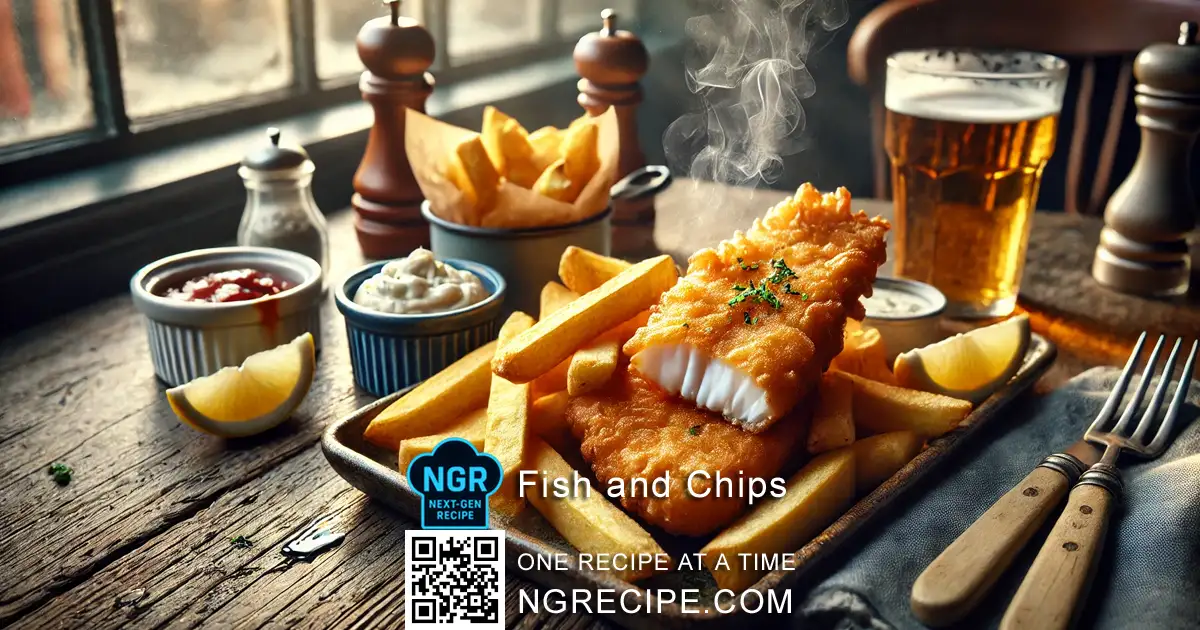
Quick Recipe Card
What This Recipe Is
A deep-fried fish and chips variation using panko breadcrumbs instead of traditional batter, resulting in a lighter, crunchier coating with consistent crispness.
Ingredients
- 4 white fish fillets (cod or haddock), about 150–180 g each (5–6 oz)
- 800 g potatoes (1.7 lb), peeled and cut into thick chips
- 120 g all-purpose flour (1 cup)
- 2 large eggs
- 200 g panko breadcrumbs (2 cups)
- 1 tsp salt (5 g)
- ½ tsp black pepper (2 g)
- 1 L vegetable oil for frying (4 cups)
Equipment
- Deep frying pan or deep fryer
- Mixing bowls
- Tongs or slotted spoon
- Paper towels
- Knife and cutting board
- Thermometer (recommended)
Instructions
Step 1:
Heat oil to 150°C (300°F) and fry potatoes for 5–6 minutes until soft but not browned. Remove and rest.
Step 2:
Increase oil temperature to 180°C (356°F).
Step 3:
Season fish with salt and pepper.
Step 4:
Dredge each fillet in flour, dip into beaten eggs, then coat with panko breadcrumbs.
Step 5:
Fry fish for 4–6 minutes until golden and crisp. Remove and drain on paper towels.
Step 6:
Fry chips again at 180°C (356°F) for 3–4 minutes until golden and crispy.
Step 7:
Drain chips and season lightly with salt.
Step 8:
Serve immediately.
Visual Cooking Cues
- Fish turns golden brown with crisp edges
- Chips become golden and firm
- Oil bubbles reduce when food is properly cooked
Chef Tips
- Press panko gently onto fish for better adhesion
- Keep oil clean for consistent flavor
- Serve immediately for best texture
Common Mistakes
- Wet fish causing coating to fall off
- Low oil temperature leading to soggy coating
- Overcrowding pan reducing crispness
Troubleshooting
- Coating falling off: Ensure fish is dry and coated properly
- Soggy chips: Increase oil temperature and avoid overcrowding
- Overcooked fish: Reduce frying time slightly
Ingredient Pairings
- Lemon wedges
- Tartar sauce
- Malt vinegar
- Coleslaw
Substitutions
- Use gluten-free flour and breadcrumbs if needed
- Substitute cod with haddock or pollock
Recipe Family Variations
- Spiced panko with paprika or garlic powder
- Oven-baked version with light oil spray
Serving Suggestions
- Serve hot with chips and dipping sauces
- Add lemon wedges for freshness
Dietary Classification
- Contains gluten
- Contains eggs
- Not suitable for vegan diets
Nutrition Information
- Calories: ~550 kcal
- Protein: 30 g
- Fat: 25 g
- Carbohydrates: 50 g
- Fiber: 4 g
- Sodium: 500 mg
Storage / Reheating
Storage
- Store leftovers in airtight container for up to 2 days
Reheating
- Reheat in oven at 180°C (356°F) for 10 minutes to restore crispness
FAQ
Can I bake instead of fry?
Yes, but texture will be less crispy
Why is my coating falling off?
Fish may be too wet or coating not pressed properly
Can I use frozen fish?
Yes, fully thaw and dry before use
Why This Recipe Works
- Panko creates a lighter, airier crust than traditional batter
- Double-layer coating ensures adhesion and crispness
- Controlled oil temperature prevents sogginess
- Proper drying of fish avoids coating separation
Recipe Identity
- Origin: United Kingdom (modern adaptation)
- Style: Breaded fried fish with chips
- Core technique: Coating and deep frying
- Key feature: Extra crispy panko crust
Dish Classification
- Dish type: Main dish
- Course: Main course
- Meal type: Lunch, Dinner
- Traditional or modern dish: Modern variation
- Street food or home cooking: Both
- Festival or everyday food: Everyday comfort food
Recipe History
Fish and chips originated in the United Kingdom in the 19th century. The panko variation is a modern adaptation influenced by Japanese breadcrumb techniques, offering improved crispness and texture.
Cultural Notes
- This modern version adapts traditional British fish and chips using Japanese panko for improved texture
Advanced Cooking Knowledge Open detailed cooking science and reference notes
Flavor, Texture, and Aroma Profile
- Flavor: Mild, savory, slightly nutty coating
- Texture: Crisp exterior, flaky interior, soft chips
- Aroma: Toasted breadcrumbs, fried fish, light oil aroma
Flavor Balance
- Balanced saltiness with subtle umami from fish
- Neutral base enhanced by dipping sauces
Flavor Components
- Sweet: Minimal from potatoes
- Salt: From seasoning
- Acid: Optional via lemon or vinegar
- Bitter: None
- Umami: Fish
- Aromatic elements: Light toasted panko aroma
Ingredient Notes
- Use firm white fish to prevent breakage
- Russet or Maris Piper potatoes are ideal for chips
- Panko breadcrumbs provide superior crunch
Ingredient Science
- Panko flakes trap air, creating a crisp texture
- Flour dries the fish surface for better coating adhesion
- Egg acts as a binding layer for breadcrumbs
Ingredient Roles
- Fish: Main protein
- Potatoes: Carbohydrate base
- Flour: Base coating layer
- Egg: Binding agent
- Panko: Crisp coating
- Oil: Heat transfer medium
Ingredient Classification
- Protein: Fish
- Carbohydrate: Potatoes
- Fat: Oil
- Coating agents: Flour, egg, panko
Preparation Techniques
- Pat fish dry to remove moisture
- Cut potatoes evenly for uniform cooking
- Set up coating station: flour, egg, panko
Cooking Techniques
- Deep frying for both fish and chips
- Breading technique for coating
Heat Management
- Low heat stages:
- Initial potato cooking at 150°C (300°F)
- Medium heat stages:
- Resting phase for chips
- High heat stages:
- Final frying at 180°C (356°F)
- Temperature cues:
- Oil should bubble steadily, not aggressively
Texture Development
- Double frying chips ensures crisp exterior and fluffy interior
- Panko coating creates a crunchy shell without heaviness
Cooking Time Control
- Avoid overcrowding to maintain oil temperature
- Fry fish for 4–6 minutes until golden
Flavor Pairing Logic
- Acidic elements balance fried richness
- Creamy sauces complement crisp coating
Global Variations
- Japanese-style katsu fish using similar breadcrumb technique
- American-style breaded fish with seasoned crumbs
Leftover Ideas
- Fish sandwich with tartar sauce
- Fish salad with greens
Cooking Safety Notes
- Monitor hot oil to prevent overheating
- Avoid water contact with hot oil
Sustainability Notes
- Choose sustainably sourced fish
- Reuse oil responsibly if clean
