Peking Duck
A legendary Chinese dish known for its deeply lacquered crispy skin, tender meat, and elegant table-side presentation, traditionally served with thin pancakes, hoisin sauce, and fresh vegetables.
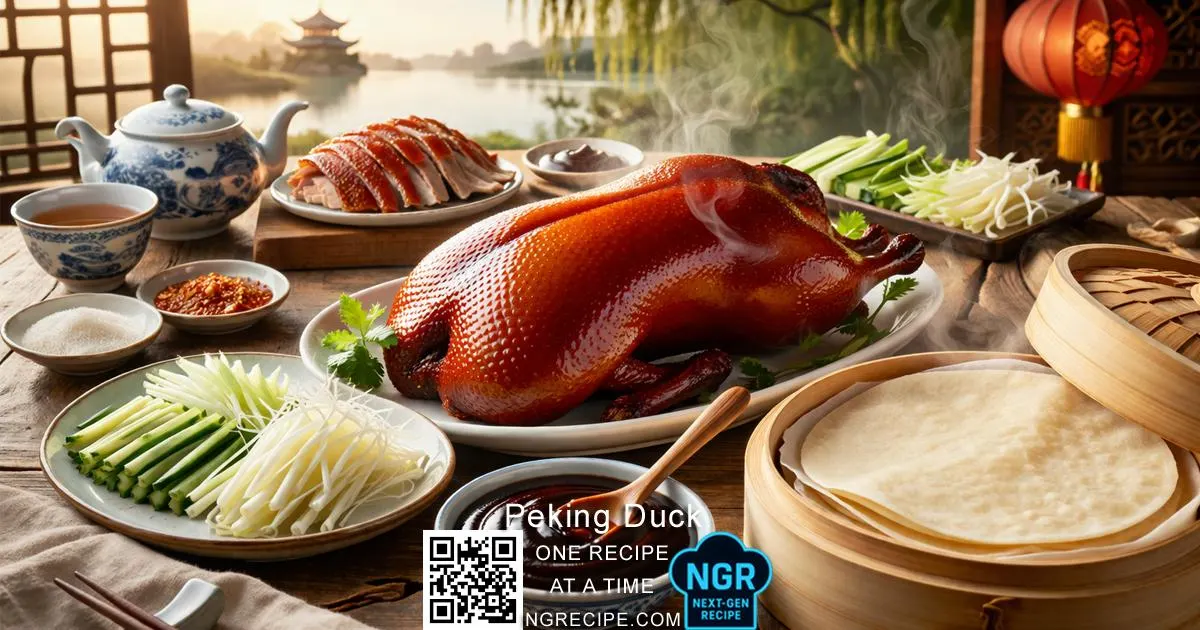
Quick Recipe Card
What This Recipe Is
Peking Duck is a classic Beijing dish featuring a specially prepared whole duck that is air-dried and roasted until the skin becomes crisp and glassy, while the meat remains juicy and flavorful.
Ingredients
- Whole duck – 2.5 kg (5.5 lb)
- Salt – 10 g (2 tsp)
- Honey or maltose – 60 ml (1/4 cup)
- Water – 500 ml (2 cups)
- Soy sauce – 30 ml (2 tbsp)
- Chinese five-spice powder – 5 g (1 tsp)
- Fresh ginger – 20 g (1 tbsp, sliced)
- Garlic – 3 cloves
- Scallions – 4 stalks
- Cucumber – 1 large, julienned
- Hoisin sauce – 120 ml (1/2 cup)
- Mandarin pancakes – 12 pieces
Equipment
- Roasting oven
- Rack and tray
- Hook or stand for drying
- Basting brush
Instructions
Step 1:
Clean and pat dry the duck thoroughly.
Step 2:
Rub salt evenly over the duck and inside the cavity.
Step 3:
Place ginger, garlic, and scallions inside the cavity.
Step 4:
Pour boiling water over the duck to tighten the skin.
Step 5:
Mix honey, soy sauce, and water, then brush over the duck.
Step 6:
Hang or place the duck on a rack and air-dry in a refrigerator for 12–24 hours.
Step 7:
Preheat oven to 180°C (356°F).
Step 8:
Roast duck on a rack for 45 minutes.
Step 9:
Increase temperature to 220°C (428°F) and roast for 20–30 minutes until skin is crisp.
Step 10:
Rest for 10 minutes before carving.
Step 11:
Slice skin and meat thinly and serve with pancakes, hoisin sauce, cucumber, and scallions.
Visual Cooking Cues
- Skin becomes glossy and taut before roasting
- Final color: deep amber with blistered crisp skin
Chef Tips
- Ensure skin is completely dry before roasting
- Use a fan or refrigerator airflow for better drying
Common Mistakes
- Skipping drying step → soggy skin
- Overcrowding oven → uneven cooking
- Low heat only → rubbery skin
Troubleshooting
- Skin not crisp: Increase final heat
- Meat dry: Reduce roasting time
- Uneven color: Rotate duck during roasting
Ingredient Pairings
- Hoisin sauce
- Fresh cucumber
- Scallions
- Thin pancakes
Substitutions
- Honey instead of maltose
- Chicken (less authentic but possible)
Recipe Family Variations
- Cantonese roast duck (juicier, less crisp)
- Home oven simplified version
Serving Suggestions
- Serve immediately with warm pancakes
- Pair with light tea or steamed rice
Dietary Classification
- Non-vegetarian
- High-fat dish
Nutrition Information
- Calories: ~450 kcal
- Protein: 28 g
- Fat: 35 g
- Carbohydrates: 8 g
- Fiber: 1 g
- Sodium: 600 mg
Storage / Reheating
Storage
- Refrigerate leftovers up to 3 days
Reheating
- Reheat in oven at 180°C (356°F) for crispness
FAQ
Can I skip air-drying?
No, it is essential for crispy skin
Can I use a smaller duck?
Yes, adjust cooking time
Why is my skin not crispy?
Likely due to moisture
Why This Recipe Works
- Air-drying removes moisture, ensuring crisp skin
- Sugar glaze promotes caramelization
- Controlled roasting renders fat gradually without burning
Recipe Identity
- Origin: Beijing, China
- Signature element: Ultra-crispy skin
- Cooking style: Air-dried and roasted whole duck
Dish Classification
- Dish type: Meat dish
- Course: Main course
- Meal type: Dinner
- Traditional or modern dish: Traditional
- Street food or home cooking: Restaurant-style, also adapted for home cooking
- Festival or everyday food: Special occasion food
Recipe History
Peking Duck dates back to the Imperial kitchens of the Ming Dynasty. It became a symbol of refined Chinese cuisine, particularly in Beijing, where specialized roasting techniques were perfected.
Cultural Notes
- Traditionally carved table-side in restaurants
- Considered a symbol of Chinese culinary artistry
Advanced Cooking Knowledge Open detailed cooking science and reference notes
Flavor, Texture, and Aroma Profile
- Flavor: Savory, slightly sweet, aromatic
- Texture: Crisp skin, tender meat, soft pancakes
- Aroma: Roasted, caramelized, mildly spiced
Flavor Balance
- Sweetness from glaze and hoisin
- Saltiness from seasoning
- Mild umami from duck fat and meat
- Freshness from cucumber and scallions
Flavor Components
- Sweet: Maltose/honey glaze
- Salt: Salt rub
- Acid: Minimal (optional light vinegar in glaze)
- Bitter: Slight roast caramelization
- Umami: Duck meat
- Aromatic elements: Ginger, garlic, scallions
Ingredient Notes
- Maltose gives the most authentic glossy skin
- Use a high-quality duck with intact skin
Ingredient Science
- Sugar glaze enhances Maillard reaction
- Fat rendering from duck skin creates crisp texture
Ingredient Roles
- Duck: Main protein
- Honey/maltose: Skin crisping and color
- Soy sauce: Umami seasoning
- Ginger/garlic: Aromatics
- Pancakes: Serving base
Ingredient Classification
- Protein: Duck
- Aromatics: Ginger, garlic, scallions
- Condiments: Hoisin, soy sauce
- Vegetables: Cucumber
Preparation Techniques
- Air-drying
- Glazing
- Trussing
Cooking Techniques
- Roasting
- Fat rendering
Heat Management
- Low heat stages: Initial drying (optional oven drying at 90°C / 195°F)
- Medium heat stages: Main roasting at 180°C (356°F)
- High heat stages: Final crisping at 220°C (428°F)
- Temperature cues: Skin turns deep golden and crisp
Texture Development
- Dry skin + sugar glaze = crisp surface
- Slow roasting keeps meat juicy
Cooking Time Control
- Avoid over-roasting to prevent dryness
- Rotate duck for even cooking
Flavor Pairing Logic
- Rich duck pairs with fresh, crisp vegetables
- Sweet sauce balances savory fat
Global Variations
- Western-style roast duck with herbs
- Fusion wraps with tortillas
Leftover Ideas
- Duck fried rice
- Duck noodle soup
- Duck sandwiches
Cooking Safety Notes
- Ensure internal temperature reaches 74°C (165°F)
- Avoid cross-contamination with raw poultry
Sustainability Notes
- Choose responsibly sourced duck
- Use leftover bones for broth
