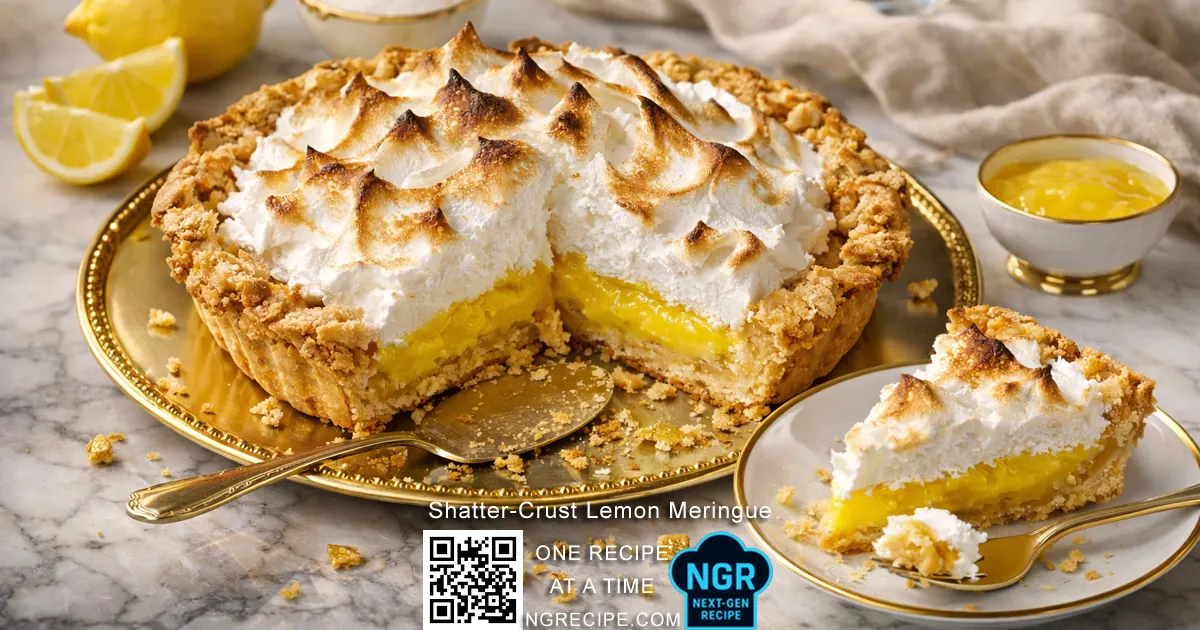
Shatter-Crust Lemon Meringue
A crisp, delicate “shatter” pastry base filled with bright, tangy lemon curd and topped with airy, lightly toasted meringue—this version focuses on precision texture, balanced acidity, and stable structure.
Quick Recipe Card
What This Recipe Is
A classic lemon meringue pie featuring an ultra-crisp, thin pastry crust (“shatter crust”), smooth lemon filling, and stable meringue topping.
Ingredients
- 150 g (1 1/4 cup) all-purpose flour
- 75 g (1/3 cup) unsalted butter, cold
- 30 g (2 tbsp) sugar
- 1 egg yolk
- 30 ml (2 tbsp) cold water
- 1 pinch salt
- 240 ml (1 cup) water
- 150 g (3/4 cup) sugar
- 30 g (1/4 cup) cornstarch
- 3 egg yolks
- 120 ml (1/2 cup) fresh lemon juice
- 1 tbsp lemon zest
- 30 g (2 tbsp) butter
- 3 egg whites
- 75 g (1/3 cup) sugar
Equipment
- Pie pan (23 cm / 9 inch)
- Mixing bowls
- Whisk
- Rolling pin
- Saucepan
- Oven
Instructions
Step 1:
Preheat oven to 180°C (350°F).
Step 2:
Mix flour, sugar, and salt; cut in butter until crumbly.
Step 3:
Add egg yolk and cold water; form dough.
Step 4:
Roll out and line pie pan.
Step 5:
Blind bake crust for 15–20 minutes until golden.
Step 6:
In a saucepan, whisk water, sugar, and cornstarch; cook until thick.
Step 7:
Add egg yolks, lemon juice, zest, and butter; cook until smooth.
Step 8:
Pour hot filling into baked crust.
Step 9:
Beat egg whites until soft peaks; gradually add sugar to stiff peaks.
Step 10:
Spread meringue over hot filling, sealing edges.
Step 11:
Bake 10–15 minutes until lightly browned.
Step 12:
Cool completely before slicing.
Visual Cooking Cues
- Crust: golden and dry
- Filling: thick and glossy
- Meringue: firm peaks, lightly toasted tips
Chef Tips
- Always pour hot filling before adding meringue
- Seal meringue edges to crust to prevent shrinking
Common Mistakes
- Soggy crust from underbaking
- Weeping meringue from low sugar or undercooking
- Runny filling from insufficient thickening
Troubleshooting
- Filling not set: cook longer with cornstarch fully activated
- Meringue shrinking: ensure proper sealing
- Crust soft: extend blind bake time
Ingredient Pairings
- Fresh berries
- Whipped cream
- Mint leaves
Substitutions
- Lime juice instead of lemon
- Gluten-free flour for crust
Recipe Family Variations
- Swiss meringue topping
- Graham cracker crust version
Serving Suggestions
- Serve chilled or at room temperature
- Pair with tea or coffee
Dietary Classification
- Vegetarian
Nutrition Information
- Calories: ~320 kcal
- Protein: 5 g
- Fat: 14 g
- Carbohydrates: 42 g
- Fiber: 1 g
- Sodium: 80 mg
Storage / Reheating
Storage
- Refrigerate up to 3 days
- Keep covered to prevent drying
Reheating
- Best served cold; avoid reheating
FAQ
Why is my meringue weeping?
Likely due to undercooked sugar or humidity.
Can I make it ahead?
Yes, but best within 24 hours.
How do I keep crust crisp?
Blind bake thoroughly.
Why This Recipe Works
- Blind-baked crust prevents sogginess
- Cornstarch stabilizes lemon curd
- Hot filling helps meringue adhere and prevents weeping
- Sugar-stabilized meringue holds structure during baking
Recipe Identity
- Classic Western dessert
- Structured layered pastry
- Balance of tart, sweet, and airy textures
Dish Classification
- Dish type: Pie
- Course: Dessert
- Meal type: Sweet dish
- Traditional or modern dish: Traditional with refined technique
- Street food or home cooking: Home cooking / bakery-style
- Festival or everyday food: Both
Recipe History
Lemon meringue pie originated in Europe and was refined in American baking traditions, where it became a staple dessert combining French meringue techniques with citrus curd fillings.
Cultural Notes
- A staple of American dessert culture
- Known for its visual contrast and balanced flavor
Advanced Cooking Knowledge Open detailed cooking science and reference notes
Flavor, Texture, and Aroma Profile
- Bright citrus acidity
- Sweet, toasted meringue
- Crisp, buttery crust
- Silky, custard-like filling
Flavor Balance
- High acid balanced by sugar and fat
- Light bitterness from lemon zest
- Aromatic citrus oils enhance depth
Flavor Components
- Sweet: Sugar, meringue
- Salt: Pinch of salt in crust and filling
- Acid: Lemon juice
- Bitter: Lemon zest
- Umami: Egg yolks
- Aromatic elements: Lemon zest, butter
Ingredient Notes
- Fresh lemon juice is essential for brightness
- Cold butter ensures flaky crust
- Fine sugar dissolves better in meringue
Ingredient Science
- Cornstarch thickens curd by gelatinization
- Egg proteins coagulate to set filling
- Sugar stabilizes meringue foam
Ingredient Roles
- Flour: Structure
- Butter: Flakiness and richness
- Eggs: Binding and thickening
- Lemon: Flavor and acidity
- Sugar: Sweetness and stability
Ingredient Classification
- Dairy: Butter
- Protein: Eggs
- Citrus: Lemon
- Dry goods: Flour, sugar, cornstarch
Preparation Techniques
- Cutting butter into flour
- Blind baking crust
- Tempering egg yolks
Cooking Techniques
- Baking
- Whisking
- Thickening via heat
Heat Management
- Low heat stages: Lemon curd thickening
- Medium heat stages: Baking crust
- High heat stages: Final meringue browning
- Temperature cues: 180°C (350°F) oven
Texture Development
- Thin crust creates crisp “shatter” effect
- Properly cooked curd becomes smooth and sliceable
- Meringue forms stiff peaks
Cooking Time Control
- Avoid overcooking curd (prevents graininess)
- Bake until meringue lightly golden
Flavor Pairing Logic
- Acidic lemon pairs with sweet, airy meringue
- Butter balances sharp citrus notes
Global Variations
- French tarte au citron (without meringue)
- British lemon meringue pie (similar style)
Leftover Ideas
- Crumble into dessert parfait
- Use filling in tartlets
Cooking Safety Notes
- Fully cook egg-based filling
- Avoid raw egg white consumption unless pasteurized
Sustainability Notes
- Use locally sourced lemons where possible
- Minimize food waste by reusing egg whites/yolks efficiently
