Tacos
Tacos are a classic Mexican dish featuring soft or crisp tortillas filled with seasoned meat, fresh vegetables, and vibrant toppings. They are quick to prepare, highly customizable, and deliver a perfect balance of flavor, texture, and freshness.
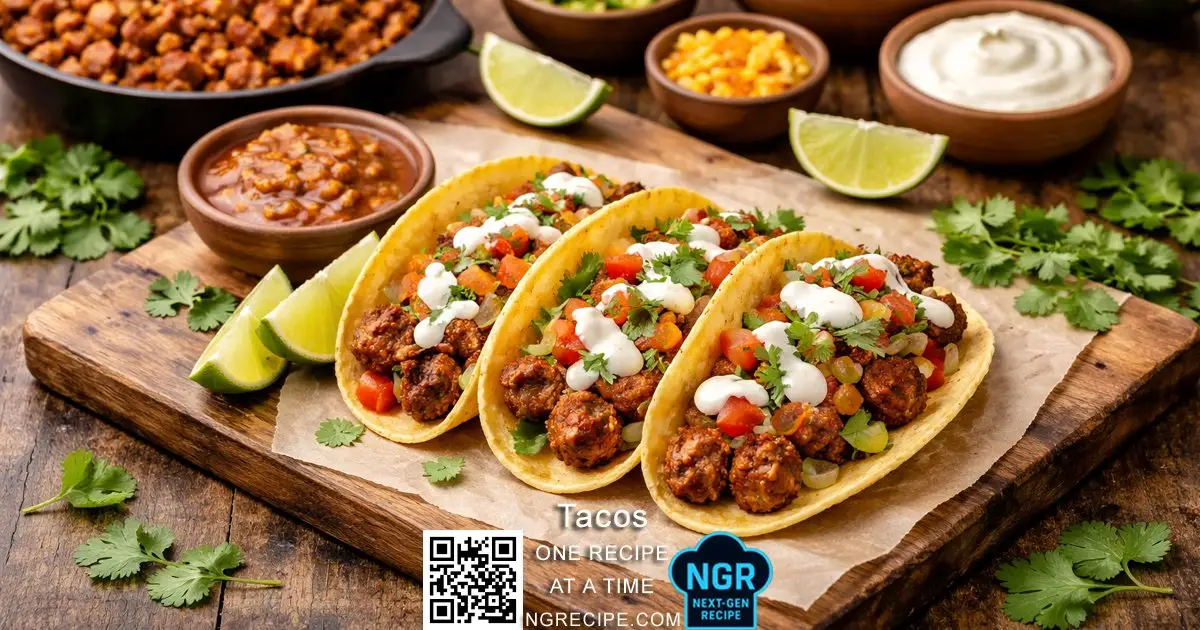
Quick Recipe Card
What This Recipe Is
A versatile handheld dish built around warm tortillas filled with spiced protein, fresh garnishes, and sauces, offering a balanced combination of savory, tangy, and aromatic flavors.
Ingredients
- 8 small tortillas (corn or flour) (20 cm / 8 inches)
- 300 g ground beef or shredded chicken (10.5 oz)
- 1 tablespoon vegetable oil (15 ml)
- 1 teaspoon cumin powder (5 g)
- 1 teaspoon chili powder (5 g)
- 1 teaspoon paprika (5 g)
- 2 cloves garlic, minced (10 g)
- 1 small onion, finely chopped (100 g / 3.5 oz)
- 1 tomato, diced (120 g / 4 oz)
- 1 cup lettuce, shredded (50 g / 1.7 oz)
- 1/2 cup shredded cheese (50 g / 1.7 oz)
- 1/4 cup sour cream (60 ml / 2 oz)
- Juice of 1 lime (15 ml / 1 tbsp)
- Salt to taste (5 g / 1 tsp)
Equipment
- Frying pan or skillet
- Spatula
- Knife and cutting board
- Mixing bowl
Instructions
Step 1:
Heat oil in a pan over medium heat.
Step 2:
Add chopped onion and cook until translucent.
Step 3:
Add garlic and cook briefly until aromatic.
Step 4:
Add ground beef or chicken and cook until browned.
Step 5:
Add cumin, chili powder, paprika, and salt; mix well.
Step 6:
Cook for 5–7 minutes until fully cooked.
Step 7:
Warm tortillas in a separate pan or directly over flame.
Step 8:
Assemble tacos by adding meat to tortillas.
Step 9:
Top with lettuce, tomato, cheese, and sour cream.
Step 10:
Finish with lime juice and serve immediately.
Visual Cooking Cues
- Meat should turn brown with no pink remaining
- Onions become soft and slightly golden
- Tortillas should be warm and flexible
Chef Tips
- Use fresh lime juice for best flavor
- Do not overload tacos to maintain structure
Common Mistakes
- Overcooking meat causing dryness
- Using cold tortillas leading to cracking
- Adding too many wet toppings causing sogginess
Troubleshooting
- Dry meat: Add a splash of water or broth
- Soggy tacos: Reduce liquid toppings
- Broken tortillas: Warm properly before use
Ingredient Pairings
- Avocado
- Salsa
- Pickled onions
- Fresh cilantro
Substitutions
- Beef → Turkey or tofu
- Sour cream → Yogurt
- Cheese → Dairy-free cheese
Recipe Family Variations
- Fish tacos
- Vegetarian bean tacos
- Spicy tacos with extra chili
Serving Suggestions
Serve with salsa, guacamole, and lime wedges.
Dietary Classification
- Non-vegetarian
- Can be adapted to vegetarian or gluten-free
Nutrition Information
Approximate per serving:
- Calories: 300 kcal
- Protein: 18 g
- Fat: 15 g
- Carbohydrates: 25 g
- Fiber: 3 g
- Sodium: 400 mg
Storage / Reheating
Storage
Store cooked filling in airtight container for up to 3 days in refrigerator.
Reheating
Reheat filling in a pan over medium heat; warm tortillas separately.
FAQ
Can I make tacos ahead of time?
Prepare filling ahead but assemble just before serving.
Are tacos gluten-free?
Corn tortillas are typically gluten-free.
Why This Recipe Works
The combination of warm tortillas and well-seasoned fillings creates contrast between soft, juicy, and crisp textures. Fresh toppings enhance brightness and prevent heaviness.
Recipe Identity
- Origin: Mexico
- Core Structure: Tortilla + filling + toppings
- Serving Style: Handheld, assembled just before eating
Dish Classification
- Dish type: Filled flatbread
- Course: Main course
- Meal type: Lunch, Dinner
- Traditional or modern dish: Traditional
- Street food or home cooking: Both
- Festival or everyday food: Everyday food
Recipe History
Tacos originated in Mexico as a practical street food. Traditionally made with corn tortillas and simple fillings, they evolved regionally and globally into countless variations.
Cultural Notes
Tacos are deeply rooted in Mexican culture and are commonly eaten as street food or home meals.
Advanced Cooking Knowledge Open detailed cooking science and reference notes
Flavor, Texture, and Aroma Profile
Tacos offer a layered sensory experience: savory meat, fresh crunch from vegetables, creamy toppings, and aromatic spices.
Flavor Balance
Balanced between salty, tangy, mildly spicy, and umami-rich elements.
Flavor Components
- Sweet: Light sweetness from onions and tomatoes
- Salt: Seasoned meat and tortillas
- Acid: Lime juice
- Bitter: Minimal
- Umami: Cooked meat
- Aromatic elements: Garlic, cumin, chili powder
Ingredient Notes
- Corn tortillas offer traditional flavor; flour tortillas are softer.
- Ground beef provides richness; chicken offers a lighter option.
Ingredient Science
Fat in meat enhances flavor retention. Acid from lime balances richness and improves taste perception.
Ingredient Roles
- Tortillas: Structural base
- Meat: Protein and umami
- Vegetables: Freshness and texture
- Spices: Flavor depth
- Dairy: Creaminess
Ingredient Classification
- Protein: Beef or chicken
- Carbohydrates: Tortillas
- Vegetables: Onion, tomato, lettuce
- Dairy: Cheese, sour cream
- Seasonings: Spices, salt
Preparation Techniques
- Finely chopping vegetables
- Evenly seasoning meat
- Warming tortillas before serving
Cooking Techniques
- Pan-frying meat
- Gentle heating of tortillas
Heat Management
- Low heat stages: Warming tortillas
- Medium heat stages: Cooking onions and garlic
- High heat stages: Browning meat
- Temperature cues: Meat should sizzle but not burn
Texture Development
Proper browning creates slight crisp edges while keeping the interior juicy.
Cooking Time Control
Avoid overcooking meat to prevent dryness; cook until just done.
Flavor Pairing Logic
Fatty meat pairs well with acidic lime and fresh herbs, balancing richness.
Global Variations
- Tex-Mex tacos with cheddar cheese
- Korean tacos with kimchi
- Indian-style tacos with spiced paneer
Leftover Ideas
Use leftover filling in wraps, salads, or rice bowls.
Cooking Safety Notes
Ensure meat is cooked thoroughly to safe internal temperature.
Sustainability Notes
Using locally sourced vegetables and reducing meat portions can lower environmental impact.
