Tempura Fish and Chips
A light, ultra-crispy twist on the classic British favorite, Tempura Fish and Chips combines Japanese tempura technique with traditional fish and chips for a delicate, airy crunch and clean flavor.
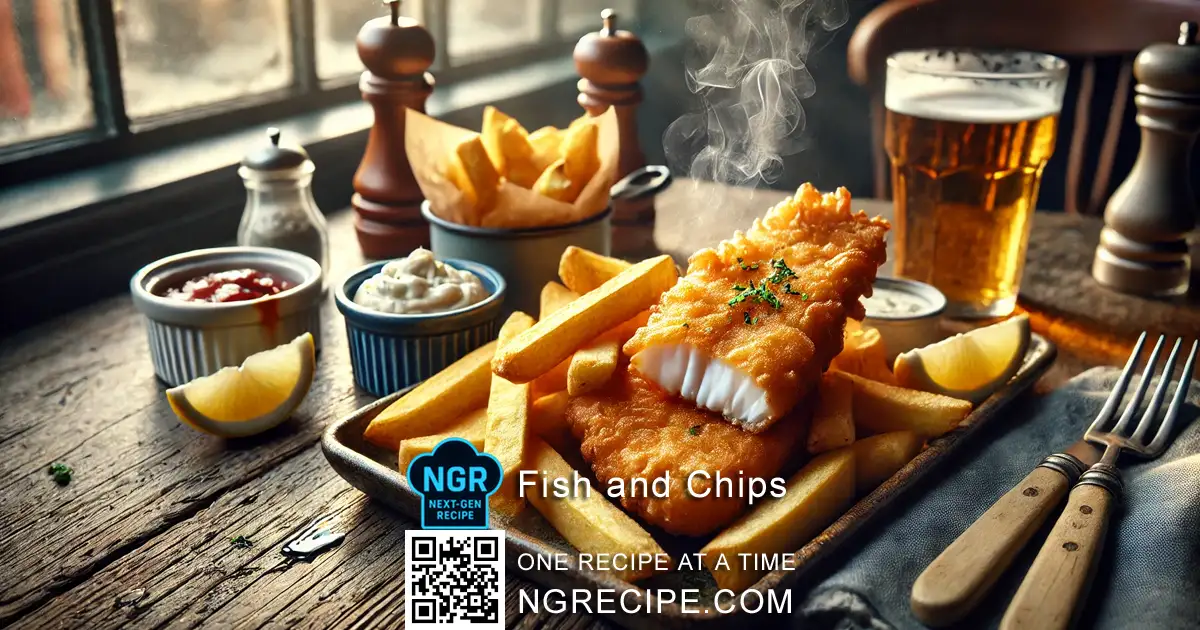
Quick Recipe Card
What This Recipe Is
Tempura Fish and Chips is a fusion dish where fresh white fish is coated in a cold, airy tempura batter and deep-fried until crisp, paired with golden fried chips. Unlike heavy beer batter, tempura creates a lighter, crispier texture.
Ingredients
- White fish fillets (cod or haddock) – 600 g (1.3 lb)
- Potatoes – 800 g (1.8 lb), cut into chips
- Plain flour – 120 g (1 cup)
- Cornstarch – 30 g (1/4 cup)
- Baking powder – 5 g (1 tsp)
- Ice-cold water – 200 ml (3/4 cup + 1 tbsp)
- Egg yolk – 1
- Salt – 5 g (1 tsp)
- Oil for frying – 1.5 liters (6 cups)
- Lemon wedges – for serving
Equipment
- Deep frying pan or fryer
- Thermometer
- Mixing bowl
- Slotted spoon
- Wire rack
Instructions
Step 1:
Heat oil to 160°C (320°F).
Step 2:
Fry potato chips for 5–6 minutes until soft but not browned. Remove and rest.
Step 3:
Increase oil temperature to 180°C (356°F).
Step 4:
In a bowl, lightly mix flour, cornstarch, baking powder, egg yolk, and ice-cold water. Do not overmix.
Step 5:
Season fish with salt.
Step 6:
Dip fish into batter and immediately place into hot oil.
Step 7:
Fry fish for 4–5 minutes until light golden and crisp.
Step 8:
Fry chips again for 2–3 minutes until golden and crispy.
Step 9:
Drain on a wire rack.
Step 10:
Serve hot with lemon wedges.
Visual Cooking Cues
- Batter looks lumpy and thin
- Fish turns pale golden, not dark brown
- Chips become crisp and golden
Chef Tips
- Keep batter cold at all times
- Fry immediately after dipping
- Use fresh oil for best flavor
Common Mistakes
- Overmixing batter
- Oil too cold causing sogginess
- Overcrowding fryer
Troubleshooting
- Batter not crisp: Ensure cold batter and hot oil
- Fish breaking: Dry fish before battering
- Soggy chips: Double fry properly
Ingredient Pairings
- Lemon
- Tartar sauce
- Vinegar
- Fresh herbs
Substitutions
- Sparkling water instead of still water
- Rice flour instead of plain flour
Recipe Family Variations
- Spiced tempura batter
- Gluten-free version with rice flour
Serving Suggestions
- Serve immediately while hot
- Pair with dipping sauces
- Add simple salad for balance
Dietary Classification
- Non-vegetarian
- Dairy-free
Nutrition Information
- Calories: ~550 kcal
- Protein: 28 g
- Fat: 25 g
- Carbohydrates: 55 g
- Fiber: 4 g
- Sodium: 500 mg
Storage / Reheating
Storage
- Best eaten fresh
- Refrigerate leftovers up to 2 days
Reheating
- Reheat in oven at 180°C (356°F) for 10 minutes
FAQ
Why is tempura batter different?
It is lighter and uses cold water to reduce gluten formation.
Can I use frozen fish?
Yes, but thaw and dry completely first.
Why double fry chips?
It ensures crisp exterior and soft interior.
Why This Recipe Works
- Ice-cold batter prevents gluten development, ensuring crispness
- Minimal mixing keeps batter airy
- High heat frying seals coating quickly
- Tempura technique avoids heavy oil absorption
Dish Classification
- Dish type: Fried seafood dish
- Course: Main course
- Meal type: Lunch or dinner
- Traditional or modern dish: Modern fusion
- Street food or home cooking: Both
- Festival or everyday food: Everyday comfort food
Recipe History
This dish merges British fish and chips with Japanese tempura techniques introduced globally in modern fusion cuisine, focusing on lighter frying methods.
Cultural Notes
- Combines Japanese frying precision with British comfort food tradition
Advanced Cooking Knowledge Open detailed cooking science and reference notes
Flavor, Texture, and Aroma Profile
- Light, crisp exterior
- Soft, flaky fish interior
- Clean, delicate taste
- Subtle oil aroma without heaviness
Flavor Components
- Sweet: Mild (from fish and potatoes)
- Salt: Moderate
- Acid: Optional (lemon or vinegar)
- Bitter: Minimal
- Umami: Present in fish
- Aromatic elements: Light frying aroma
Ingredient Notes
- Use firm white fish for structure
- Keep water ice-cold for proper tempura
- Use starchy potatoes for crisp chips
Ingredient Science
- Cold batter slows gluten formation
- Cornstarch enhances crispness
- Baking powder adds lightness
Ingredient Roles
- Fish: Main protein
- Flour + cornstarch: Structure and crispness
- Egg yolk: Adds richness
- Baking powder: Aeration
- Oil: Heat transfer medium
Ingredient Classification
- Protein: Fish
- Carbohydrates: Potatoes, flour
- Fat: Frying oil
- Seasoning: Salt
Preparation Techniques
- Cut potatoes evenly
- Pat fish dry to help batter adhere
- Prepare batter just before frying
Cooking Techniques
- Deep frying
- Tempura batter dipping
- Double frying for chips
Heat Management
- Low heat stages: Preheating oil
- Medium heat stages: First fry of chips (~160°C / 320°F)
- High heat stages: Final frying (~180°C / 356°F)
- Temperature cues: Batter should sizzle immediately
Texture Development
- Chips: Crisp outside, fluffy inside
- Fish: Light shell, tender interior
Cooking Time Control
- Avoid overcrowding
- Fry in batches for consistency
Flavor Pairing Logic
- Acid balances fried richness
- Salt enhances crisp coating
Global Variations
- Japanese-style tempura seafood
- British pub-style fish and chips
Leftover Ideas
- Fish sandwiches
- Fish tacos
Cooking Safety Notes
- Handle hot oil carefully
- Avoid water contact with oil
Sustainability Notes
- Use sustainably sourced fish
- Reuse oil responsibly
